Understanding the Importance of Emerging Technologies in SaaS Development
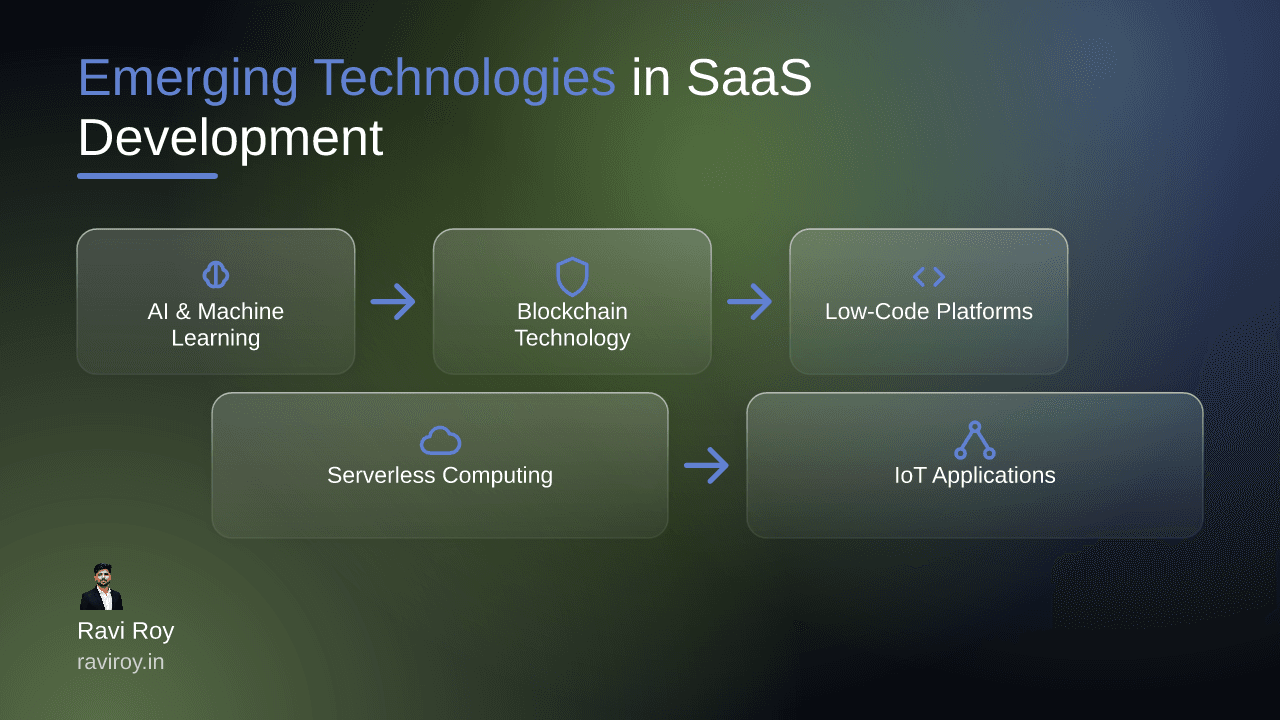
The world of Software as a Service (SaaS) is rapidly evolving, with emerging technologies taking center stage in modern development practices. From artificial intelligence (AI) to blockchain, SaaS is no longer just about cloud storage and simple applications; it's now a powerhouse of innovation that can transform industries. This post explores the critical emerging technologies shaping the SaaS landscape, enhancing both functionality and security.
What are the Key Emerging Technologies in SaaS?
AI and Machine Learning
AI and machine learning are not just buzzwords; they're catalysts for change in the SaaS landscape. These technologies enable applications to perform tasks that traditionally required human intelligence—think data analysis, customer segmentation, and personalized user experiences. A notable example is Salesforce's Einstein, which uses AI to optimize marketing strategies and sales forecasts.
Blockchain Technology
Blockchain is famously associated with cryptocurrencies, but its applications extend far beyond. By enabling secure, transparent transactions, blockchain fosters trust and integrity in SaaS applications. For instance, Oracle's Blockchain Cloud Service allows companies to create applications that secure their transaction data while enhancing accountability.
Low-Code Development Platforms
Low-code platforms are transforming the way applications are built by reducing development time and enabling non-technical users to contribute. Platforms like Mendix and OutSystems allow businesses to prototype and launch applications rapidly, enabling even small teams to accomplish what was once the domain of specialized developers.
Serverless Computing
Serverless computing offers a new paradigm in SaaS, allowing developers to build applications without worrying about server management. This architecture not only reduces infrastructure costs but also enhances scalability. AWS Lambda is a prime example, allowing developers to run code in response to events without provisioning or managing servers.
Internet of Things (IoT)
The Internet of Things opens up new avenues for SaaS applications, enabling real-time data collection and analysis. Companies can leverage IoT to enhance functionality across various sectors, including healthcare and logistics. A notable example is Cisco’s Jasper, which optimizes IoT device management and analytics in a SaaS environment.
How is AI Transforming SaaS Development?
AI Integration in Product Features
AI integration provides a plethora of capabilities in SaaS products, enhancing features like automatic report generation, customer chatbots, and advanced data analytics. For instance, HubSpot employs AI to analyze customer behavior, delivering insights that empower sales teams.
Enhancing User Experience with AI
User experience is significantly elevated through AI-driven personalization. SaaS companies, like Spotify, utilize machine learning algorithms to analyze user behavior, delivering tailored playlists and recommendations that keep users engaged and satisfied.
Predictive Analytics and Decision Making
Predictive analytics, powered by AI, plays a pivotal role in data-driven decision-making. Tools like Looker and Tableau offer insights powered by machine learning, allowing businesses to anticipate trends and adapt strategies in real-time.
The Role of Blockchain in SaaS Security
Decentralization and Data Integrity
Blockchain technology ensures data integrity through its decentralized nature. This means that no single entity controls the data, making it resistant to tampering and fraud. An example is IBM’s Food Trust, which uses blockchain to track food supply chains and ensure product authenticity.
Improving Trust with Transparent Transactions
Transactional transparency enhances user trust in SaaS applications. For instance, Everledger utilizes blockchain to maintain an immutable record of diamond transactions, providing significant assurance of authenticity and ethical sourcing.
Use Cases of Blockchain in SaaS Applications
Not only does blockchain secure data, but it also offers innovative use cases. One example is Uphold, a digital wallet platform that uses blockchain to provide secure, instant transactions across multiple currencies.
Why Low-Code Platforms Are Important for SaaS?
Accelerating Development Speed
Development speed is crucial in the competitive SaaS market, and low-code platforms drastically reduce the time from ideation to launch. Companies using Appian have reported a 50% reduction in development time compared to traditional coding methods.
Empowering Non-Technical Users
One of the standout features of low-code platforms is that they democratize application development, allowing non-developers to build applications using visual interfaces. This empowerment encourages collaboration between IT and business teams, often resulting in better solutions.
Facilitating Rapid Prototyping
Rapid prototyping is enabled through low-code platforms, allowing teams to iterate and improve on applications based on user feedback. A real-world example is the use of Microsoft Power Apps to create prototypes for customer relationship management within weeks.
The Impact of Serverless Computing on SaaS Efficiency
Cost Savings and Scalability
Serverless computing significantly reduces operational costs since companies only pay for the compute time they consume. Startups like Snap use serverless architecture to scale up seamlessly during peak usage without incurring hefty costs related to underutilized server capacity.
Improving Deployment Times
Deployment times are much shorter in serverless architectures compared to traditional models. For example, companies utilizing Google Cloud Functions can deploy applications in minutes, rather than days or weeks.
Streamlining Resource Management
With serverless solutions, developers can focus on writing code rather than managing infrastructure. This streamlining of resource management leads to improved team efficiency and faster delivery of features to end-users.
How IoT Expands SaaS Applicability
Real-Time Data Collection and Analysis
IoT devices enable SaaS applications to collect real-time data, providing actionable insights. For example, service providers like ServiceTitan use IoT data to optimize field service operations.
Enhancing SaaS Solutions for Specific Industries
IoT expands SaaS applicability across various sectors, including smart cities, agriculture, and healthcare. Platforms like GE’s Predix integrate IoT for predictive maintenance in industrial operations, optimizing uptime and efficiency.
Case Studies of IoT-Integrated SaaS Products
Successful IoT-integrated SaaS products can be seen in companies like Fleet Complete, which provides real-time fleet tracking and management by leveraging IoT technology to enhance operational efficiency.
Conclusion: Preparing for the Future of SaaS Development
The transformational impact of emerging technologies such as AI, blockchain, low-code platforms, serverless computing, and IoT cannot be understated. Businesses must actively invest in and adopt these technologies to stay ahead in the increasingly competitive SaaS market. Those who embrace innovation and adapt will not only survive but thrive in the future of SaaS development.
What emerging technology do you see having the most significant impact on SaaS development in the coming years, and why?
💬 Join the conversation — share your take in the comments and tell us what you’d add.