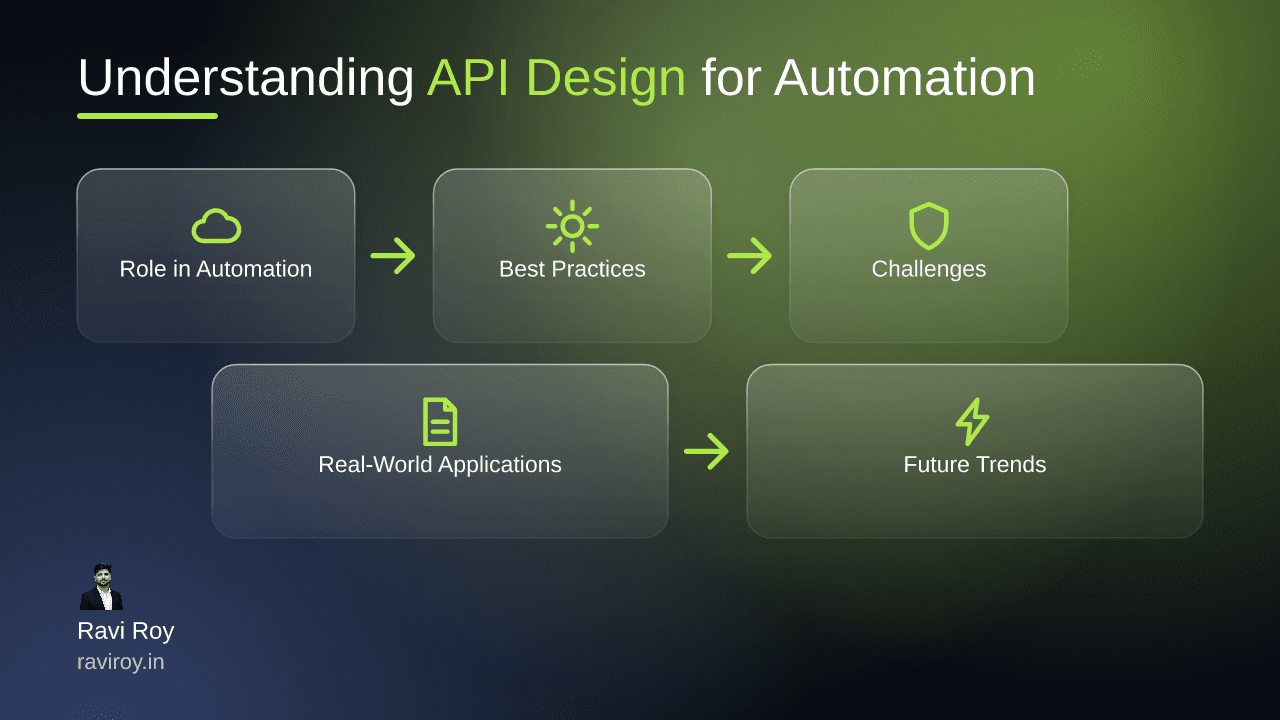
The Fundamental Role of API Design in Automation
From enabling seamless data exchange to supporting agile workflows, well-crafted API design plays a pivotal role in automation. When you think about efficient systems, consider this: a robust API can be the backbone that transforms disparate software into a unified powerhouse. However, poor API design can cripple automation efforts, leading to frustration and wasted resources.
Understanding API Design
API design refers to the planning and creation of application programming interfaces that allow various software components to communicate. Good API design is significant because it enhances usability and accelerates integration processes, empowering developers and businesses alike. An API serves as a contract between a service provider and its consumers, dictating how they interact—much like the rules of a game.
Impact of Poor API Design on Automation
On the flip side, poorly designed APIs create hurdles that complicate automation. For instance, if an API lacks clear documentation, developers may struggle to implement it correctly, leading to increased latency in workflows and increased efforts in maintenance. Notably, inefficiencies that arise from bad design can cascade throughout a system, affecting performance and productivity. In fact, as noted in various case studies, these issues often lead to direct financial losses due to operational bottlenecks and increased time-to-market for new features.
Best Practices for Effective API Design in Automation
Implementing best practices can significantly enhance the overall performance of APIs, ensuring they effectively support automated systems.
API-First and API-Native Development
An API-first approach involves prioritizing API design during the initial phases of software development. This strategy encourages teams to think about how components interact before diving into code, simplifying the integration process down the line. This foresight can improve both developer experience and user satisfaction. According to reports, companies that adopt this method see a 30% faster deployment rate of new projects.
Standardization and Interoperability
Interoperability is essential for good API design. When APIs adhere to common standards, different systems can communicate with each other seamlessly. Examples of widely accepted standards include RESTful principles and GraphQL. This standardization not only improves automation but also fosters innovation, as developers can build upon existing frameworks instead of reinventing the wheel for each project.
Low-Code/No-Code API Integration
The rise of low-code and no-code platforms has made API integration more accessible. These solutions enable non-developers to utilize APIs for automation without needing extensive coding knowledge. By empowering a broader audience to engage with APIs, organizations can accelerate their automation initiatives and even optimize workflows in real-time, significantly reducing the dependency on traditional development cycles.
Challenges of Poor API Design for Automation
Despite best efforts, poor API design can introduce various challenges that hinder automation.
Scalability Issues
Well-crafted APIs scale effortlessly with increased demand. However, a poorly designed API can create significant scalability issues. For instance, if the API relies on synchronous calls, it may become a bottleneck as user traffic increases. When systems can’t handle peak loads effectively, this often leads to downtime and reduced service quality. Moving towards asynchronous API models can significantly mitigate these challenges.
Increased Security Vulnerabilities
Security is often an afterthought in API design, yet neglecting this aspect can lead to vulnerabilities that are exploited by attackers. Poor security practices may include weak authentication methods, hardcoded credentials, or unencrypted data transmission. These vulnerabilities not only put sensitive information at risk but can also lead to compliance issues with regulations such as GDPR and CCPA. Implementing best security practices during the API design phase is essential to safeguard data and maintain user trust.
Real-World Applications of API as a Product
Understanding the real-world implications of API design can offer invaluable insights to developers and businesses alike.
Case Studies of Successful API Implementations
Several companies exemplify successful API implementations. For example, Twilio revolutionized communication by allowing businesses to integrate voice and messaging capabilities into their applications seamlessly. This API-first strategy not only enhanced automation but also attracted numerous developers, transforming Twilio into a go-to platform for communication solutions.
Lessons Learned from API Failure
Conversely, some high-profile API failures teach critical lessons. One notable example is the 2016 release of the Twitter API v1.1. It suffered from poor documentation and rate limits that confused developers, resulting in widespread frustration and disuse. This cautionary tale emphasizes the importance of both clear documentation and user-focused design in building APIs.
Future Trends in API Design for Automation
The landscape of API design continues to evolve, driven by technological advancements and shifting user needs.
AI-Driven API Design
AI's role in API design is becoming increasingly prominent. By leveraging machine learning algorithms, developers can analyze usage patterns to enhance API functionality and predict potential issues before they become critical. Companies are increasingly turning to AI for API management, facilitating not only speed but also risk mitigation.
Event-Driven and Asynchronous APIs
The rise of event-driven architectures is another notable trend. These systems operate on a reactive basis, allowing applications to respond to events in real time. Asynchronous APIs enhance responsiveness by enabling systems to process requests without waiting for responses, thus improving performance. This approach dramatically boosts the scalability and efficiency of automation processes.
Navigating the complexities of API design in automation isn't just about coding—it's about understanding the impact of your decisions on efficiency and scalability. Have you experienced challenges with API design in your projects? Share your insights and examples!
💬 Join the conversation — share your take in the comments and tell us what you’d add.