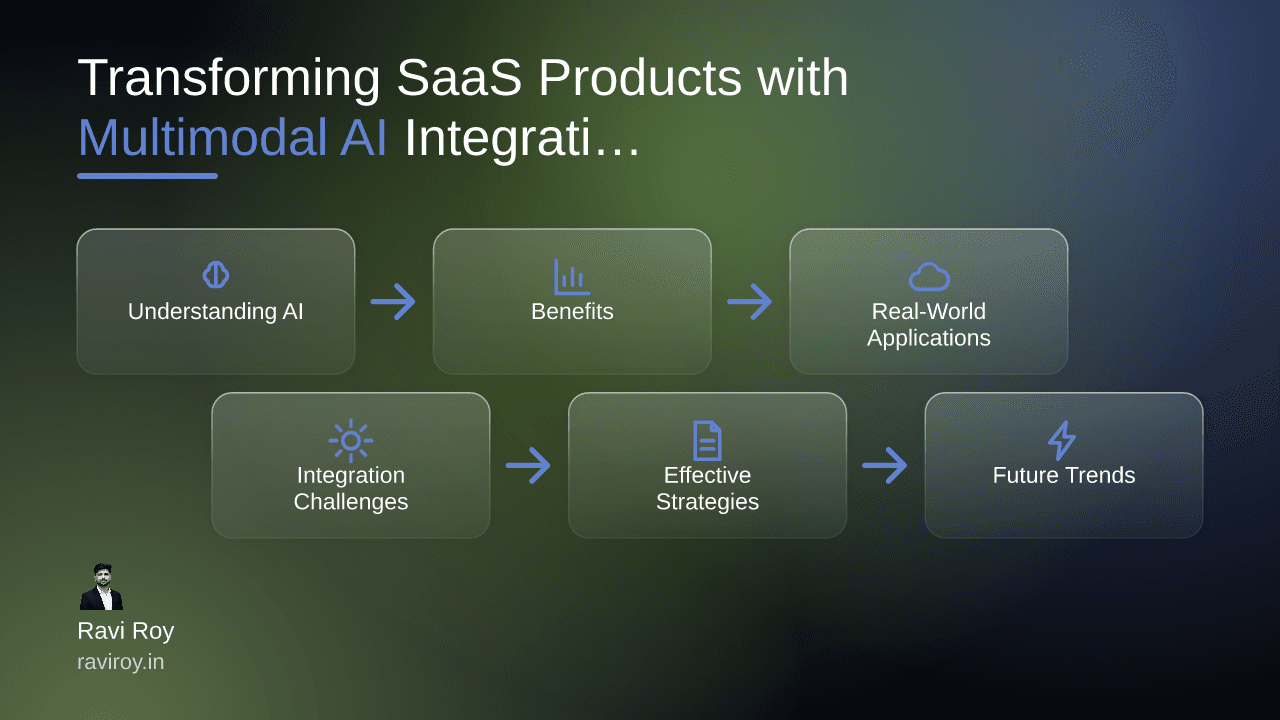
Transforming SaaS Products with Multimodal AI Integration
As the demand for personalized and efficient experiences grows, the technology that powers our SaaS products must evolve. Enter multimodal AI—a game-changer redefining how we interact with software. By harnessing multiple forms of data, from text to images and audio, SaaS products can create seamless user experiences that are both intuitive and responsive.
Understanding Multimodal AI
What is Multimodal AI?
Multimodal AI refers to the capability of artificial intelligence to understand and process multiple data modalities simultaneously. This integration is crucial in modern tech, where users engage through various channels and formats. By combining modalities like text, audio, and images, businesses can create a more holistic approach to problem-solving and user interaction.
For instance, imagine a customer service chatbot that not only understands text queries but can also analyze screenshots of issues submitted by users. This sophisticated understanding enhances the interaction, making it more efficient and accurate.
How Does Multimodal AI Work?
At its core, multimodal AI leverages sophisticated algorithms designed for different types of data, using deep learning techniques to extract meaning from various sources. Technologies like neural networks process text through natural language processing (NLP), while image recognition algorithms parse photos or videos. Audio data, meanwhile, is analyzed through sound recognition tools, enabling systems to create a rich, interconnected understanding of inputs.
To illustrate, applications like Google Assistant utilize multimodal AI by interpreting voice commands (audio), fetching related images (visual), and providing text (written) information, all in one interactive response.
Benefits of Multimodal AI for SaaS Products
Enhanced User Experiences
The primary benefit of integrating multimodal AI into SaaS products is the enhanced user experience. By tailoring interactions based on user preferences and behaviors, businesses can deliver relevant and timely information. Suppose a marketing platform leverages multimodal AI; it could analyze a user’s past campaign performance data (text), monitor social media interactions (audio), and evaluate visual advertisement engagement—all to offer personalized suggestions for future campaigns.
This level of customization not only boosts user satisfaction but also fosters loyalty, as users feel understood and valued.
Boosted Automation and Efficiency
Integration of multimodal AI significantly boosts automation capabilities, leading to reduced development times and operational efficiencies. For example, when a SaaS product automates data gathering and processing—from diverse sources such as social media posts or customer feedback forms—the need for manual intervention decreases dramatically.
Case Study: Consider an e-commerce platform that deployed multimodal AI tools for inventory management. The result was a 30% reduction in time spent on stock monitoring and an increase in customer satisfaction, evidenced by a 20% uptick in repeat purchases.
Real-World Applications of Multimodal AI in SaaS
Healthcare Innovations
In the healthcare sector, multimodal AI is revolutionizing diagnostics. Platforms are now able to analyze patient records (text), medical images (visual), and even patient voices (audio) to provide more accurate diagnoses. A notable example is IBM Watson Health, which assesses a combination of clinical data and research articles to suggest treatment plans tailored to individual patients.
Retail and E-Commerce Transformations
E-commerce companies are increasingly leveraging multimodal AI to create personalized shopping experiences. For instance, platforms like Amazon utilize AI that recommends products based on past purchases (text), customer reviews (audio), and product images (visual). This integration leads to a user-friendly experience that drives sales.
Challenges in Integrating Multimodal AI into SaaS Development
Technical Challenges
Despite its benefits, integrating multimodal AI into existing SaaS products can pose significant technical challenges. Complexity arises from ensuring compatibility across various data sources, which may require extensive coding and expertise in multiple AI disciplines. Businesses often encounter hurdles like data silos, where information is trapped within specific channels and not easily shareable.
Cost Implications and ROI Analysis
Cost is another bottleneck when considering AI integration. Developing a multimodal AI system demands considerable investment in both technology and talent. Companies need to conduct thorough ROI analyses to ensure that the potential benefits outweigh setup costs. A practical approach involves identifying quick wins or pilot projects that can demonstrate success in a shorter time frame, thus justifying broader investments.
Strategies to overcome these challenges include using dedicated integration platforms and collaborating with AI specialists who can provide valuable insights into optimizing data workflows.
Creating Effective Integration Strategies
Evaluation of Existing SaaS Architectures
Assessing current SaaS infrastructures for compatibility with multimodal AI technologies is fundamental. This evaluation should involve a comprehensive audit of existing systems and the identification of potential gaps. Are the current data frameworks robust enough to handle multimodal inputs?
Steps to Evaluate:
Conduct a data inventory to understand current data sources.
Analyze system architecture for flexibility and scalability.
Consult with AI experts to identify integration paths.
Low-Code/No-Code Solutions
Low-code and no-code platforms are emerging as crucial tools to simplify the integration of multimodal AI into SaaS systems. These solutions allow developers and non-developers alike to create applications or modify workflows without extensive coding knowledge. This democratization of technology accelerates the integration process, enabling rapid deployment of new features.
In practice, a team utilizing a low-code platform can prototype and test a multimodal AI feature in a fraction of the time compared to traditional coding methods, significantly speeding up the development cycle.
Future Trends in SaaS Development with Multimodal AI
Unified AI Systems
The future landscape of SaaS products will likely feature unified AI systems that integrate multiple forms of data into a single operational framework. This shift will enable developers to build applications that learn and adapt over time, enhancing their capabilities based on user interactions.
Self-Optimizing Systems through Reinforcement Learning
Another exciting trend is the rise of self-optimizing systems driven by reinforcement learning. These systems will gradually improve their performance by learning from previous actions and user feedback. As multimodal AI continues to evolve, its understanding of context and nuance will also deepen, leading to smarter applications that provide value in ways we are only beginning to understand.
The transformative power of multimodal AI is undeniable. For SaaS products, the potential to enhance user experiences, streamline operations, and innovate is vast.
What challenges have you faced in integrating AI into your SaaS products, and how did you overcome them?
💬 Join the conversation — share your take in the comments and tell us what you’d add.