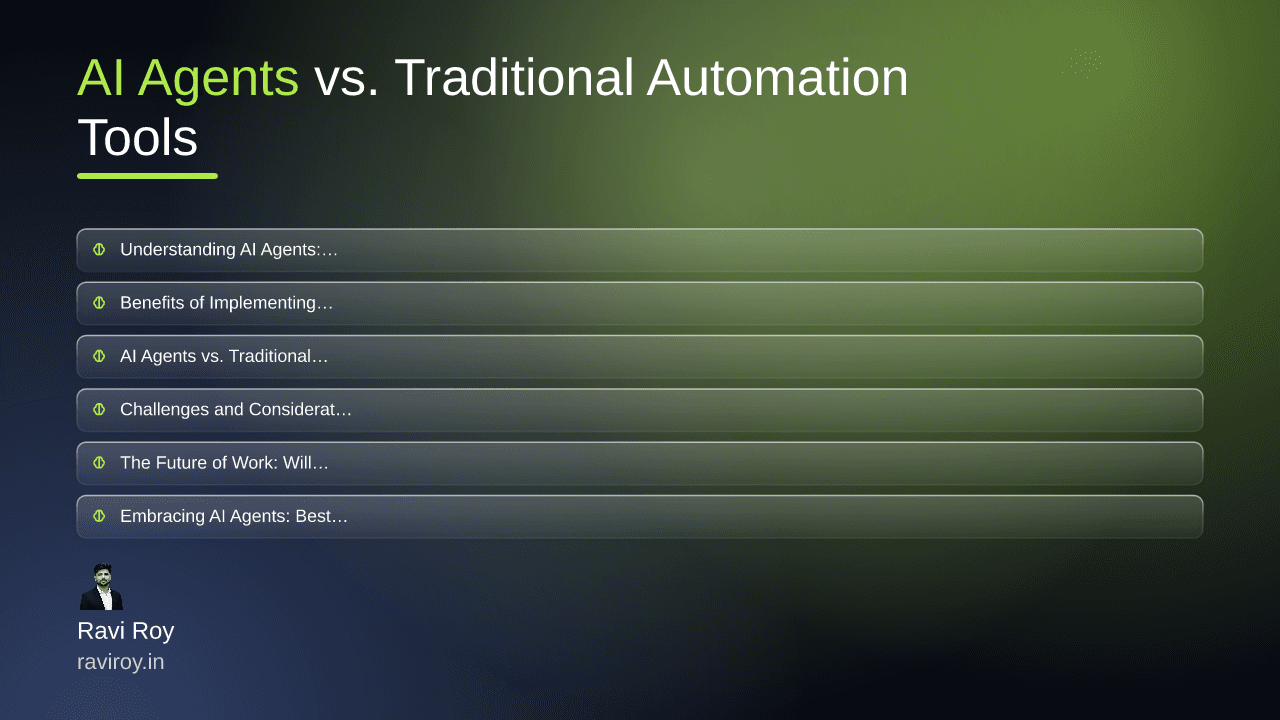
Understanding AI Agents: A New Era in Automation
In an era where efficiency reigns supreme, AI agents are emerging as game-changers in automation, reshaping workflows across a myriad of industries. These intelligent systems are not just extensions of traditional tools; they are capable of learning and adapting, pushing the boundaries of what automation can achieve.
Defining AI Agents
AI agents refer to systems that can simulate human-like decision-making abilities. Unlike conventional automation, which strictly follows predefined rules, AI agents are designed to understand context and nuances. This ability allows them to learn from experiences and adapt to new challenges, which can significantly enhance operational efficiency.
How AI Agents Differ from Traditional Automation
Traditional automation is rule-based, performing specific tasks based on established protocols. Take, for instance, automated scheduling systems that can only operate within set parameters. Conversely, AI agents use machine learning to grasp the subtleties of various tasks. A prime example is virtual assistants like Siri or Alexa, which can perform a range of tasks, from scheduling appointments to providing weather updates, by interpreting natural language and user command patterns.
In warehousing, autonomous robots not only recognize items but can adjust their routes in real-time based on obstacles, showcasing how AI agents vastly outperform traditional, static automation in dynamic environments.
Benefits of Implementing AI Agents in Business
The advantages of integrating AI agents into business processes are profound, bringing forth a new level of productivity and efficiency.
Increased Efficiency and Productivity
AI agents excel at performing tasks faster and more accurately than humans, minimizing the potential for errors. For example, a logistics company that deployed AI for inventory management reported a 30% reduction in time spent on stock-taking and order processing. This newfound speed allows teams to focus on strategic initiatives rather than getting bogged down in routine tasks.
Moreover, AI agents can operate 24/7, which is invaluable for businesses aiming to provide uninterrupted services. For instance, customer service AI agents can handle inquiries at any hour, catering to clients from different time zones without fatigue.
Cost Savings and ROI
Implementing AI agents can generate significant cost savings. By automating routine tasks, businesses can reduce operational costs, minimizing the need for a larger workforce. According to recent studies, organizations that incorporated AI agents saw an average of 20% reduction in overhead expenses within the first year.
The potential return on investment (ROI) is substantial as well. AI agents streamline processes that would otherwise consume human resources, allowing for a more strategic allocation of talent. This increased efficiency creates a robust business case for adopting AI technologies.
AI Agents vs. Traditional Automation Tools
To understand the transformative power of AI agents, it's essential to compare these innovative systems with traditional automation tools.
Comparative Analysis of Capabilities
AI agents are inherently more flexible than their traditional counterparts. While conventional automation tools rely on static rules to execute tasks, AI agents can adapt to unforeseen circumstances. For example, during peak shipping seasons, AI agents can optimize delivery routes dynamically, reducing delays that could hamper customer satisfaction. In contrast, traditional systems might struggle to adjust, resulting in slower service.
Case Studies: Success Stories in Different Industries
Several industries have experienced remarkable successes through AI integration. In logistics, a company like DHL employed AI agents in order fulfillment. The result? A staggering 40% improvement in delivery times. Additionally, in the realm of customer service, a retail giant utilized AI agents to enhance user experiences; complaints were resolved 50% faster compared to human agents, showcasing the efficacy of AI in streamlining communication.
Challenges and Considerations of Adopting AI Agents
Despite the benefits, the adoption of AI agents comes with its own set of challenges that businesses must navigate.
Integration with Existing Systems
One of the most significant hurdles is the need for substantial data integration. AI agents require rich datasets to learn effectively, which can be challenging for organizations with legacy systems. The integration process often demands investment in both technology and human resources for successful implementation.
Ethical Concerns and Governance
As businesses embrace AI agents, ethical considerations come to the forefront. Issues surrounding fairness, transparency, and accountability must be addressed. Companies must establish governance frameworks to mitigate risks associated with AI deployment. This need for ethical governance is underscored by various studies indicating that organizations can face reputational damage if AI systems exhibit biases or lack transparency in decision-making processes.
The Future of Work: Will AI Agents Replace Human Employees?
As AI agents become increasingly common in the workplace, questions surrounding their impact on employment arise.
Human-AI Collaboration
AI agents are not intended to replace human workers but rather to complement them. These systems are designed to enhance human capabilities, allowing for collaborative workflows that leverage the strengths of both humans and machines. In customer service, for instance, AI can handle routine inquiries while human agents focus on complex issues requiring empathy and creativity.
The Evolving Job Landscape
It's essential to recognize that while some roles may become obsolete due to AI integration, new job opportunities will emerge. The focus will shift towards roles that require human ingenuity and critical thinking. A shift towards reskilling and upskilling the workforce is crucial for adapting to this tech-driven landscape. Training programs will be necessary to equip employees with the skills needed to work alongside AI.
Embracing AI Agents: Best Practices for Implementation
Successfully integrating AI agents into your organization requires careful strategic planning.
Steps for Successful Integration
Establish a Clear Strategy: Before introducing AI agents, develop a comprehensive strategy outlining your objectives and expected outcomes. This will guide your implementation process and ensure alignment with business goals.
Leverage Pilot Programs: Begin with pilot programs that allow for testing AI agents in a controlled environment. This helps identify potential issues and offers insights into optimizing performance before scaling.
Engage Stakeholders: Involve key stakeholders early in the process to ensure collective buy-in. Collaborative feedback can lead to better-designed AI solutions that meet the needs of your team.
Monitoring and Fine-Tuning AI Performance
Once AI agents are deployed, continuous monitoring is essential. Regularly review performance metrics to identify areas for improvement. Fine-tuning AI agents based on user feedback can enhance their functionality and effectiveness, ensuring they evolve to meet dynamic business needs.
As you embark on this journey towards adopting AI agents in your workflow, consider the lessons learned by others.
What experiences have you had with implementing AI agents in your workflow, and what challenges did you face?
💬 Join the conversation — share your take in the comments and tell us what you’d add.