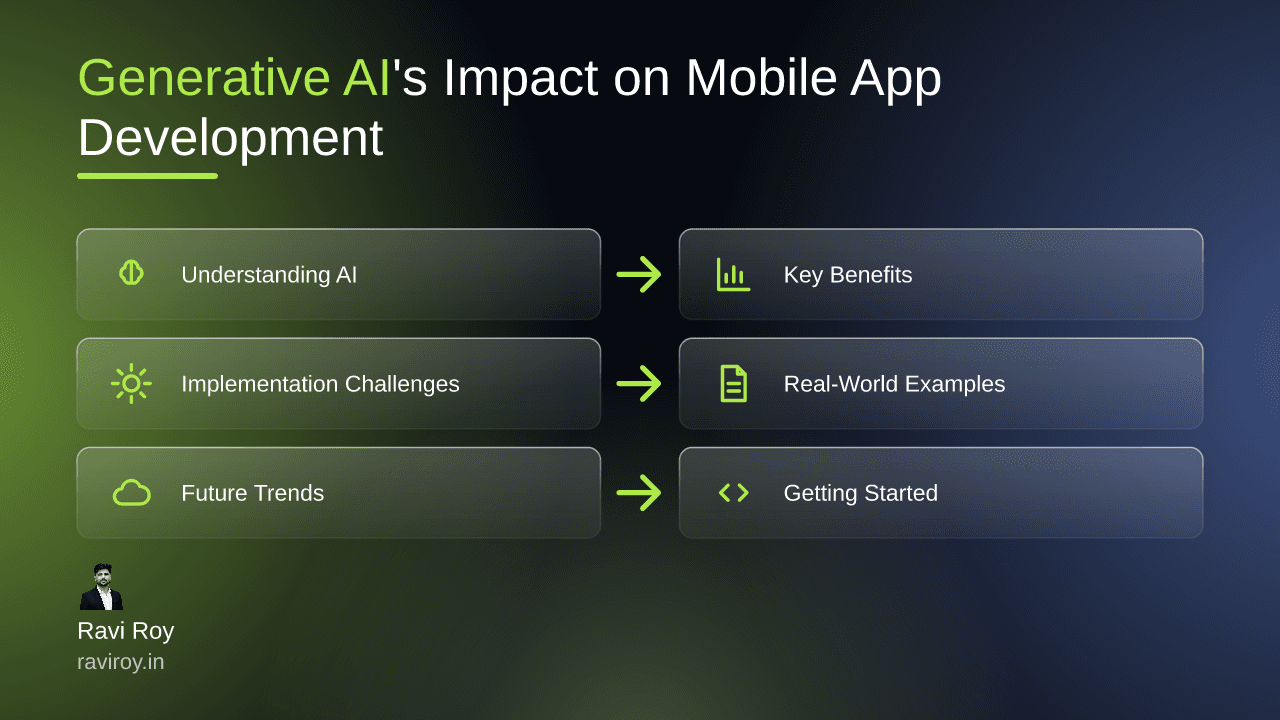
Understanding Generative AI in Mobile App Development
The advent of generative AI has transformed the landscape of mobile app development, presenting unprecedented opportunities for innovation. As developers harness the power of these advanced technologies, new capabilities arise that enhance both functionality and user engagement. But what exactly is generative AI, and how does it work?
What is Generative AI?
Generative AI refers to algorithms designed to create new content from existing data. In the context of mobile apps, this can involve generating images, text, audio, and even entire app features. A prime example is a photo-editing app that uses generative AI to enhance images or to create artwork based on user input. This technology can also create personalized experiences, such as tailored music playlists or custom-designed graphics for social media, fundamentally changing how users interact with applications.
How Does Generative AI Work?
At the heart of generative AI are algorithms like Generative Adversarial Networks (GANs). GANs function through a two-part system: a generator and a discriminator. The generator creates new data instances, while the discriminator evaluates them against real-world data, iteratively improving the quality of the generated output. By using GANs in mobile app development, developers can craft features that adapt to user preferences, paving the way for more intuitive interactions.
Key Benefits of Generative AI for Mobile Apps
Generative AI offers several transformative advantages that can elevate mobile app performance and user satisfaction.
Enhanced User Experience
One of the most significant benefits of generative AI is its ability to enhance user experience through personalization. For instance, music streaming apps like Spotify use AI to analyze users' listening habits and generate customized playlists based on their tastes. This kind of high-level personalization increases user engagement, making it more likely that they will continue using the app.
Faster Development Cycles
Speed is essential in today's fast-paced market, and generative AI can significantly reduce development time. Case studies have shown that incorporating AI into the development process can lead to a reduction in the time needed to bring features to market. For example, a mobile game development studio implemented generative AI to automate the creation of characters and scenarios, cutting their development cycle in half. This allows teams to focus on more complex tasks and strategic planning.
Cost Efficiency
Implementing generative AI can also lead to substantial cost savings. Automating repetitive tasks, improving design efficiency, and reducing the need for extensive human resources can contribute to lowered operational costs. According to a survey conducted by McKinsey, businesses that integrated AI solutions saw an average cost reduction of 20-30% in related projects.
Challenges of Implementing Generative AI
While the benefits are compelling, integrating generative AI into mobile app development also presents unique challenges.
Technical Hurdles
Developers may face technical difficulties when implementing AI solutions, particularly in understanding the complexities of the algorithms involved. Integration often requires significant changes to existing infrastructure and may involve learning curve challenges for the team. Traditional app development tools may not seamlessly support generative AI features, necessitating additional resources and expertise.
Data Privacy Concerns
As generative AI relies heavily on data, concerns regarding data privacy increase significantly. Developers must navigate the implications of using user data responsibly, ensuring compliance with regulations like GDPR and CCPA. Even within compliant frameworks, securing user trust can be a complex issue as applications become more personalized through AI.
Real-World Examples of Generative AI in Mobile Apps
Understanding the practical applications of generative AI can provide further insight into its potential.
Successful Case Studies
Notably, apps like DALL-E have revolutionized art and graphic design by allowing users to input simple prompts to generate complex visual content. This form of generative AI empowers artists by providing initial drafts or even final products, thus streamlining the creative process.
Innovative Applications
Generative AI is also being used in fitness applications, where algorithms analyze user performance data and create tailored workout plans. Apps such as Freeletics leverage AI to offer personalized training regimens and nutritional plans that adapt over time, enhancing user engagement and results.
Future Trends in Generative AI for Mobile Development
As technology advances, so too does the potential for generative AI in mobile app development.
Potential Innovations
Emerging technologies, such as edge computing combined with generative AI, will likely allow for real-time data processing and model training directly on devices. This reduces latency and enhances user experiences by providing faster and more relevant outputs.
Market Predictions
Experts predict that the market for generative AI in app development will continue to grow, with a forecasted increase in AI-generated content across various sectors. The demand for personalized experiences is driving this growth, compelling developers to adopt AI strategies to stay competitive.
How Developers Can Get Started with Generative AI
For developers eager to dive into generative AI, understanding the tools and best practices is crucial.
Tools and Libraries
Several frameworks facilitate the incorporation of generative AI into mobile apps:
TensorFlow: Highly popular for machine learning applications, it offers extensive resources and community support.
PyTorch: Known for its flexibility, it is ideal for research and production environments, providing dynamic computation graphs.
OpenAI's GPT: Widely used for natural language processing tasks.
Best Practices
Start Small: Begin with pilot projects that test generative AI in controlled scenarios.
Prioritize Data Ethics: Ensure that user data is handled in compliance with privacy laws.
Iterate and Learn: Use feedback loops to improve AI models continuously based on real user interactions.
By integrating these practices and tools, developers can navigate the complexities of generative AI to create innovative mobile applications that captivate users.
What experiences have you had with generative AI in your app development projects, and what challenges did you face?
💬 Join the conversation — share your take in the comments and tell us what you’d add.