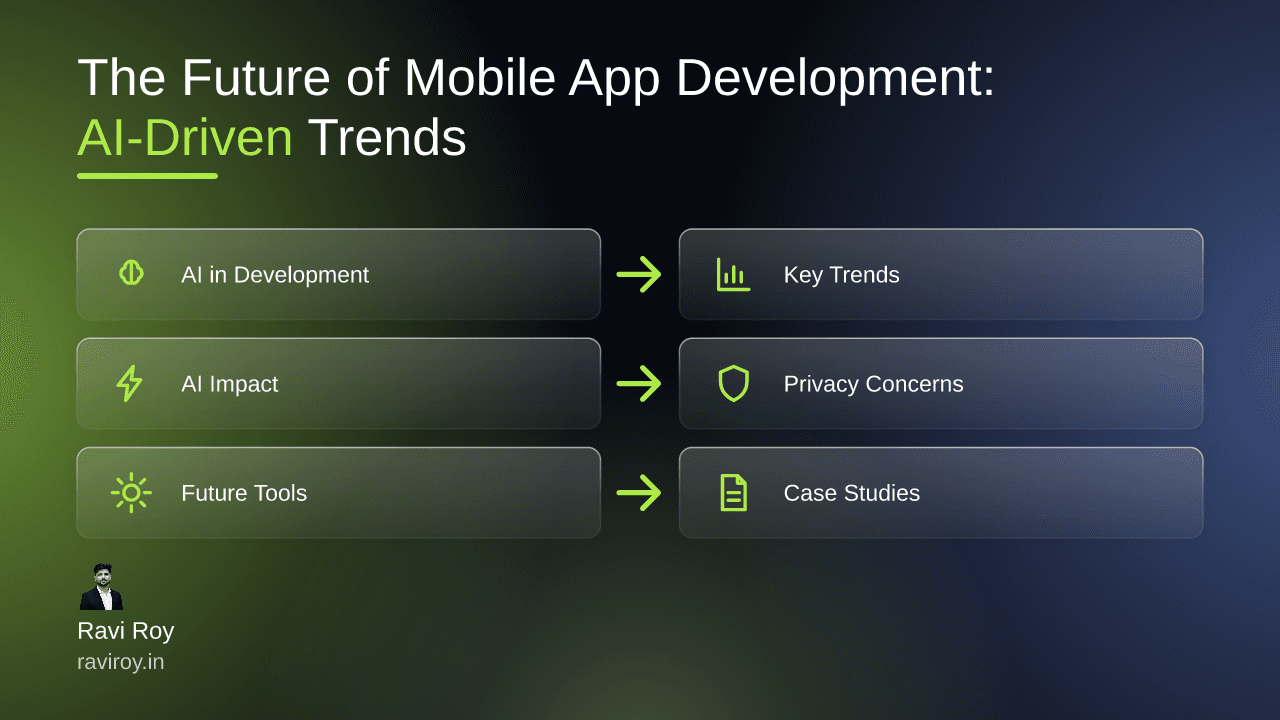
The Future of Mobile App Development: AI-Driven Trends and Technologies
Introduction to AI in Mobile App Development
Mobile app development is not merely about coding; it’s about creating interactive experiences that enhance everyday life. As the number of mobile users continues to surge, the demand for innovative applications grows, making this field more significant than ever. But how is artificial intelligence (AI) reshaping the landscape of mobile app development?
AI is revolutionizing traditional development processes by enabling automation, enhancing user experiences, and facilitating smarter decision-making. By harnessing its capabilities, developers can streamline tasks, predict user behavior, and optimize application performance. Let’s dive into the transformative role of AI in mobile app development.
Understanding Mobile App Development
Mobile app development generally involves designing, building, and deploying software applications that run on mobile devices. It encompasses various aspects, including user interface design, backend server integration, and ongoing maintenance. With over 3.8 billion smartphone users worldwide, its significance cannot be overstated—businesses today must leverage mobile strategy to engage customers effectively.
The Role of AI in Modern Development
AI technologies such as machine learning, natural language processing, and predictive analytics are boosting the capabilities of development teams. From automating repetitive tasks to offering insights into user preferences, these technologies help developers create smarter, faster, and more user-friendly applications.
Trends Shaping the Future of Mobile App Development
The influence of AI on mobile app development is underscoring several key trends that promise to redefine the industry landscape.
Faster Development and Automation
AI-enabled tools are increasingly being adopted to automate repetitive tasks that would traditionally consume valuable developer time. For instance, tools like GitHub Copilot and DeepCode assist developers by generating code snippets based on context, reducing manual entry and targeted errors. This significantly speeds up the development cycle, allowing teams to focus on innovation rather than routine tasks.
Example: A travel app using AI tools might automatically generate user journey codes based on location data, enabling a responsive user interface with various travel opportunities derived from user preferences.
Hyper-Personalization of User Experiences
User experience (UX) is where AI truly shines. Apps integrated with AI can analyze user behaviors and patterns to provide hyper-personalized content. Netflix, for example, uses AI to suggest shows based on viewing history, creating a tailored experience that keeps users engaged.
Implementation: By integrating AI algorithms for recommendation engines, e-commerce apps can suggest personalized products to individual users, increasing sales and customer satisfaction.
Integration of AI-Powered Features
Integrating features like chatbots and virtual assistants into mobile applications is becoming a standard practice as they enhance user engagement. They can handle customer inquiries, provide real-time support, and gather user data for future interactions.
Case: Platforms like Duolingo offer AI-powered chat interfaces for language learning, allowing users to practice their skills interactively, enhancing educational outcomes.
Impact of AI Throughout the Mobile App Lifecycle
AI doesn’t stop at development; its influence extends throughout the entire mobile app lifecycle.
Design and Prototyping
AI tools like Adobe Sensei are emerging to influence the design phase, allowing designers to generate layouts and prototypes that reflect user preferences. These tools can analyze design trends and offer data-driven suggestions, saving substantial time during the ideation stage.
Technique: Utilize tools that provide automatic resizing and layout adjustments based on AI insights to create responsive designs easily.
Development and Testing
During the development phase, AI significantly enhances predictive analytics, paving the way for error detection and quality assurance. Frameworks like Appium can execute automated testing scripts generated based on user interactions, mitigating the risk of bugs going undetected.
Practices: Applying continuous integration/continuous delivery (CI/CD) practices can streamline the testing process, allowing developers to release updates faster while maintaining high-quality standards.
Deployment and Maintenance
Even after deployment, AI continues to play a vital role in app maintenance. Tools that leverage machine learning can monitor app performance in real-time, alerting developers to potential issues before they affect users.
Example: Implementing predictive maintenance strategies using AI can lead to improved app reliability, thereby enhancing user satisfaction.
Privacy and Security in AI-driven Mobile Apps
With the integration of AI, concerns about privacy and security have become increasingly prominent.
Understanding AI-enhanced Security Measures
AI can bolster security measures in mobile apps through anomaly detection and fraud prevention systems. For instance, apps can be designed to learn user behavior patterns and detect unusual activities that might signal security threats.
Practical Implementation: Utilize AI-driven monitoring tools that can analyze login behavior, notifying users of suspicious access attempts instantly.
Privacy Implications for Users
However, the use of AI raises legitimate privacy concerns. Users may feel uneasy about how their data is collected and processed. Developers must strike a balance between leveraging AI for personalization and ensuring user data security and privacy.
Guidelines: Adhere to regulations like GDPR and provide transparent data policies that inform users about how their data will be utilized.
Future Tools and Technologies for Developers
As AI continues to evolve, new tools and platforms will emerge, shaping the future of mobile app development.
AI-Powered Development Platforms
Emerging platforms such as Microsoft Azure AI and Google Cloud AI promise to streamline app development by providing robust AI models and tools. Such platforms enable developers to build complex AI functionalities without needing an in-depth understanding of AI technologies.
Recommendation: Explore these platforms to simplify the integration of advanced AI features into upcoming projects.
Skill Set Transformation for Developers
To stay relevant in this ever-evolving landscape, developers must upgrade their skills. Understanding machine learning frameworks like TensorFlow or Keras is becoming essential. Moreover, knowledge of data ethics, privacy regulations, and user psychology will enhance a developer's toolkit.
Advice: Attend workshops, online courses, and webinars focused on AI technologies to enhance your professional skill set.
Case Studies of AI in Mobile App Development
Real-world applications can provide invaluable insights into the successful integration of AI.
Successful Implementations
Consider Spotify, which harnesses AI for music recommendations, creating highly personalized playlists based on user habits. The success of their algorithm lies in understanding user preferences and continuously evolving based on feedback.
Lessons Learned from Early Adopters
Early adopters of AI in mobile apps provide lessons on effective implementation. For instance, Airbnb utilizes AI for dynamic pricing, allowing them to adjust rates depending on market demand and user preferences.
Takeaway: Analyze and learn from the frameworks and strategies employed by successful AI-driven applications to inspire your projects.
Conclusion
The future of mobile app development is undeniably intertwined with the capabilities of AI. Embracing these trends, tools, and best practices will not only enhance development efficiency but set your applications apart in an increasingly competitive landscape.
What challenges have you faced while integrating AI in your app projects, and how did you overcome them?
💬 Join the conversation — share your take in the comments and tell us what you’d add.