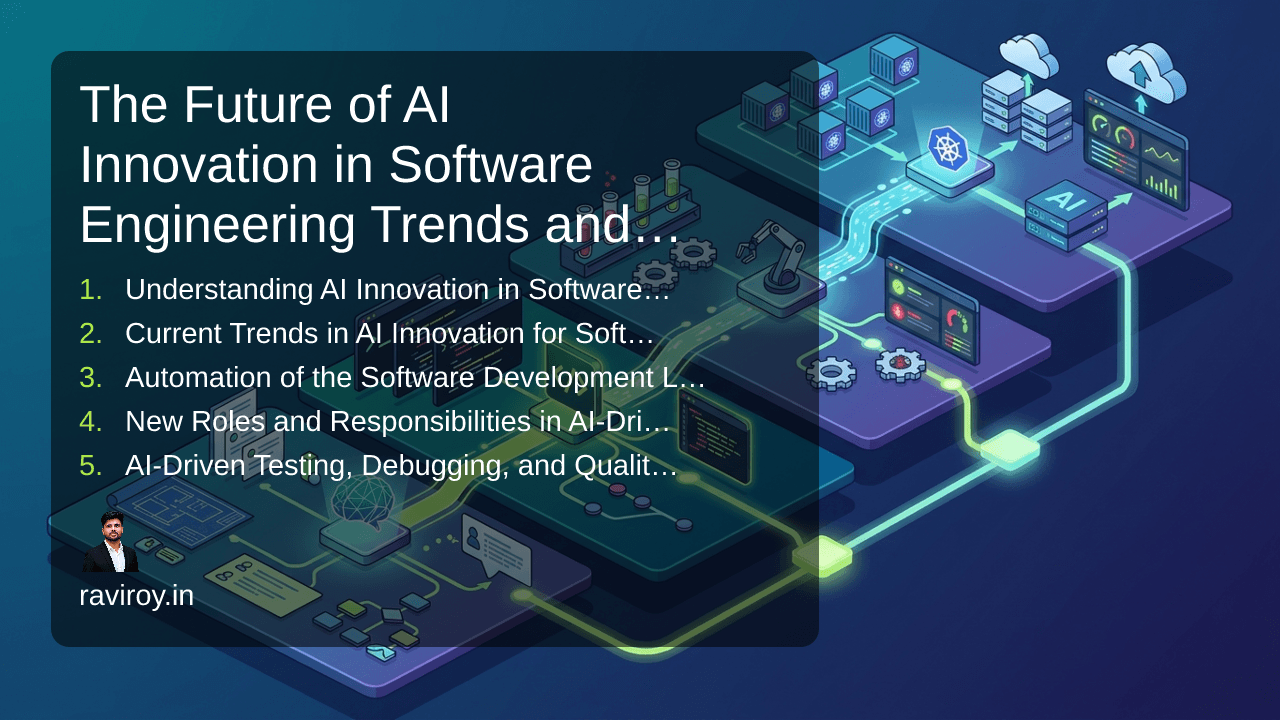
Understanding AI Innovation in Software Engineering
AI innovation is transforming software engineering, driving breakthroughs that enhance productivity, streamline processes, and improve software quality. As we dive deeper into the software development life cycle, the integration of AI technology becomes evident through smarter project management, automated testing, and robust debugging processes. Not only does this integration foster innovation, but it also empowers development teams to achieve superior results efficiently.
The impact of AI on productivity is profound. By automating repetitive tasks, AI-enabled tools allow development teams to focus on complex challenges, enhancing creativity and leading to faster project delivery. Evidence suggests that leveraging AI effectively can reduce development time by up to 30%, presenting significant advantages in competitive markets (source).
Current Trends in AI Innovation for Software Development
Agentic AI in Development
Agentic AI refers to systems designed to perform tasks independently, transforming how software is developed. By acting on user feedback and adapting in real-time, agentic AI helps teams stay flexible and responsive. Recently, platforms like GitHub Copilot have popularized this trend by assisting developers in writing code, suggesting changes based on context, and learning from previous inputs, resulting in more intuitive coding experiences.
Generative AI for Code and Language Processing
The rise of generative AI marks a significant milestone in software engineering. Tools such as OpenAI's Codex can automatically generate code based on natural language descriptions, significantly reducing the barrier to entry for new developers. This technology not only accelerates the coding process but also inspires new programming patterns and paradigms, reshaping how developers approach problem-solving. As generative AI continues to evolve, its implications promise to redefine the landscape of software development, making coding more accessible to a broader audience.
AI in Low-Code/No-Code Platforms
Low-code and no-code platforms are revolutionizing development by enabling non-technical personnel to create applications. The integration of AI within these platforms enhances functionalities, allowing users to automate processes without needing extensive programming knowledge. According to a recent study, companies utilizing low-code solutions have seen a 70% reduction in development time, making these tools invaluable for businesses looking to innovate quickly and efficiently (source).
Automation of the Software Development Lifecycle with AI
AI is streamlining the software development lifecycle (SDLC) across various phases: planning, development, testing, and deployment. Automation tools, such as Jenkins and CircleCI, leverage AI to optimize workflows, ensuring that development teams can focus on high-level tasks instead of mundane operations.
For instance, AI-driven tools can analyze code changes and automatically generate test cases, thus reducing human error and increasing accuracy. However, while relying on AI automation introduces efficiency gains, it can also lead to potential pitfalls. Developers may become overly dependent on these tools, risking a decline in fundamental programming skills.
New Roles and Responsibilities in AI-Driven Software Development
AI Oversight and Architecture
As AI becomes more ingrained in software practices, new roles are emerging. Professionals focusing on AI oversight ensure that algorithms function as intended and meet ethical standards. This oversight is critical, especially as organizations become increasingly data-driven and reliant on AI outputs.
Developer Roles in AI-Enhanced Environments
Traditional developer roles are evolving as well. Team members are expected to acquire knowledge of AI frameworks and machine learning concepts. As this transition occurs, software engineers must cultivate a blend of programming skills and data science expertise, enabling them to navigate the complexities of AI-driven environments effectively.
AI-Driven Testing, Debugging, and Quality Assurance
AI enhancements in testing and debugging processes have proven transformative. By analyzing vast datasets of previous projects, AI tools can predict potential bugs, suggest fixes, and even test applications automatically. AI-driven testing frameworks, such as Test.ai, have demonstrated effectiveness in streamlining quality assurance by reducing time-to-market significantly.
In case studies where companies have successfully integrated AI into their testing protocols, results indicate improvements in software reliability and product quality. The automated identification of bugs leads to a direct correlation with reduced corrective maintenance costs (source).
Ethical Considerations in AI Innovation
With great power comes great responsibility. As AI technologies proliferate in software development, ethical considerations become paramount. The potential for bias in AI algorithms can lead to unintended consequences in software outputs, affecting usability and user experience across diverse demographics.
It is crucial for development teams to adopt best practices for responsible AI use. Organizations can implement guidelines for transparency in AI systems and conduct regular audits to minimize biases. Encouraging ethical discussions within teams ensures a comprehensive understanding of the implications of AI technology.
In summary, AI innovation is reshaping the software engineering landscape through progressive trends and practices. By embracing these changes, development teams can leverage AI to improve efficiency, foster creativity, and enhance quality—all while navigating the ethical implications of such powerful technology.
As you reflect on these trends, consider: in your experience, how have you integrated AI into your software development processes, and what challenges have you faced?
💬 Join the conversation — share your take in the comments and tell us what you’d add.