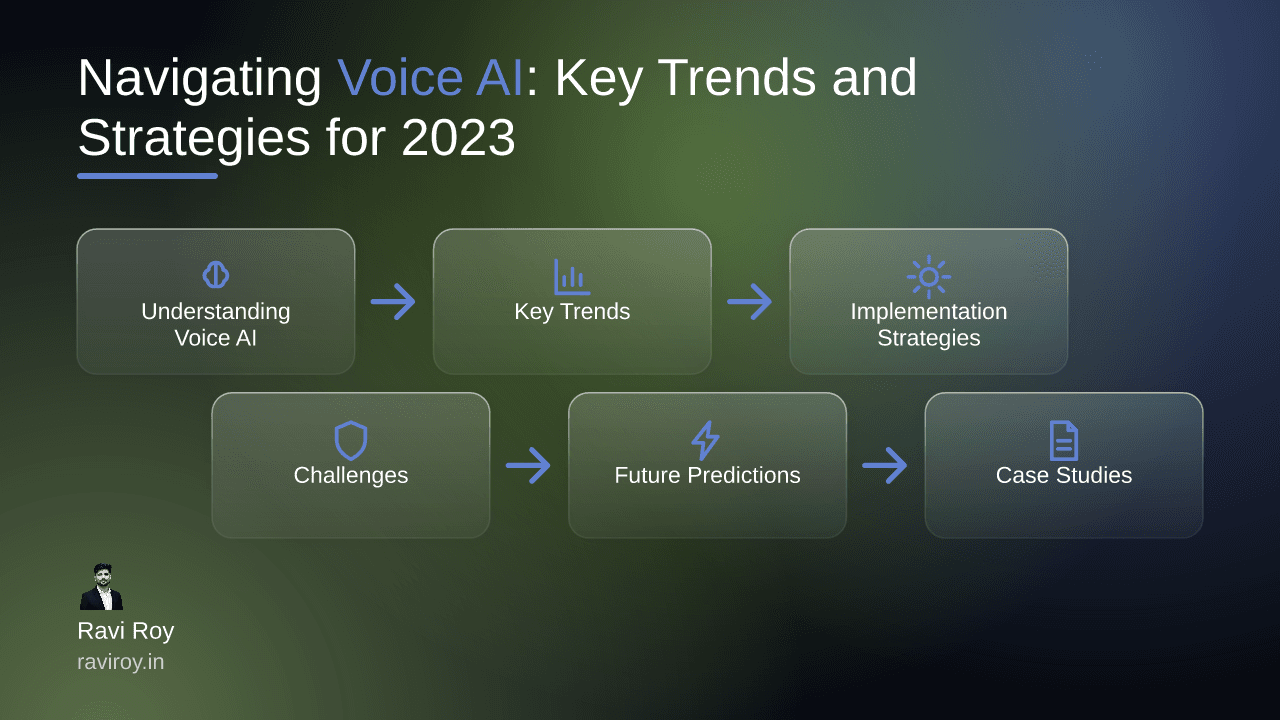
Understanding Voice AI and Its Impact
Voice AI is revolutionizing the way we interact with technology, reshaping everything from customer support to personal device management. This cutting-edge technology uses natural language processing (NLP) and machine learning to enable devices to understand and respond to human speech, creating more intuitive user experiences.
What is Voice AI?
Voice AI, or voice artificial intelligence, involves sophisticated machine learning algorithms and linguistic recognition systems that allow devices to interpret and generate human language as voice commands or questions. Key components include:
Natural Language Processing (NLP): This aspect analyzes and interprets human language, transforming it into data that machines can understand.
Speech Recognition: The ability to transcribe spoken words into text so that machines can process the information.
Text-to-Speech (TTS): This technology converts written text back into audible speech, enabling systems to respond verbally.
As of 2023, the global Voice AI market is projected to hit approximately $26.8 billion, reflecting an increase of nearly 150% from just a few years ago. According to recent reports, the number of active voice-assisted devices worldwide reached over 4.5 billion, demonstrating the widespread adoption and reliance on voice technology across various sectors.
The Growth of Voice AI
The growing popularity of voice assistants like Amazon Alexa, Google Assistant, and Apple Siri has accelerated the advancement of Voice AI. Businesses across industries are increasingly integrating voice technology into their operations. For example, a major retail chain saw a 30% increase in customer engagement after implementing voice-activated shopping features on its app. As more organizations recognize the extensive benefits, investors are pouring resources into innovative voice applications, signaling that Voice AI is more than just a trend—it's a fundamental shift in how we engage with technology.
Key Trends Shaping Voice AI in 2023
As we delve into the year, several pivotal trends are emerging in the Voice AI landscape, each aiming to enhance user satisfaction and streamline operations.
Personalization and User Experience
One of the most significant trends in Voice AI is the focus on personalization. By analyzing user behavior and preferences, Voice AI systems can provide more tailored experiences. For instance, personalized recommendations based on previously collected data can lead to faster decision-making in applications like music streaming or e-commerce. In fact, studies show that 70% of users are more likely to engage with personalized content, making this a critical component for businesses.
Integration with IoT Devices
Voice AI is increasingly becoming the central hub in smart homes and workplaces, integrating seamlessly with Internet of Things (IoT) devices. This connectivity allows users to control everything from home appliances to HVAC systems through simple voice commands. The global market for IoT and Voice AI is expected to grow by over 22% this year alone, highlighting a shift toward more interconnected living environments.
Voice Commerce and Transactions
The rise of voice commerce is transforming retail by simplifying the purchasing process. According to recent forecasts, voice commerce sales are anticipated to exceed $40 billion by 2024, driven by an increase in consumer trust and familiarity with voice-activated shopping. Retailers are not just investing in voice technology for luxury; they're understanding its potential for enhancing sales and reducing cart abandonment rates.
Implementing Voice AI: Strategies for Success
Adopting Voice AI requires careful consideration of various strategies to maximize its potential in your operations.
Choosing the Right Technology
Selecting the appropriate Voice AI tools is foundational. Companies should assess:
Compatibility: Ensure the chosen platform can easily integrate with existing systems.
Scalability: The tool should accommodate business growth and evolving user needs.
User-Friendliness: A straightforward interface increases the likelihood of user adoption.
Researching both proprietary options and open-source tools can uncover valuable insights that enhance implementation success.
Training Your Voice AI Model
To effectively utilize Voice AI, training your model is key. Follow these steps:
Data Collection: Gather relevant data representing your audience.
Annotation: Label the data, enabling the model to understand various dialects and languages.
Testing: Conduct rigorous testing using diverse queries to refine responses.
Continuous Improvement: Update the model periodically based on user feedback and interaction analytics.
Best Practices for User Engagement
Effective user engagement is paramount in utilizing Voice AI. Implement these best practices:
Clear Commands: Ensure users understand how to interact with the system using simple, concise prompts.
Feedback Mechanism: Implement a system for users to provide feedback on their experience, aiding continuous improvement.
Ongoing Training: Regularly update your Voice AI model based on user interactions to refine accuracy and relevance.
Challenges and Considerations in Voice AI Adoption
While the benefits of Voice AI are substantial, challenges need careful navigation to ensure successful implementation.
Privacy and Security Concerns
Privacy remains a primary concern with Voice AI applications. As organizations collect sensitive data, implementing robust security measures is critical. For instance, utilizing encryption and anonymizing user data can help maintain trust while complying with privacy regulations like GDPR.
Accessibility for Diverse Users
Creating an inclusive Voice AI system means designing for a variety of users, including those with disabilities. Employing features such as speech recognition that accommodates different accents and dialects is essential. Moreover, using gender-neutral voices helps ensure that users feel represented and respected.
Overcoming Technical Limitations
Voice AI technology still has limitations, including challenges with noisy environments and varying dialects. Addressing these can involve:
Advanced Noise Suppression: Utilizing algorithms that filter out background noise.
Dialect Training: Incorporating diverse language models into your AI systems.
Overcoming these technical barriers is crucial for maximizing the utility of Voice AI.
The Future of Voice AI: Predictions and Innovations
As we look ahead, numerous innovations and ethical considerations are shaping the future landscape of Voice AI.
Voice AI in Customer Support
The utilization of Voice AI in customer support is on the rise, with companies deploying AI-driven chatbots for 24/7 assistance. These bots not only provide immediate responses but also learn from previous interactions to offer increasingly personalized solutions.
Emerging Innovations
Anticipate advancements such as emotional recognition, enabling Voice AI systems to gauge user emotions based on the tone of voice. This allows for more nuanced interactions and can significantly enhance customer satisfaction. Furthermore, integrations with augmented reality (AR) might soon allow users to interact with virtual products using voice commands.
The Role of AI Ethics in Voice Technology
As innovation unfolds, ethical considerations will take center stage. Creating guidelines around data usage, transparency, and user autonomy will become increasingly paramount. Striking a balance between technological advancement and ethical considerations will determine the integrity of Voice AI.
Case Studies: Success Stories in Voice AI Implementation
Real-world examples highlight the transformative capabilities of Voice AI across various industries.
Retail Success Stories
Major retailers like Walmart have successfully integrated Voice AI into their supply chain, allowing customers to make voice-activated orders and receive product information without the need for staff intervention. This approach has not only streamlined purchasing processes but also elevated the customer experience.
Voice AI in Healthcare
In healthcare, systems such as Amazon's Alexa for healthcare enable patients to schedule appointments and access health information through voice commands. A notable implementation resulted in a major hospital reducing appointment booking times by an impressive 40%.
Education and Voice Learning Tools
Voice AI is also making headway in education. Tools like Google Assistant are being used in classrooms to facilitate personalized learning. Teachers can utilize these systems to track student progress based on their verbal interactions, enabling tailored educational support.
Navigating the evolving landscape of Voice AI requires awareness of current trends, strategic implementation, and an understanding of ethical considerations.
What specific Voice AI trends have you seen impact your industry or daily life recently?
💬 Join the conversation — share your take in the comments and tell us what you’d add.