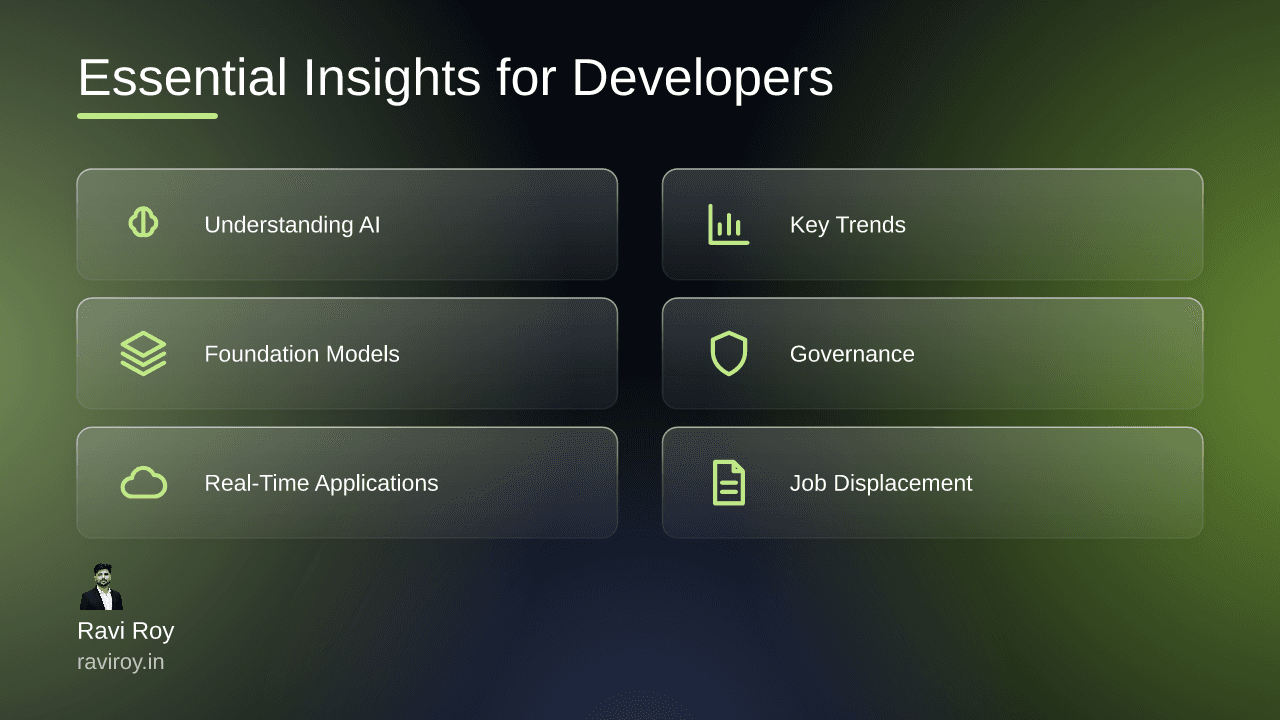
Understanding Emerging Technologies in AI
The rapid evolution of technology, particularly in artificial intelligence (AI), is not just a trend but a revolution redefining development practices. As a developer in today's landscape, understanding emerging technologies is pivotal for unlocking new capabilities and driving innovation forward.
What Are Emerging Technologies?
Emerging technologies in AI encompass advanced tools and methodologies that fortify the capabilities of applications, systems, and solutions. These technologies are typically characterized by their potential to disrupt existing processes or improve efficiencies dramatically. For developers, this represents both an opportunity and a challenge, requiring adaptability and a proactive mindset to stay pertinent in a swiftly changing environment.
The Impact of AI on Development Practices
The continuous rise of AI tools is reshaping development practices across industries. Developers are now expected to not only integrate AI components but also reassess their design principles and methodologies. Adapting to these innovations means embracing experimentation and iterative development to explore new functionalities and performance metrics that AI can offer.
Several overarching trends in AI development are critical to observed: the rise of automated workflows, an emphasis on data-driven decision-making, and the integration of AI in software engineering processes. Each of these trends has direct implications for how developers approach their projects and collaborate within teams.
Key Trends Shaping AI Development
As AI technologies evolve, several key trends are emerging that developers must prioritize.
Agentic AI and Multi-Agent Systems
Agentic AI refers to systems that can operate autonomously, making decisions based on predefined rules and real-time data analysis. These systems are finding applications in various fields, including finance for risk assessment and healthcare for patient monitoring.
Multi-agent systems enhance the capabilities of agentic AI by enabling multiple autonomous agents to communicate, collaborate, and compete. This inter-agent interaction can lead to more efficient solutions and the emergence of innovative applications one agent might not have achieved alone.
Multimodal AI Integration
Multimodal AI systems process and analyze data from multiple sources and formats, such as text, images, and audio. This integration significantly enhances user experiences, leading to more intuitive applications. For instance, an AI-driven customer service bot that understands voice commands and text queries can provide seamless and efficient support.
The ability to leverage multimodal systems is crucial for developers aiming to create sophisticated, user-centric applications. As users increasingly interact with technology across various mediums, understanding how to implement these integrations can set a product apart.
Specialized and Smaller AI Models
While large AI models have garnered significant attention, smaller, specialized AI models offer distinct advantages in niche applications. These models tend to be more efficient, cost-effective, and easier to deploy compared to their larger counterparts.
A practical example includes models that utilize fewer resources and are fine-tuned for specific tasks, like sentiment analysis in customer feedback. Developers can utilize frameworks such as TensorFlow Lite to optimize and deploy these smaller models on edge devices, making advanced capabilities accessible without substantial infrastructure investments.
Advancements in Foundation Models
The evolution of foundational models is crucial for enhancing AI capabilities. Developers should be aware of the following advancements.
Extended Context Windows
Extended context windows allow AI models to process larger segments of text or data, resulting in improved communication and understanding of user intent. For developers, this means creating applications that can maintain context over longer interactions, which is essential for chatbot development and conversational AI tools.
In practical terms, using transformers with extended context windows can greatly improve the performance of natural language processing (NLP) applications. For instance, developers can now build chatbots capable of managing extensive dialogue histories, leading to richer user interactions.
Generative AI in Complex Applications
Generative AI is transforming various industries by providing creative solutions to complex tasks. From generating realistic images in healthcare diagnostics to creating financial models in banking, these capabilities are unlocking new potentials.
For example, generative adversarial networks (GANs) can be applied in healthcare to simulate patient environments, aiding research and training. Developers need to embrace generative AI tools to enhance their applications, positioning their solutions as industry leaders.
Governance and Regulation in AI
With great power comes great responsibility, particularly in the realm of AI. Developers must navigate the complex landscape of governance and ethics.
The Importance of Explainable AI
In sectors such as finance and healthcare, explainable AI (XAI) is not just a compliance requirement; it also enhances trust and user engagement. Developers are tasked with implementing AI systems that can articulate the reasoning behind their decisions, which is crucial for safeguarding users' interests.
By focusing on transparency in algorithm design, developers can ensure that their applications abide by ethical standards and maintain user trust. Techniques such as decision trees or model-agnostic methods can be used to provide insights into model behavior.
Challenges in AI Ethics
The governance of AI technology raises significant ethical questions. As AI becomes more embedded in our daily routines, the potential for bias, discrimination, and misuse becomes increasingly apparent. Developers must be acutely aware of these challenges and implement strategies to mitigate risks.
Understanding frameworks like Fairness, Accountability, and Transparency (FAT) will aid developers in integrating ethical considerations into their designs. By actively promoting an ethical approach, developers can build solutions that resonate positively with users and society at large.
Real-Time Applications and Privacy with Edge AI
The convergence of AI and Edge computing offers exciting possibilities for real-time applications.
Benefits of Edge AI
Edge AI refers to the practice of processing data near its source rather than relying solely on centralized data centers. This approach minimizes latency, reduces bandwidth costs, and enhances data privacy. By enabling instantaneous data processing, developers can create systems responsive enough for real-time applications.
For example, in a smart factory environment, Edge AI can analyze equipment monitoring data instantly, enabling predictive maintenance and minimizing downtime.
Use Cases in Industry
Industries like healthcare and IoT are among the first to harness the advantages of Edge AI. In the healthcare sector, wearable devices can continuously monitor patient vitals, sending alerts without the need for cloud intervention.
Privacy remains a critical concern, as these applications must ensure data security while complying with regulations such as HIPAA. Developers should leverage encryption and anonymization techniques, ensuring user data is handled responsibly.
Addressing Job Displacement Concerns
As AI technologies continue to advance, questions about job displacement are inevitably raised.
The Role of AI in Job Markets
AI has the potential to transform job markets by automating mundane tasks but also creates new roles focused on oversight, management, and further innovation. Developers should view this landscape through a lens of opportunity, identifying ways in which their skill sets can evolve alongside technological advancements.
Preparing for the Future Workforce
High-demand skills in the future workforce will increasingly center around data science, machine learning, and AI stewardship. Developers must prioritize continuous learning to stay relevant, adopting new programming languages and frameworks as necessary.
Practical strategies for developers include pursuing certifications in AI technologies, contributing to open-source projects, and participating in mentorship programs to gain insight into upcoming trends.
The Future of AI Development
The future holds rapid advancements that can redefine AI development yet again.
Looking Ahead: Next-Gen AI Technologies
With the current trajectory of AI innovations like quantum computing and advanced neural architectures, developers should anticipate a landscape that continuously challenges their skills and creativity. Being responsive to these changes will require not only technical acumen but also visionary thinking.
How Developers Can Lead Innovation
Developers can foster innovation by cultivating teamwork, embracing an agile mindset, and prioritizing experimentation. By providing spaces for creative brainstorming and collaboration, teams can generate groundbreaking ideas that push the boundaries of what is possible in AI.
Moreover, a culture of continuous learning within a development team is essential for adapting to new technologies. Sharing knowledge through workshops, hackathons, and collaborative projects can significantly enhance a team's capabilities.
As you reflect on the evolving landscape of AI, consider this: What emerging AI technology do you believe will have the most significant impact on development in the next few years, and why? By sharing your perspective, you contribute to the ongoing dialogue about the future of our industry.
💬 Join the conversation — share your take in the comments and tell us what you’d add.