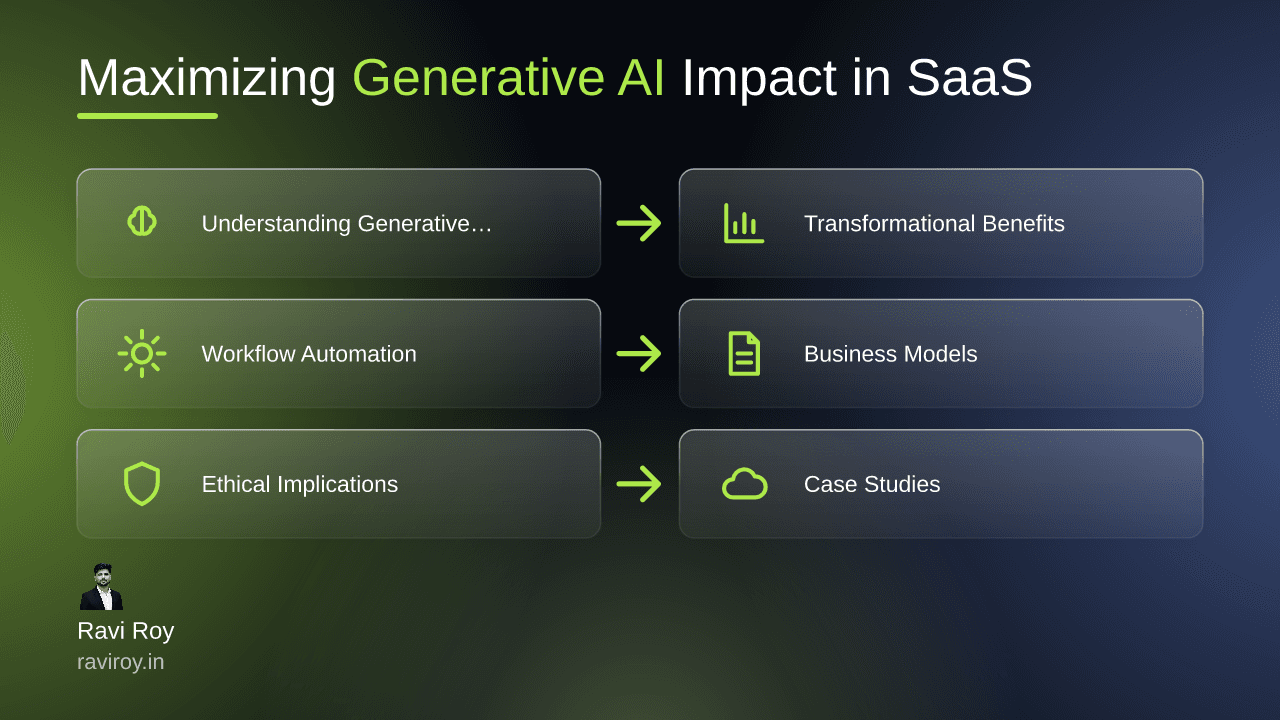
Understanding Generative AI in SaaS
Generative AI is revolutionizing the landscape of Software as a Service (SaaS), providing unprecedented avenues for innovation and efficiency. For companies eager to harness its power, understanding the distinct elements of generative AI is crucial.
What is Generative AI?
Generative AI refers to algorithms that can generate new content, designs, or solutions based on existing data. Utilizing technologies like deep learning and neural networks, generative AI systems can create everything from text and images to music and code. This innovative capability enables SaaS products to deliver tailored experiences that evolve with user needs.
How Generative AI Differs from Traditional AI
While traditional AI focuses primarily on recognizing patterns and making predictions based on historical data, generative AI goes a step further. It not only analyzes data but also generates new outputs, allowing for enhanced creativity and adaptability. For instance, traditional AI might forecast customer behavior, whereas generative AI can produce marketing content or personalized product features that cater to those behaviors. Given the rapid advancements in technology, emerging trends indicate that generative AI applications will continue to expand within the SaaS realm, driving increased competition and user satisfaction.
Transformational Benefits of Generative AI in SaaS
The integration of generative AI into SaaS products offers numerous transformational benefits that propel user engagement and operational efficiency.
Enhancing User Personalization
Generative AI dramatically enhances user personalization by analyzing individual behaviors and preferences in real time. For example, platforms such as Spotify use generative algorithms to curate personalized playlists that adapt to users' music tastes, boosting user satisfaction and engagement by over 30%. By leveraging user data, SaaS platforms can tailor experiences, recommend features, or even modify interfaces to best suit each user.
Boosting Productivity with AI Copilots
AI copilots are transforming team dynamics by automating repetitive tasks and providing real-time insights. Tools like GitHub Copilot utilize generative AI to offer coding suggestions as developers work, significantly reducing coding time. Reports show that teams using AI copilots can achieve productivity increases of nearly 50%, liberating human resources for more strategic initiatives.
The Role of Generative AI in Workflow Automation
Generative AI is not just a tool for enhancing user experiences; it is also key in streamlining organizational workflows.
Autonomous Workflow Solutions
Generative AI can create autonomous workflows that dramatically improve process efficiency and reduce errors. For instance, consider a customer support system integrated with generative AI. It can autonomously generate responses to frequently asked questions, significantly cutting down response times and increasing customer satisfaction. By delegating mundane tasks to AI, companies can focus on higher-value work that contributes to growth.
Implementing AI in Existing SaaS Systems
To incorporate generative AI into legacy systems, follow these steps:
Assess Current Capabilities: Identify the workflows that can be improved through automation.
Choose the Right Tools: Select generative AI tools that complement your existing technology stack.
Pilot Implementation: Start with a small, controlled pilot project to evaluate impacts and adapt as needed.
Scale Up Gradually: Gradually expand the generative AI features across your organization based on feedback from the pilot.
Real-world examples show productivity boosts of up to 40% in organizations that have successfully integrated generative AI into their existing processes.
Redefining SaaS Business and Pricing Models
Generative AI is not only altering efficiencies but also reshaping business and pricing strategies within the SaaS industry.
AI-Driven Pricing Strategies
Dynamic pricing models powered by generative AI can adapt in real time to market conditions and user demand, providing competitive advantages. By analyzing user engagement patterns, SaaS companies can seamlessly adjust pricing structures based on customer personas, ultimately maximizing revenue. Research suggests companies using these advanced pricing strategies experience revenue increases of 20% or more.
Market Adaptation and Competitive Advantage
As businesses globally adapt to changing demands, generative AI provides a necessary edge. Companies that leverage AI capabilities are better positioned to respond quickly to market fluctuations, resulting in agility that surpasses non-AI competitors. This adaptability ensures not just survival but growth in an increasingly competitive SaaS marketplace.
Ethical Implications of Generative AI in SaaS
As with all transformative technologies, the integration of generative AI presents ethical challenges that cannot be overlooked.
User Trust and Data Ethics
The application of generative AI in SaaS raises significant data privacy concerns. Companies must ensure transparency in how user data is utilized for AI-driven personalization. Ethical frameworks like GDPR impose strict guidelines, ensuring that user consent is paramount and data handling practices protect user privacy.
Navigating Regulatory Challenges
Navigating regulatory landscapes is essential for successful generative AI implementation. Organizations need to stay informed about legal challenges and adapt accordingly. By integrating compliance considerations early in their AI strategies, companies can mitigate risks and build consumer trust in their brand.
Real-World Case Studies of Generative AI in Action
A deeper understanding of generative AI’s impact can be gleaned from examining real-world applications in leading SaaS organizations.
Success Stories from Leading SaaS Companies
Companies such as Adobe and Salesforce have embraced generative AI for more personalized user experiences. Adobe's Sensei uses AI to enhance creative tools significantly, empowering users to develop marketing content more efficiently. Salesforce's Einstein offers AI capabilities that provide actionable insights, improving lead conversions by up to 30%.
Learning from Failures in AI Adoption
However, not all implementations have yielded positive results. Several companies have faced challenges when trying to integrate generative AI. For example, an e-commerce platform's attempts to personalize recommendations without sufficient user consent attracted negative attention. This situation underscores the importance of ethical considerations and user trust in partnership with innovative technology.
Conclusion
The potential of generative AI in SaaS product development is enormous. By enhancing personalization, automating workflows, and adapting business models, generative AI offers transformative opportunities for user engagement and operational efficiency.
How have you seen generative AI applied in your SaaS projects, and what impact did it have?
💬 Join the conversation — share your take in the comments and tell us what you’d add.