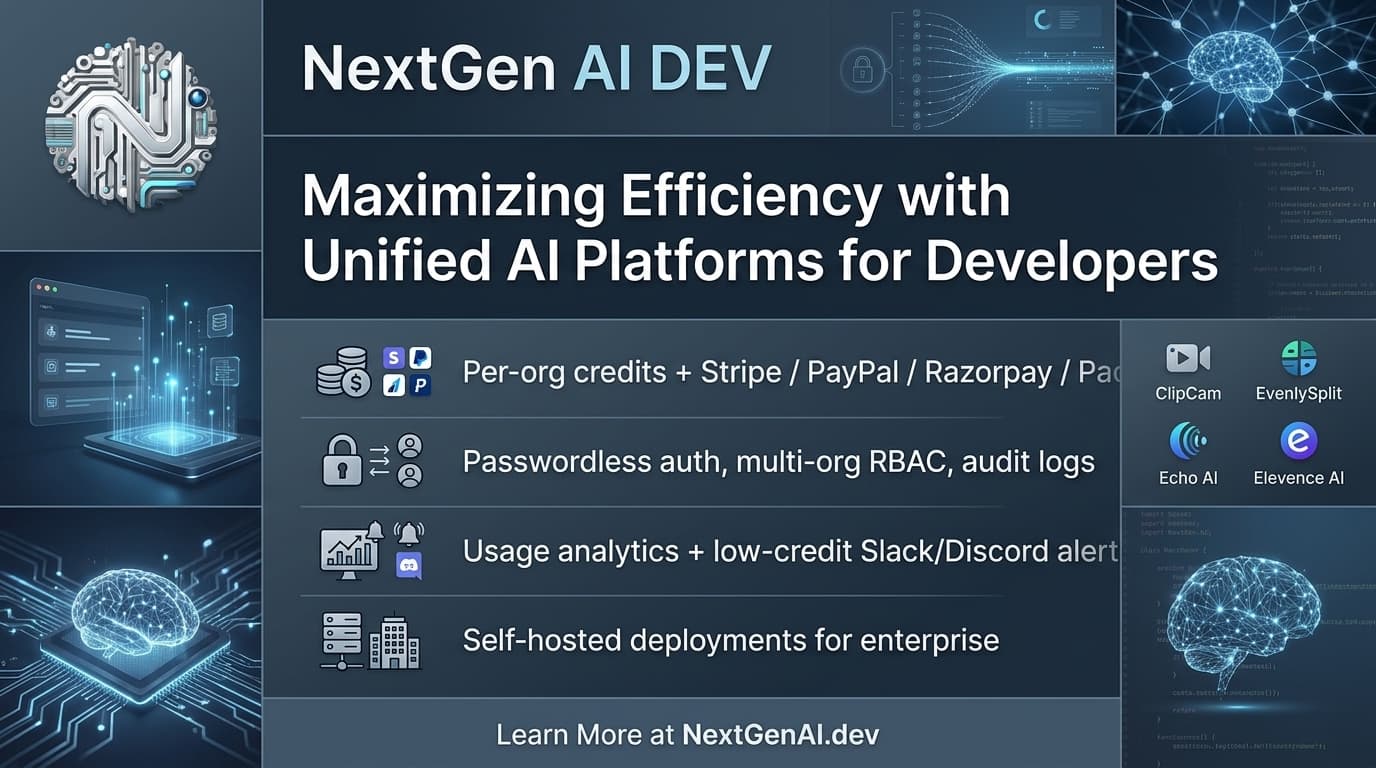
Maximizing Efficiency with Unified AI Platforms for Developers
Imagine transforming your chaotic development process into a streamlined, efficient operation in a matter of weeks. Unified AI platforms for developers offer this potential, revolutionizing how teams collaborate, automate, and innovate. In this post, we’ll delve deep into what unified AI platforms are, their benefits, key features, real-world examples, challenges of adoption, and future trends that you can’t afford to ignore.
What Are Unified AI Platforms?
Unified AI platforms are comprehensive solutions designed to integrate various AI tools into a single framework. Unlike point AI tools that focus on specific tasks, unified platforms provide a cohesive environment that supports all stages of development—from ideation to deployment. Typical components include natural language processing (NLP), machine learning (ML) capabilities, and analytics tools, all designed to work together seamlessly.
The journey of unified AI platforms began in the early days of machine learning, when tools were often limited and specialized. As development complexities increased, so did the need for an integrated approach that could address various aspects of AI development in one place. By merging multiple functionalities, these platforms have evolved significantly, paving the way for more agile and responsive development workflows.
Benefits of Unified AI Platforms for Developers
The adoption of unified AI platforms brings a multitude of advantages specifically beneficial for developers.
Automation of Repetitive Engineering Tasks to Save Time
With automation at its core, a unified AI platform can drastically reduce the time spent on repetitive tasks. Developers can automate processes such as code generation, error detection, and routine maintenance, allowing them to focus on more complex and creative aspects of their projects.
Improved Collaboration Within Teams Through Integrated Tools
Collaboration is vital in any development process, and unified AI platforms enhance team interactions by offering integrated tools. This fosters better communication, clearer understanding of project goals, and ultimately leads to a more unified effort in achieving desired outcomes.
Faster Time to Value with Rapid Deployment and Setup
Unified AI platforms are designed for quick setup and deployment, slashing the time it takes to transition from concept to execution. This faster time to value means that developers can deliver solutions and updates more rapidly, keeping pace with market demands and user expectations.
Key Features of Effective Unified AI Platforms
When evaluating unified AI platforms, certain features stand out as crucial for ensuring effectiveness and positive outcomes.
End-to-End Workflow Integration
End-to-end integration allows for a smooth flow of data and processes across multiple stages of development. By enabling seamless transitions, this feature streamlines workflows, reduces bottlenecks, and enhances productivity, making it easier to track progress and adapt as needed.
Scalability and Interoperability
As development projects grow and evolve, scalability becomes a key consideration. Effective unified AI platforms must accommodate increasing demands without performance dips. Interoperability ensures that the platform can work alongside existing systems, enhancing flexibility in project management.
Embedded Governance and Compliance
In today’s regulatory environment, governance features are critical. Unified AI platforms embedded with compliance tools help ensure that your development efforts adhere to necessary guidelines, mitigating risks associated with data management, privacy, and ethical standards.
Real-World Examples of Unified AI Platforms
To elucidate the practical applications of unified AI platforms, let’s delve into a couple of notable case studies.
Case Study: Platform X
Platform X has enabled numerous development teams to transform their workflows. One success story involves a company that saved over 30% in project time by automating code reviews and quality checks. Developers reported an increase in both morale and output, as they could focus on innovating rather than troubleshooting.
Case Study: Platform Y
Another shining example is Platform Y, known for enhancing team productivity drastically. One user reported that the integration of communication tools within the platform led to a significant reduction in email traffic, allowing for real-time problem-solving and collaboration.
Comparison of Popular Unified AI Platforms
For a thorough evaluation, we can compare the features of popular unified AI platforms. Metrics such as ease of use, customer support, scalability, and specific tool integrations can be crucial when choosing the right platform for your needs.
Challenges and Considerations When Adopting Unified AI Platforms
Despite a wealth of benefits, transitioning to unified AI platforms may come with its challenges.
Integration with Existing Systems
A significant challenge many developers face is integrating new platforms with existing systems. This can often lead to compatibility issues and short-term slowdowns. However, thorough planning and strategic implementation can ease this transition.
Initial Costs and Long-term ROI
Cost considerations are always at the forefront of decision-making. While the initial investment in a unified AI platform may seem steep, understanding the long-term return on investment can shift the perception to a more favorable stance as time savings and efficiency gains become apparent.
Training and Familiarization
Finally, adequate training is often overlooked but is critical for success. Investing in training ensures that all team members are proficient in utilizing the platform, unleashing its full potential and enhancing team productivity.
Future Trends in Unified AI Platforms
As technology continues to evolve, several upcoming trends in unified AI platforms can shape the future of development.
Agent Orchestration
Agent orchestration represents a new frontier in AI development, allowing multiple AI agents to cooperate seamlessly within a unified framework. This enables a higher level of complexity and capability, paving the way for advanced functionalities and smarter applications.
Multimodal Capabilities
Multimodal capabilities—integrating different types of data and user inputs—are set to enhance user experiences drastically. This trend will open new avenues for developers, giving them tools to create solutions that are not only intelligent but also more intuitive and user-friendly.
Maximizing efficiency in your development process is no longer a wishful thought; it's a tangible reality with unified AI platforms.
Explore how unified AI platforms can transform your development process—try integrating one today!