Understanding RAG Systems in AI
The rise of real-time AI applications demands systems that can efficiently retrieve and generate information. This is where Retrieval-Augmented Generation (RAG) systems shine, bridging the gap between conventional large language models (LLMs) and real-world data needs.
What is RAG in AI?
RAG systems combine two powerful processes: retrieval and generation. By leveraging vast repositories of information, these systems ensure that AI models don’t just produce sentences, but instead deliver accurate and contextually relevant responses. RAG enhances the AI's capabilities by allowing it to fetch data from external sources before generating answers, which is crucial for applications that require real-time accuracy (source).
How does RAG work?
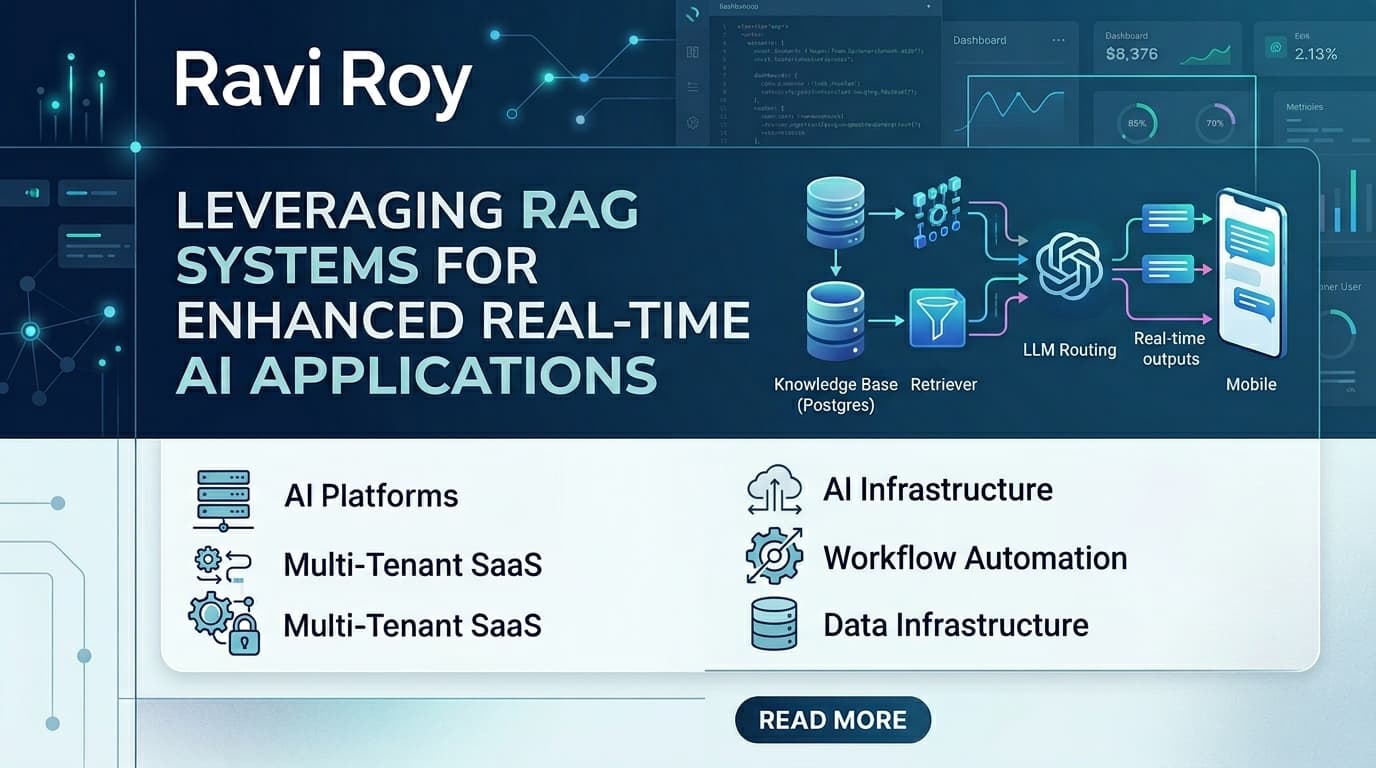
At its core, a RAG system functions by first identifying relevant information through a retrieval mechanism, followed by using that information to produce coherent textual outputs. The retrieval phase typically employs embedding techniques that convert queries into vector-based representations. These vectors are then used to search for relevant documents from a knowledge base, which are subsequently employed by the generative component to construct meaningful responses.
Benefits of RAG systems over traditional LLMs
When compared to traditional LLMs, RAG systems exhibit several key advantages. First, they offer improved efficiency—by pulling in data as needed, RAG minimizes computational overhead. Second, RAG systems enhance accuracy, providing responses grounded in current and user-specific context. This alleviates the issue of outdated knowledge, a common limitation faced by traditional models that rely solely on pre-existing training data.
The Mechanics of RAG Systems
To appreciate the capabilities of RAG systems, one must delve into their components and workflows.
Key components of RAG systems
RAG systems consist of two primary components: a retriever and a generator. The retriever is responsible for sourcing the right information based on user queries, while the generator crafts a coherent response based on the retrieved data. Together, they create a system that prioritizes both relevance and fluency, effectively addressing user queries.
Retrieval and generation workflows
The workflow of RAG systems involves multiple stages. It starts with user input, which is translated into a query embedding. This embedding is then matched against a database to pull the most relevant documents. Once the documents are retrieved, they serve as context for the generator, which formulates a tailored response. This cyclical process ensures that the system continually learns and adapts to new data inputs.
Hybrid approaches combining RAG with fine-tuning
Hybrid models that incorporate fine-tuning provide additional layers of efficiency. By utilizing transfer learning techniques, these models adapt to specific tasks, improving the accuracy and relevance of their outputs. Fine-tuning allows RAG systems to better understand domain-specific language and nuances, thus making them more versatile and effective in specialized applications.
Use Cases for RAG Systems
The applications of RAG systems are broad and impactful, affecting various sectors.
Common applications of RAG in real-time scenarios
In customer support, RAG systems can swiftly retrieve detailed answers to customer inquiries. For content creation, they can pull relevant sources and data points, enhancing the quality of writing while saving time. In healthcare, RAG aids in providing real-time diagnostic suggestions based on comprehensive medical databases.
Industry-specific examples
RAG systems have been effectively implemented in the finance sector to analyze market data and generate actionable insights in real time. Similarly, in academia, they assist researchers in retrieving the latest publications and integrating them seamlessly into their written work.
Advantages in multimodal data support
RAG systems excel in supporting multimodal data. They can seamlessly integrate text, images, and other data types, allowing for enriched responses. For instance, when a user queries about symptoms, a RAG system can pull textual information, reference medical images, and even analyze coded records, providing a holistic response.
Advanced RAG Variants and Innovations
As technology evolves, so too do RAG systems, leading to innovative approaches.
Adaptive RAG systems
Adaptive RAG systems are tailored to learn from user interactions, improving their retrieval and generation capabilities over time. By leveraging real-time feedback, these systems can adjust their algorithms and better align with user preferences and needs.
Multimodal expansion opportunities
The future of RAG includes integrating diverse modalities, such as audio and video data. This expansion would allow RAG systems to cater to even more complex queries and provide richer, more interactive user experiences, which is crucial in fields like education and entertainment.
Future trends in RAG technologies
Emerging trends indicate a shift towards incorporating advanced technologies such as reinforcement learning and multi-agent systems into RAG frameworks. These advancements promise to enhance the decision-making capabilities of RAG models, allowing them to operate more autonomously and accurately respond to challenging queries.
Challenges and Considerations
While RAG systems present numerous benefits, some challenges persist.
Addressing enterprise production concerns
Enterprises may face hurdles when deploying RAG systems, particularly concerning data privacy and integration with existing infrastructures. Businesses must ensure their RAG implementations comply with regulations and mesh seamlessly with current processes to maximize effectiveness.
Long-term machine learning outcomes
Evaluating the long-term impact of RAG systems is vital. Organizations must consider how these systems perform over extended periods and adapt to changing data landscapes. Continuous monitoring and adjustments will be necessary to maintain relevance.
Sustainability and scalability of RAG systems
As organizations scale their RAG systems, sustainability becomes a key focus. Implementing strategies for energy efficiency and resource conservation will ensure that the benefits of RAG systems can be enjoyed without a significant environmental footprint.
Best Practices for Implementing RAG Systems
To effectively integrate RAG systems, a structured approach is essential.
Strategies for integrating RAG into existing AI frameworks
Begin by assessing your current AI infrastructure to identify how RAG can complement existing systems. It may involve aligning data sources, refining retrieval mechanisms, and ensuring clear communication paths between components for optimal performance.
Measuring performance and outcomes
Establish clear metrics and KPIs to evaluate the success of your RAG system. Track accuracy, response time, and user satisfaction to gauge effectiveness. Regular audits will help pinpoint areas for improvement, ensuring the system remains relevant and efficient.
Continuous improvement and updates
RAG systems require regular maintenance to stay current. As new data emerges and user expectations evolve, continuous updates—whether through retraining models or integrating new data sources—will enhance performance. Encourage a culture of innovation where feedback is actively sought and incorporated.
Conclusion
RAG systems represent a significant leap forward in enhancing real-time AI applications. By embracing these technologies, organizations can improve response accuracy and user satisfaction while minimizing the risks associated with outdated information. The potential of RAG is vast, and its ability to transform AI technologies is just beginning to unfold.
Ready to transform your AI applications with RAG systems? Contact us today for a consultation!