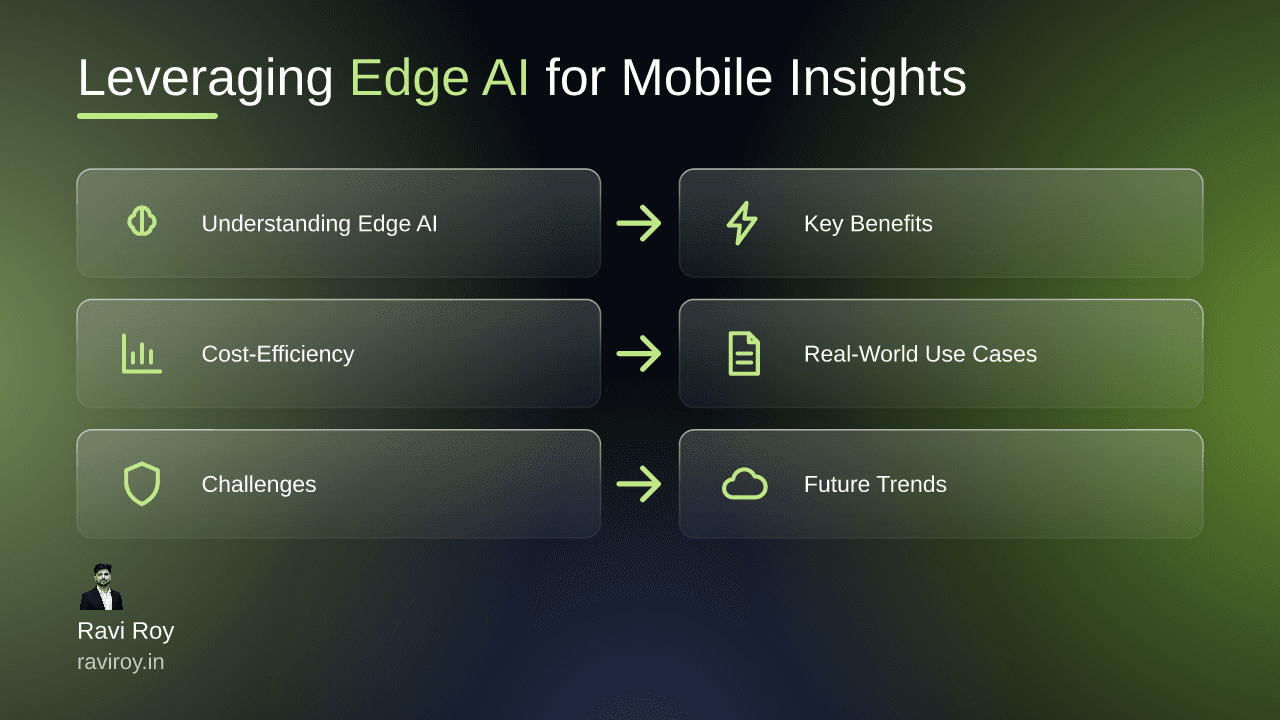
Understanding Edge AI and Its Role in Mobile Applications
The rapid evolution of mobile technology has ushered in a new era driven by real-time insights and intelligent processing. At the forefront of this revolution is Edge AI, a transformative approach that brings data processing closer to the user. By integrating Edge AI into mobile applications, developers can unlock unparalleled benefits that enhance user experiences and operational efficiencies.
What is Edge AI for Mobile Apps?
Edge AI refers to artificial intelligence algorithms processed locally on a mobile device rather than relying on remote cloud servers. This paradigm shift allows applications to function autonomously, responding instantly to user interactions. By leveraging powerful hardware capabilities available in today’s smartphones, Edge AI makes it possible to analyze and act on data in real-time, leading to more efficient and responsive mobile applications.
How Does Edge AI Work in Mobile Applications?
At its core, Edge AI operates by executing machine learning models directly on mobile devices. This is accomplished through a technology stack that includes:
Local Data Processing: Raw data—such as images, sounds, or user inputs—is processed locally, minimizing reliance on cloud infrastructure.
Pre-trained Models: Mobile apps utilize pre-trained models that have been optimized for performance on edge devices, ensuring quick inference times.
Continuous Learning: By collecting user behavior data, Edge AI can also refine its models over time without requiring constant internet connections.
This localized approach results in faster decision-making and a more seamless experience for users.
Key Benefits of Edge AI for Real-Time Mobile Insights
Harnessing Edge AI provides a plethora of advantages, particularly in mobile applications that demand swift responses and strong security measures.
Real-Time Responsiveness and Reduced Latency
One of the standout features of Edge AI is its ability to reduce latency. Since data is processed instantly on the device, mobile applications can deliver immediate feedback without waiting for data uploads to the cloud. For instance, a facial recognition app can identify users in real-time, enhancing security and user engagement.
Enhanced Data Privacy and Security
Processing data locally significantly improves privacy and security. Sensitive information, such as personal health records or biometric data, never leaves the device, minimizing risks associated with data breaches. Edge AI provides a secure environment for applications, reinforcing user trust and compliance with data protection regulations.
Offline Capabilities and Network Resilience
Edge AI enables mobile applications to function efficiently even without a stable internet connection. This capability is game-changing for scenarios like remote health monitoring or outdoor navigation apps, where connectivity can be unreliable. Users can receive vital insights and make informed decisions regardless of their network status.
Cost-Efficiency and Performance Enhancements
The pivot to Edge AI is not only operationally advantageous but also financially beneficial, reshaping how developers approach mobile application infrastructure.
Reduced Bandwidth and Cloud Costs
By executing machine learning tasks locally, Edge AI minimizes the amount of data that needs to be sent to the cloud. This not only reduces bandwidth costs but also mitigates dependence on expansive cloud storage solutions. Companies can significantly lower their operational costs while enhancing application performance.
Advancements in Hardware for Edge Processing
Recent advancements in mobile hardware play a pivotal role in enabling Edge AI. Devices equipped with powerful processors, GPUs, and dedicated neural processing units (NPUs) can run complex AI algorithms efficiently. As these technologies advance, the prospects for Edge AI applications will expand even further, allowing for more sophisticated functionalities on mobile devices.
Real-World Use Cases of Edge AI in Mobile Scenarios
The implementation of Edge AI is not just theoretical; numerous industries are leveraging its capabilities to enhance their mobile applications.
Mobile Healthcare Applications
In the healthcare sector, Edge AI is revolutionizing patient monitoring. Applications like ECG monitors process vital sign data directly on devices, providing immediate alerts for abnormal readings, which can be vital in preventing emergencies.
Smart Retail Solutions
Retailers are embracing Edge AI to enhance customer experiences. For instance, mobile apps can analyze customer behavior in real-time during shopping, offering personalized recommendations as they navigate aisles. This level of engagement fosters customer loyalty and boosts sales.
Augmented Reality Experiences
Augmented reality (AR) applications heavily rely on Edge AI to process data in real-time. For example, AR navigation apps leverage Edge AI to overlay directions on users' screens without latency, making navigation smoother and more intuitive.
Challenges and Considerations When Implementing Edge AI
Despite the advantages, implementing Edge AI also presents challenges that developers must navigate.
Infrastructure and Device Limitations
Not all mobile devices have the necessary capabilities to support advanced Edge AI applications. Developers must consider hardware limitations and ensure compatibility with a wide range of devices to reach the largest audience possible.
Technical Skills Required for Development
Creating efficient Edge AI applications requires a unique set of skills. Developers must be proficient in AI algorithms, understand mobile hardware capabilities, and be capable of optimizing machine learning models for edge processing. This specialized knowledge can pose a barrier to entry for many developers.
Future Trends in Edge AI for Mobile Technologies
As technology continues to evolve, Edge AI will become increasingly crucial in shaping the future of mobile app development.
Predictions for the Evolution of Edge AI
In the coming years, we can expect Edge AI technologies to advance significantly—potentially incorporating even more sophisticated machine learning capabilities. This evolution will further empower mobile applications to deliver hyper-personalized and context-aware experiences.
Implications for Developers and Marketers
For developers and marketers, an understanding of Edge AI's trajectory will be vital. Mobile applications that harness these emerging technologies will likely see increased user engagement and satisfaction. Marketers will need to adapt their strategies to highlight the innovative capabilities offered by Edge AI, positioning their apps as leaders in the field.
Have you implemented Edge AI in your mobile applications? What challenges have you faced, and how did you overcome them? Share your experiences and successes!
💬 Join the conversation — share your take in the comments and tell us what you’d add.