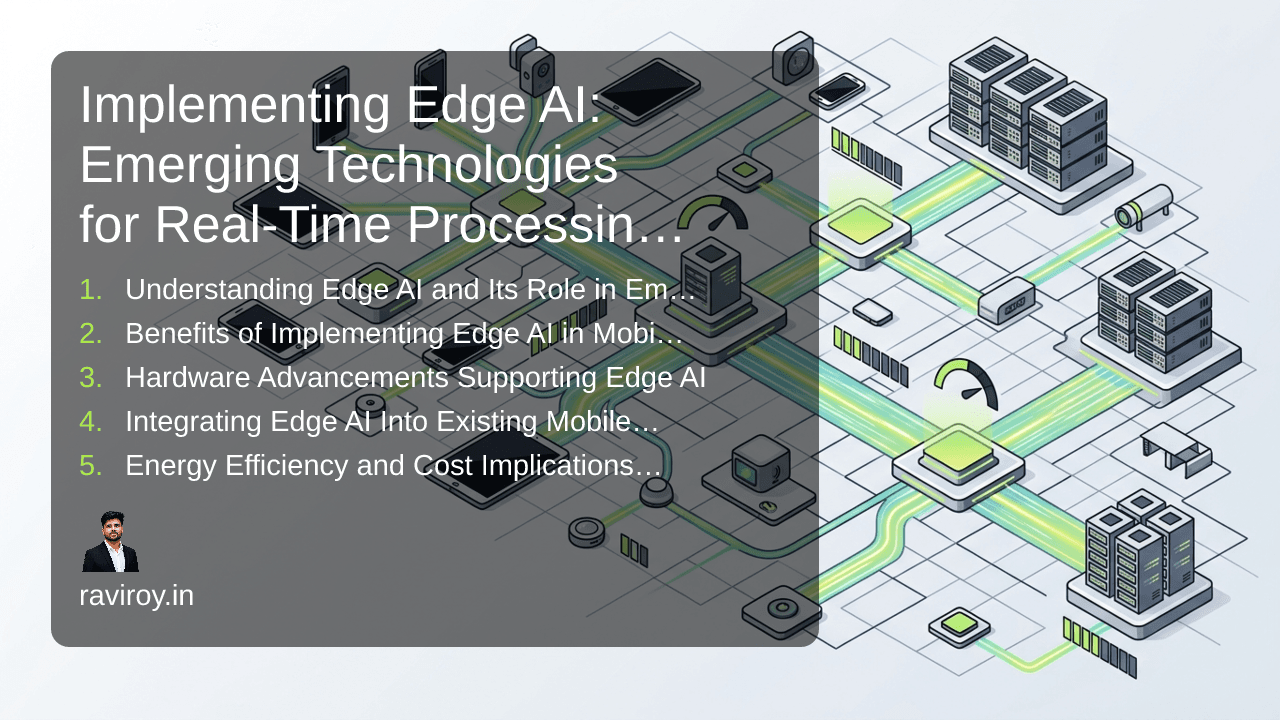
Understanding Edge AI and Its Role in Emerging Technologies
What is Edge AI?
Edge AI refers to the integration of artificial intelligence (AI) algorithms with edge computing infrastructure. This combination enables intelligent data processing and decision-making at the edge—closer to where data is generated, rather than relying on distant cloud servers. By leveraging powerful computing resources directly on devices like smartphones and IoT gadgets, Edge AI can perform tasks that require quick analysis, enhancing user experience and optimizing operations.
How Does Edge AI Enhance Mobile Applications?
The benefits of using Edge AI in mobile app development are profound. From reducing the time it takes to process information to ensuring efficient handling of sensitive user data, the impact is far-reaching. One of the core functionalities of Edge AI is its ability to process data in real-time, making it invaluable for applications that demand immediate feedback, such as augmented reality games or real-time language translation. This capability opens doors to new functionalities that were previously not achievable on mobile devices.
Benefits of Implementing Edge AI in Mobile Applications
Reduced Latency and Enhanced Performance
One of the standout advantages of Edge AI is its ability to significantly reduce latency. By processing data locally on the device, app developers can ensure quicker responses and smoother interactions. For instance, a mobile game character's movements can be rendered immediately based on user input without waiting for a cloud response.
Improved Privacy and Security
Local data processing contributes significantly to user privacy. Sensitive information, such as personal health metrics or financial data, can be analyzed without being transmitted over networks, minimizing the risk of unauthorized access. Mobile banking apps using Edge AI can offer security features that ensure transactions and sensitive data remain on the device.
Offline Capabilities for Developing Regions
Edge AI provides a crucial advantage in areas with unreliable internet connectivity. Applications designed for offline functionality can benefit from local data storage and processing, making them more accessible in developing regions. This capability creates opportunities for widespread app usage in communities that lack consistent internet access.
Hardware Advancements Supporting Edge AI
The Importance of Hardware Acceleration Technologies
To fully realize the potential of Edge AI, developers rely on cutting-edge hardware acceleration technologies. Graphics Processing Units (GPUs) and Tensor Processing Units (TPUs) enhance processing capabilities by managing heavy workloads efficiently, as noted in recent findings on hardware utilization for AI tasks. This infrastructure allows apps to run complex algorithms directly on devices without draining battery life excessively.
Key Components in Edge AI-Enabled Devices
Critical components include not just GPUs and TPUs, but also specialized hardware like Neural Processing Units (NPUs) that handle algorithmic tasks. Furthermore, frameworks like TensorFlow Lite and PyTorch Mobile have emerged to support Edge AI deployment, offering mobile-optimized solutions for running machine learning models efficiently. These tools streamline the development process, allowing faster integration of intelligence into mobile applications.
Integrating Edge AI Into Existing Mobile Applications
Step-by-Step Guide to Integration
Assess Application Requirements: Analyze which functionalities would benefit from Edge AI (e.g., image recognition or instant language translation).
Select Appropriate Frameworks: Choose frameworks that suit your app requirements, such as TensorFlow Lite for Android or Core ML for iOS.
Design the Model: Train your AI model on a robust dataset, then optimize it for mobile deployment using techniques like quantization.
Deploy and Test: Implement the model into your application, focusing on real-time performance and responsiveness.
Iterate Based on Feedback: Collect user feedback to refine features and enhance the AI integration continually.
Common Challenges and Solutions
While integrating Edge AI, developers often encounter challenges such as model compatibility, resource allocation, and ensuring efficient data processing. Common pitfalls include:
Model Overload: Ensure that the AI model is lightweight to prevent performance degradation. Consider simplifying models without losing significant accuracy.
Inconsistent Performance: Regular testing under various network conditions ensures that the app performs reliably both online and offline.
Troubleshooting: Utilize profiling tools to identify bottlenecks in processing and optimize for better real-time performance.
Energy Efficiency and Cost Implications of Edge AI
Energy Consumption Analysis
Edge AI demonstrates considerable energy efficiency compared to traditional cloud processing. When applications execute intelligent computations locally, they minimize data transfer, which is inherently energy-intensive. By optimizing energy use, mobile applications can achieve longer battery life, a critical factor for user satisfaction.
Cost-Benefit Considerations for Developers
While the initial investment in advanced hardware may seem significant, the long-term benefits often outweigh these costs. Edge AI minimizes the need for extensive cloud computing resources, reducing associated fees. A thorough cost analysis should include factors like decrease in data usage charges and improved app efficiency leading to higher user retention.
Case Studies: Edge AI in Action
Industry Applications
Real-world examples demonstrate the impactful nature of Edge AI across industries. For instance, in healthcare, diagnostic applications are beginning to use Edge AI to analyze image data from medical scans directly on devices, providing rapid insights that can substantially influence patient care decisions.
Lessons Learned from Successful Implementations
Many businesses have realized that embracing Edge AI can lead to significant competitive advantages. Key takeaways include focusing on user-centric design, ensuring robust data handling capabilities, and preparing for ongoing learning as technologies evolve.
Future Trends and Considerations in Edge AI
The Rising Demand for Edge AI Solutions
As the world progresses toward more data-driven applications, the demand for Edge AI solutions is expected to surge. Innovations in machine learning will likely enhance the capabilities of Edge AI, allowing for even more complex tasks to be performed directly on user devices.
Contributions to Sustainable Development
Edge AI has great potential to support sustainability practices by reducing reliance on centralized data centers, which consume vast amounts of energy. With thoughtful implementations, Edge AI can foster environmentally-friendly app solutions that align with global sustainability goals. Nevertheless, there remains a knowledge gap that developers must bridge regarding best practices in deploying this technology.
Edge AI represents a transformative shift in mobile app development, enabling enhanced functionality, efficiency, and security. As you embark on your own journey to integrate this emerging technology, consider your unique challenges.
What challenges have you faced when incorporating Edge AI into your mobile apps, and how did you overcome them?
💬 Join the conversation — share your take in the comments and tell us what you’d add.