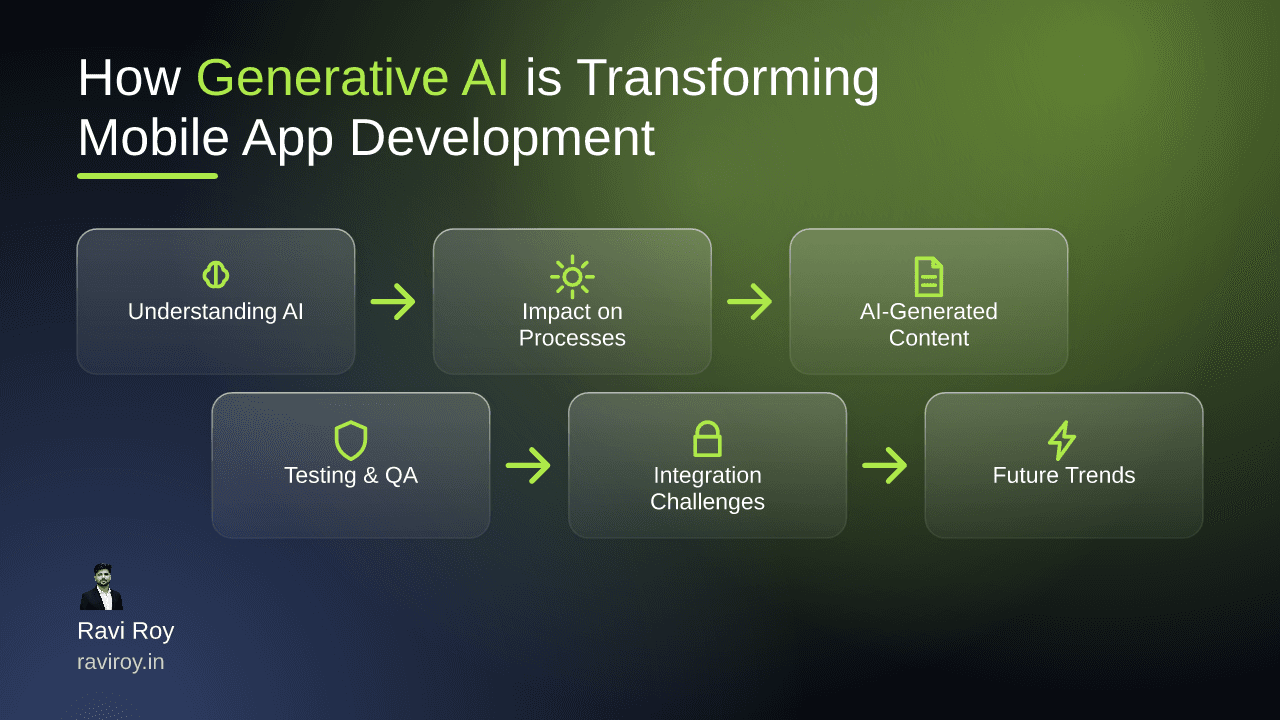
Understanding Generative AI in Mobile App Development
Generative AI is not just a buzzword—it's revolutionizing how we design and develop mobile applications. Imagine building an app that understands your user, personalizes content, and improves itself over time. The core functionalities of generative AI leverage machine learning and neural networks to create not just code, but interactive experiences.
What is Generative AI?
Generative AI refers to algorithms capable of creating new content, ranging from images and text to music and software code. At its core, it utilizes advanced machine learning techniques, particularly deep learning through neural networks, to analyze existing data and generate innovative outputs. For example, models like GPT-4 can produce human-like text, while other frameworks can generate unique graphics from scratch.
Importance in App Development
Why does generative AI matter in mobile app development? The answer is simple: it allows developers to innovate faster. By automating repetitive tasks and offering tailored user experiences, generative AI is reshaping the mobile app landscape. Developers can focus on more strategic aspects of app creation while ensuring that user needs are met efficiently.
The Impact of Generative AI on App Development Processes
Generative AI is a game-changer in mobile app development processes. By streamlining workflows and introducing new levels of personalization, it enhances the overall app experience.
Accelerated Development and Automation
One of the most significant impacts of generative AI is the automation of repetitive tasks, saving both time and resources. Developers previously spent hours on mundane coding tasks, but with AI-driven tools, these can now be automated effectively. For example, tools like OpenAI Codex can generate code snippets based on written specifications, reducing development cycles dramatically. Apps that implemented these solutions often report reducing development time by up to 30%.
Enhancing User Personalization
Hyper-personalization is another exciting feature brought by generative AI. By analyzing user data patterns, AI generates tailored content for individual users, creating highly personalized experiences. For instance, a fitness app might suggest workouts based on a user’s previous activity levels and preferences. However, challenges exist, such as ensuring data privacy while achieving this level of personalization, which must be addressed carefully.
AI-Generated Content and Media in Apps
The creative potential of generative AI in producing dynamic content is practically limitless, allowing apps to become more engaging and interactive.
Creating Dynamic Content
Numerous applications have started utilizing AI for content generation. For example, platforms like Canva use AI to automate design processes, generating graphic content that meets user specifications. Moreover, apps like Replika deploy AI to create personalized conversations, enhancing user engagement. These innovations show how generative AI can make content creation scalable and efficient.
Integration Techniques
Integrating AI-generated content into existing applications involves several techniques, including API integration and cloud-based solutions. For instance, using REST APIs to implement AI-generated images or text allows developers to enrich user experiences without significant changes to existing infrastructure. This makes AI integration simpler and more effective.
Testing and Quality Assurance with Generative AI
Quality assurance is essential in mobile app development, and generative AI provides innovative solutions to enhance this process.
Automated Testing Solutions
AI tools have the power to automate testing processes efficiently. Solutions like Testim leverage machine learning to generate test scripts based on user interactions. This automation accelerates the testing phase, allowing developers to focus on feature improvements and user experience.
Improving App Quality
Enhanced testing strategies, such as predictive analytics, help identify potential bugs before they impact users. For example, an AI-driven quality assurance platform might analyze previous release data to spot patterns in failures, allowing developers to proactively address vulnerabilities. Studies have shown that companies employing AI for testing can reduce testing time by up to 50%, significantly improving overall app quality.
Challenges of Integrating Generative AI into Mobile Apps
While generative AI holds considerable promise, its integration can present challenges that need careful consideration.
Cost and Infrastructure Requirements
Implementing AI solutions often involves high initial costs and significant infrastructure investments. The tools and technologies required for effective AI integration might not be readily accessible to all developers, especially smaller companies with limited resources. This financial barrier can slow down the adoption of generative AI in mobile app development.
Ethical Concerns
Ethical considerations surrounding AI cannot be neglected. Issues such as data privacy, algorithmic bias, and accountability arise when AI systems create content or make autonomous decisions. Developers must establish governance measures to ensure ethical practices in utilizing generative AI, making it crucial to maintain user trust.
Future Trends in Generative AI for Mobile Apps
The future is bright for generative AI in mobile app development as technology continues to evolve.
On-Device AI
A significant trend is the shift towards on-device AI, which allows for enhanced user privacy. Instead of relying on cloud computing, on-device AI processes data locally, making it less vulnerable to breaches. This approach not only protects user data but also improves the app's response time by reducing latency.
Autonomous Applications
The concept of autonomous applications is on the rise, with AI agents becoming increasingly capable of performing tasks independently. These apps can adapt in real-time to user preferences, providing a seamless user experience. Continued advancements in machine learning algorithms will fuel this trend, enhancing the flexibility and capability of mobile applications.
Conclusion
Generative AI is undeniably transforming mobile app development, offering innovative solutions that benefit both developers and users. From automating coding tasks to personalizing user experiences, the promise of AI is vast. Each of these advancements comes with its own set of challenges, but the potential for future developments makes this an exciting time for the tech industry.
What experiences have you had with implementing Generative AI in your mobile apps? Share your thoughts and insights!
💬 Join the conversation — share your take in the comments and tell us what you’d add.