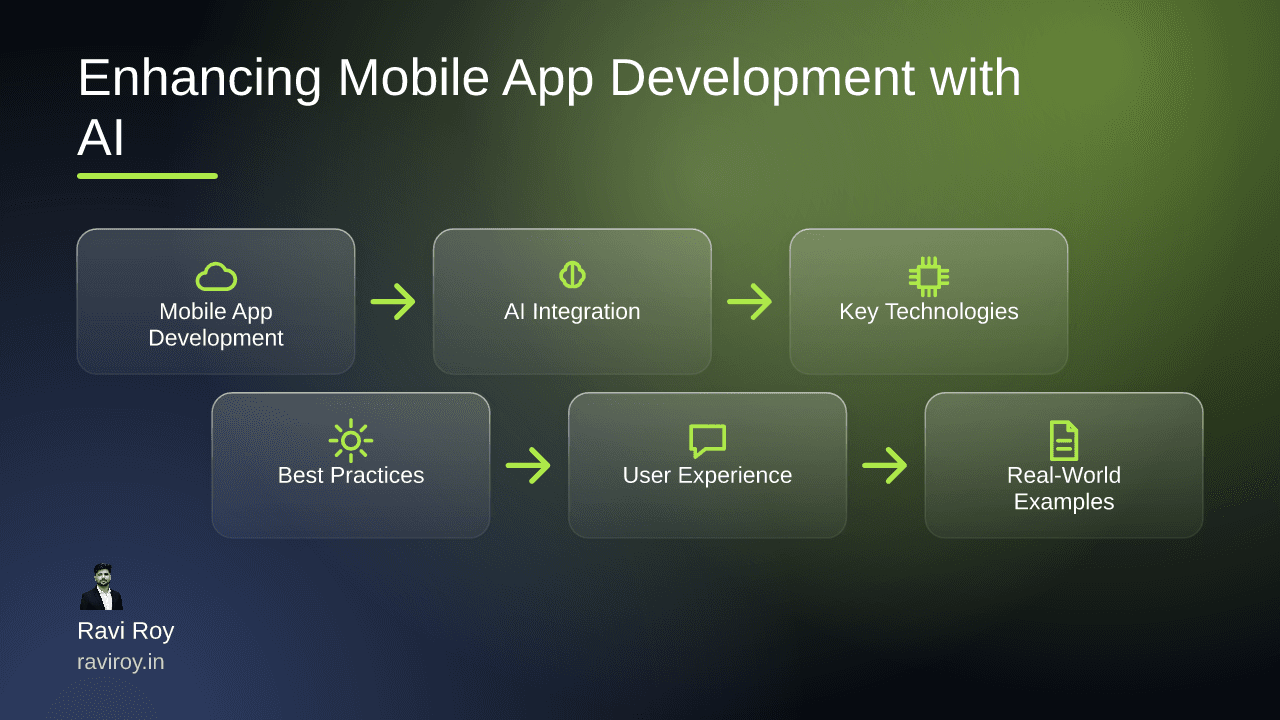
How AI-Driven User Interfaces Enhance Mobile App Development
The integration of AI-driven user interfaces is revolutionizing mobile app development, turning visions into stunning realities. With AI at the helm, developers can create innovative applications that not only attract users but also keep them engaged.
Understanding Mobile App Development and AI Integration
What is Mobile App Development?
Mobile app development is the critical process of creating software applications that run on mobile devices, primarily smartphones and tablets. Today, it serves as a vital touchpoint for businesses aiming to connect with their audience, making it essential in the digital landscape. A well-developed mobile app can significantly enhance user experience, drive user engagement, and boost operational efficiency. In a world where convenience is key, these apps not only facilitate daily activities but also create lasting brand loyalty.
Role of AI in App Development
Artificial Intelligence plays a transformative role in app development, automating processes and enhancing functionality. AI can analyze vast amounts of data to provide insights that help developers refine their apps and optimize performance. Furthermore, AI can automatically manage user interactions, providing a more intuitive experience. For example, machine learning algorithms enable apps to adapt based on user behavior, leading to a customized interface, which significantly improves user satisfaction.
Benefits of Combining AI with Mobile Apps
The amalgamation of AI and mobile app development comes with a plethora of advantages that make apps more appealing and functional:
Improved User Engagement: AI can analyze user behaviors and preferences, allowing for personalized experiences that keep users returning.
Personalization: Tailored content and interfaces based on individual user profiles create a unique experience.
Streamlined Workflows: Automation of repetitive tasks enables developers to focus on complex challenges, enhancing productivity.
Key Technologies in AI-Driven Mobile App Development
Machine Learning
Machine learning (ML) algorithms analyze user interactions to predict future behavior and preferences. For instance, e-commerce apps can recommend products based on past purchases, improving conversion rates. A practical example is Netflix, which continuously learns from user viewing habits to suggest shows and movies they are likely to enjoy.
Natural Language Processing (NLP)
Natural Language Processing empowers mobile apps to understand and respond to human language. It underpins chatbots and voice-controlled applications, enhancing user interaction. Apps like Siri and Google Assistant utilize NLP to provide users with voice commands, making them more intuitive and accessible.
Computer Vision
Computer vision technology is at the forefront of interfaces that use augmented reality (AR) and image recognition. By integrating this technology, apps can offer unique experiences, such as those seen in apps like Snapchat that use facial filters. With computer vision, mobile apps can understand and interact with the physical world, creating engaging user experiences.
Best Practices for Designing Responsive Mobile Apps
User-Centered Design Principles
Crafting intuitive interfaces starts with understanding user needs. Employing user-centered design ensures that app features align with user behavior, thereby enhancing usability. Techniques like wireframing enable developers to visualize app navigation and user flow before diving into full development.
Implementing Responsive Layouts
Responsive layouts are crucial in accommodating various screen sizes and orientations. Incorporating flexible grids allows developers to create layouts that adapt to any device, ensuring a seamless user experience. CSS frameworks like Bootstrap can simplify this process, offering ready-made classes for responsiveness.
Testing for Multiple Devices
Testing is an essential step in mobile app development. Ensuring that an app works smoothly across various devices requires meticulous testing. Platforms like BrowserStack provide tools to test on real mobile devices, thereby addressing potential issues beforehand.
Leveraging AI for Enhanced User Experience
Personalization Strategies
AI-powered personalization allows for dynamic content that enhances user satisfaction. By tracking user behavior and preferences, apps can present tailored experiences, such as customized recommendations in streaming or shopping apps. This strategic approach keeps users engaged and results in higher retention rates.
Predictive Analytics
Predictive analytics uses historical data to forecast future outcomes. In mobile applications, this can result in improved decision-making by presenting users with relevant content and recommendations. For instance, Spotify employs predictive analytics to curate playlists based on user listening trends.
Interactive Features
Incorporating interactive features, such as chatbots or gamification elements, creates engaging user journeys. Chatbots serve as 24/7 customer support, answering queries and guiding users through processes. Gamification taps into user engagement by offering rewards and challenges, encouraging prolonged app usage.
Real-World Examples of AI in Mobile Apps
Case Study: AI in E-Commerce
Consider a leading e-commerce platform that leverages AI to enhance the shopping experience. By using machine learning, it personalizes product recommendations and optimizes pricing based on demand. The real-time analytics also enable the app to forecast inventory needs effectively, minimizing losses.
Case Study: AI in Health and Wellness
Health and wellness apps exhibit innovative uses of AI, including wearable integrations that provide personalized fitness plans. For instance, an app can analyze heart rate data and activity levels, offering tailored recommendations for workouts or dietary changes.
Lessons Learned from Successful Apps
Successful applications of AI highlight the importance of continual adaptation and user feedback. A popular social media platform constantly updates its algorithms and features based on user interactions, illustrating the significance of responsiveness in user engagement.
Challenges and Solutions in Mobile App Development with AI
Data Privacy Concerns
With the rise of AI comes the responsibility to address data privacy. Developers must prioritize data security, implementing transparent policies and robust encryption methods to safeguard user information. Mandating clear consent for data collection is essential for building trust.
Technical Limitations
Integrating AI into mobile apps can present technical hurdles, from limited processing power to connectivity issues. Developers may need to optimize algorithms for mobile environments and explore cloud solutions that can offload processing tasks while ensuring seamless user experiences.
User Adoption Challenges
User reluctance remains a challenge when introducing AI technologies. Educating users on the benefits of AI can help mitigate these concerns. Providing intuitive controls and seamless integrations also contributes to smoother adoption, as users become familiar with the AI features over time.
The Future of Mobile App Development with AI
Emerging Trends
Emerging technologies like automation tools and low-code platforms are influencing mobile app development. These tools enable developers to create sophisticated applications rapidly, democratizing development for those without extensive coding expertise.
The Role of AI in App Maintenance
AI can streamline the maintenance of mobile applications by automating updates and monitoring performance. Continuous learning algorithms can predict issues and suggest optimizations, essentially leading to a self-sustaining app environment.
Predictions for the Next Decade
Looking ahead, AI is poised to redefine the mobile app ecosystem. The integration of more advanced AI tools, such as augmented reality, could lead to real-time data interactions. Apps that learn and evolve with user engagement will become the norm, paving the way for endless possibilities in enhancing mobile app experiences.
What innovative ways have you integrated AI into your mobile app projects? Share your experiences!
💬 Join the conversation — share your take in the comments and tell us what you’d add.