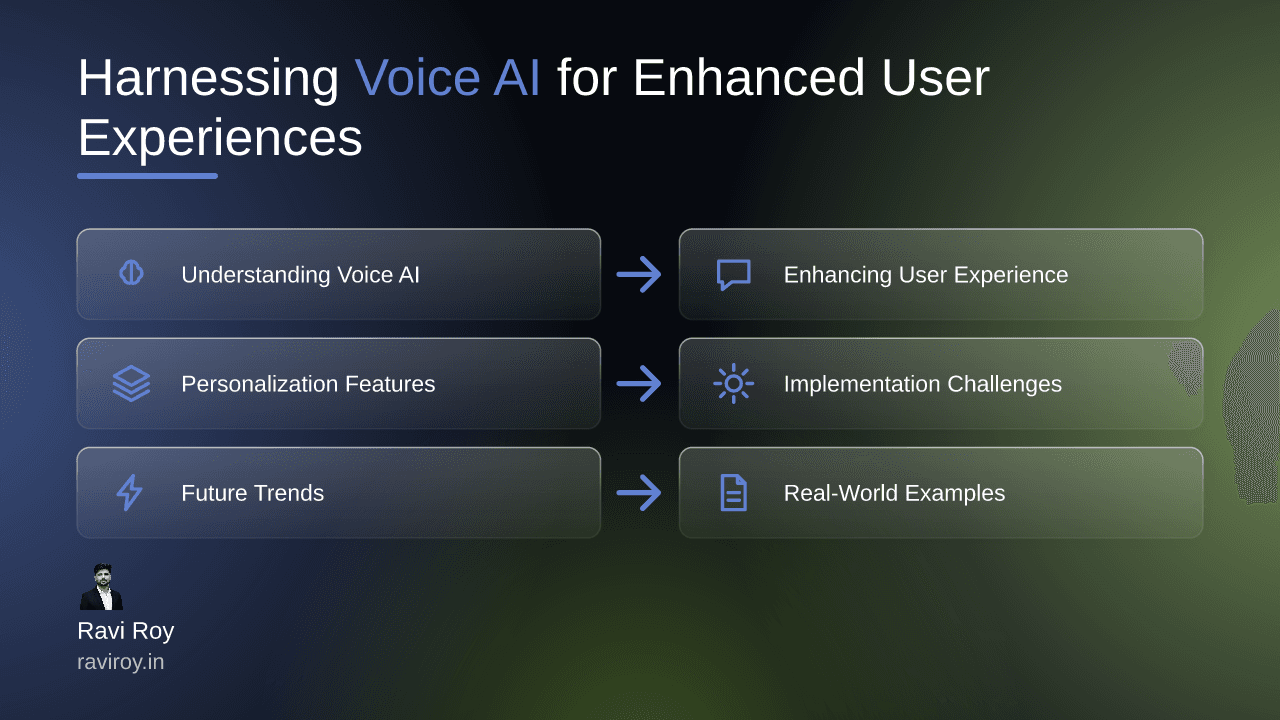
Understanding Voice AI and Its Applications
From Siri to Alexa, voice AI is reshaping the way we interact with technology. As users increasingly demand more intuitive experiences, understanding how voice AI works and its potential applications can unlock immense possibilities for app developers.
What is Voice AI?
Voice AI refers to technologies that enable machines to understand and respond to spoken language. At its core, it harnesses natural language processing (NLP), speech recognition, and machine learning to engage users through voice commands. By converting voice into text, analyzing it, and generating appropriate audio responses, Voice AI transforms how users navigate apps.
Applications of Voice AI in Apps
The applications of voice AI extend well beyond simple tasks. In customer service, voice AI can handle inquiries, providing immediate assistance without human intervention. Smart home controls allow users to manage devices simply by speaking. Likewise, personal assistant features integrate seamlessly into daily routines, ensuring a cohesive user experience across multiple applications. According to research, leveraging these technologies can reduce response times and improve customer satisfaction (source).
How Voice AI Enhances User Experience
Harnessing voice AI is more than a novelty; it fundamentally alters the user experience by creating an environment of intuitive interaction.
Natural Interaction
Voice AI facilitates natural conversations. Instead of navigating through cumbersome menus or clicking buttons, users can communicate in their own words, making technology feel more approachable. Imagine telling your app, "Play my workout playlist," instead of locating it manually. This capability encourages deeper engagement and streamlines the user journey.
Speech Recognition Accuracy
The effectiveness of voice AI largely hinges on its speech recognition accuracy. Innovations in this field mean fewer misunderstandings when users issue commands. High accuracy rates not only prevent frustration but also build trust in the technology. Users are more likely to engage with apps that understand them, thus enhancing overall satisfaction with the app's functionality.
Personalization Features in Voice AI
One size doesn’t fit all when it comes to user experience, and voice AI excels in customization.
Customizable Interactions
Voice AI allows users to personalize their interactions. For instance, users can set preferred voices, adjust speech speed, or even modify response styles to match their tones. This level of customization creates a unique experience that resonates with individual user preferences and enhances engagement.
User Preferences
When apps tailor responses based on user behavior and preferences, it fosters a sense of connection. If a user consistently asks for weather updates at a certain time, voice AI can proactively deliver this information without prompting. Personalized interactions are not only relevant but can make users feel valued, ensuring that they return to the app time and time again (source).
Challenges in Voice AI Implementation
However, the journey to harnessing voice AI isn’t without hurdles.
Privacy Concerns
One of the most pressing issues in voice AI is privacy. Users are often wary of how their voice data is collected, stored, and used. To address these concerns, developers must prioritize transparency and security protocols, ensuring users feel safe when interacting with voice-enabled apps.
Multilingual Support
As voice AI gains traction globally, multilingual support becomes increasingly important. Users expect their apps to understand and respond in various languages. This capability isn’t just beneficial for usability; it's essential for enhancing the user experience in diverse markets. Many current systems struggle with recognizing accents and dialects, making it vital for developers to integrate robust multilingual solutions (source).
Future Trends in Voice AI
The future of voice AI looks promising as emerging trends continue to drive advancements.
Edge AI for Real-Time Processing
Edge AI is revolutionizing how we perceive voice interactivity. By processing data locally on devices instead of relying solely on cloud computing, responses can be generated in real-time. This leads to faster interactions and less reliance on internet connectivity, making voice AI applications more efficient and accessible.
Integration with IoT
As more Internet of Things (IoT) devices populate our homes and lives, the integration of voice AI with these products will enhance user experiences significantly. Imagine controlling your thermostat or security system simply by asking your voice assistant. This seamless connectivity not only enriches user interactions but also establishes a cohesive ecosystem where voice commands reign supreme.
Real-World Examples of Voice AI in Action
Examining successful implementations provides valuable insights into the effectiveness of voice AI.
Case Studies
Take the case of a leading retail app that integrated voice AI to streamline customer service. By deploying voice-driven FAQs and helping users find products quickly, they reported a 30% reduction in service calls, significantly enhancing customer satisfaction.
User Feedback
User reviews reveal the significance of voice interactions in app experiences. One user reported, "Using voice commands has made my daily tasks so much easier. I don’t think I could go back to typing everything out!" These testimonials underscore the positive impact of voice AI on user engagement and satisfaction.
Voice AI is more than a technological advancement; it signifies a paradigm shift in how users interact with applications. The potential for personalized, efficient, and natural experiences is vast, yet developers must navigate the associated challenges to fully harness its power.
How have you seen Voice AI improve user experiences in apps you've used? Share your stories!
💬 Join the conversation — share your take in the comments and tell us what you’d add.