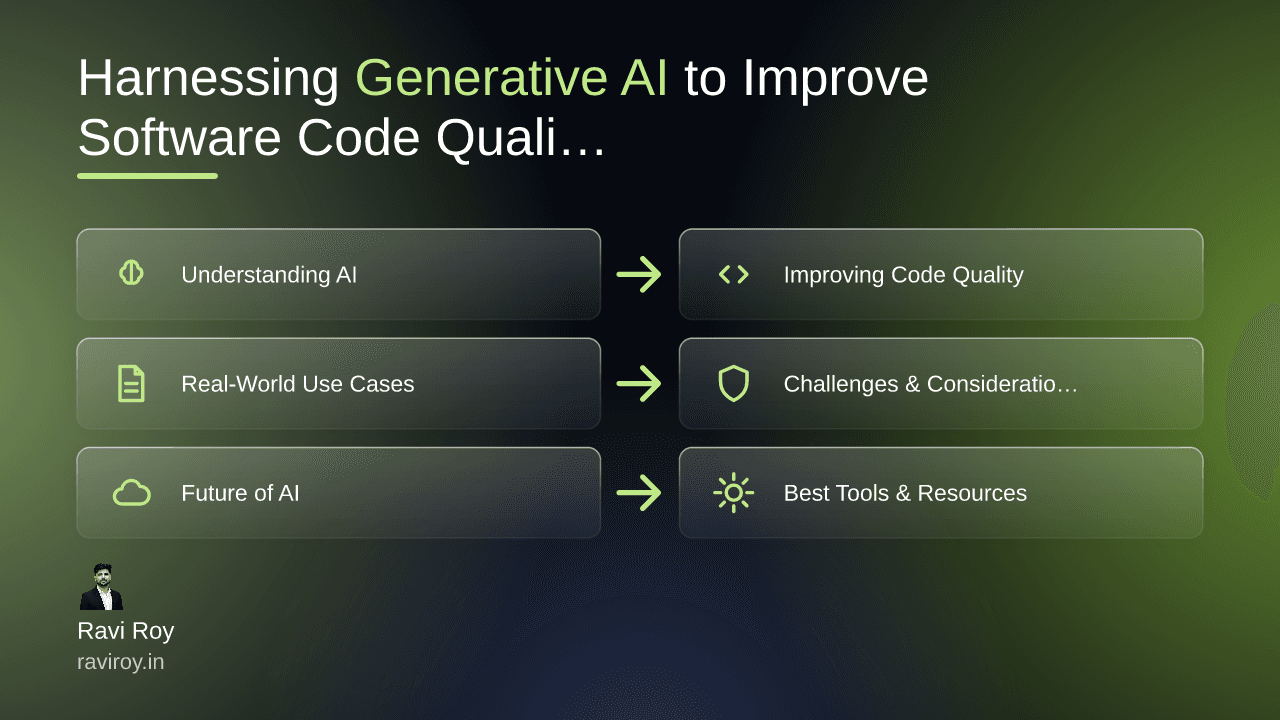
Harnessing Generative AI to Improve Software Code Quality Today
In the fast-evolving realm of software development, the quality of code often dictates the success of a project. Generative AI emerges as a game-changing ally, empowering developers to enhance code quality more efficiently than ever before. This powerful technology not only automates mundane tasks but also provides invaluable insights that can elevate your coding standards.
Understanding Generative AI and Its Relevance in Software Development
What is Generative AI?
Generative AI refers to a subset of artificial intelligence that focuses on creating new content based on existing data. By utilizing machine learning algorithms, particularly deep learning, generative AI can produce code snippets, applications, and even entire systems that fulfill specified requirements. The core principles involve inputting data, training a model, and allowing the system to generate new outputs based on patterns learned during training.
Key Applications in Software Development
Generative AI shines in several areas within software development:
Automating Repetitive Coding Tasks: Routine tasks such as code formatting, commenting, and boilerplate generation can eat up a developer's time. With AI, these tasks can be automated, allowing for greater focus on complex problem-solving.
Enhancing Code Quality through AI-Driven Insights: AI can analyze extensive codebases, identify best practices, and provide recommendations that can lead to significant improvements in code quality. For instance, insights derived from AI can flag potential inefficiencies or areas of improvement that a human coder might overlook.
How Generative AI Can Improve Software Code Quality
Automated Code Review with AI Tools
An automated code review is essential for maintaining high standards of quality in increasingly complex software. Some of the leading tools that leverage generative AI include:
DeepCode: Analyzes your code comprehensively and suggests improvements based on past successful patterns.
Codacy: Provides real-time feedback while you code, ensuring adherence to best practices and standards.
SonarQube: Delivers deep static analysis to detect bugs, vulnerabilities, and code smells in your codebase.
These tools streamline the review process and enable developers to catch issues before they escalate.
AI-Driven Bug Detection and Fixing
One of the most significant benefits of integrating AI into the coding workflow is its capability to identify and rectify bugs more effectively than traditional methods.
For example, Google's bug-fixing AI can review large codebases and pinpoint anomalies much faster than manual inspection, saving developers valuable time. Moreover, once a bug is identified, generative AI can recommend or even implement fixes autonomously, minimizing human error. This process reduces the likelihood of bugs making it to production, ultimately enhancing overall software quality.
Performance Optimization through AI
Beyond bug detection, generative AI can optimize performance metrics across various software applications. AI tools can analyze usage patterns and system efficiency, offering insights on how to streamline resource consumption. For example, AI-driven load testing tools can simulate user interactions at scale, helping developers identify bottlenecks and optimize performance accordingly.
Real-World Use Cases of Generative AI in Code Quality Improvement
Automated Code Refactoring
Organizations such as Microsoft and IBM have successfully implemented generative AI for automated code refactoring. They leverage AI algorithms to scan and improve legacy codebases, which not only enhances maintainability but also boosts overall performance. By integrating AI in this manner, these companies have reported up to a 30% reduction in technical debt.
Security Enhancements via AI Detection
Security is paramount in software development, and generative AI can significantly bolster protective measures. Many firms utilize AI-driven security analysis tools to identify vulnerabilities before they can be exploited. By implementing such tools, businesses can prevent data breaches, secure user information, and protect their reputation.
Challenges and Considerations When Implementing Generative AI
Common Challenges in AI Integration
Despite its advantages, the integration of generative AI into software development isn’t without challenges. Common hurdles include:
Resistance to Change: Many developers may be reluctant to adopt new technologies, fearing it may replace their roles rather than augment their capabilities.
Data Quality and Quantity: Generative AI relies heavily on data for training. Poor quality datasets can yield inaccurate models that lead to more problems than solutions.
Developer Skill Set Impacts
As generative AI tools become more prevalent, there is an increasing need for developers to upskill. Familiarity with AI technologies, machine learning concepts, and data analysis is crucial. Companies may need to invest in training programs to help their teams transition smoothly and maintain competitiveness.
The Future of Generative AI in Software Development
Trends to Watch
The trajectory of generative AI in software development points toward more advanced predictive analytics, more refined natural language processing capabilities, and the ability to create increasingly complex code autonomously. These advancements will likely result in more efficient development cycles and further elevate code quality.
Ethical Considerations
As with any emerging technology, ethical implications must be considered. The use of AI in software creation raises questions about accountability and ownership. Developers and companies should establish governance frameworks to navigate these challenges responsibly.
Best Tools and Resources for Utilizing Generative AI
Top Tools for AI-Driven Code Review
Here are leading tools that specialize in ensuring code quality through AI:
GitHub Copilot: A popular choice for many developers, GitHub Copilot assists in real-time code completion and suggestions, enhancing productivity significantly.
CodeGuru: Amazon's CodeGuru leverages machine learning to provide code reviews, helping developers catch issues early and improve overall code quality.
Resources for Learning and Implementation
To ensure your team effectively incorporates generative AI, consider the following resources:
Coursera and Udemy courses on AI and machine learning: Many offer specialized courses for developers looking to engage with AI technologies in their work.
Developer forums like Stack Overflow: Engaging with community discussions can provide real-world insights and experiences that facilitate learning.
As you explore how generative AI can transform your approach to software development, we invite you to share your insights. What has been your experience with AI tools in code development, and how have they affected your workflow or project outcomes?
💬 Join the conversation — share your take in the comments and tell us what you’d add.