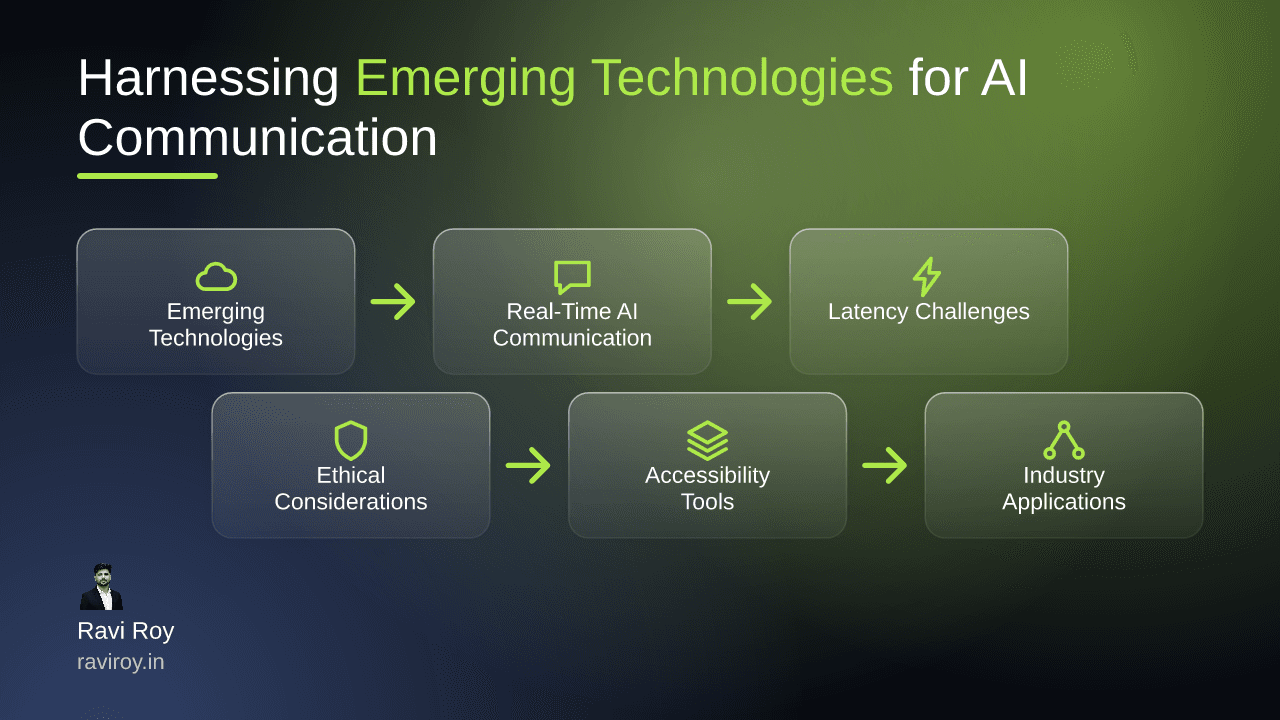
The Role of Emerging Technologies in Real-Time Communication
Picture a world where conversations happen seamlessly, regardless of distance, all powered by cutting-edge technology. This is the realm of real-time communication in AI development, a game-changer fueling innovations across various sectors. Real-time communication involves instant data exchange that allows AI systems to operate effectively, enabling applications that respond in milliseconds to user inquiries or system requirements.
Emerging technologies are vital in this landscape, as they enhance communication efficiency, making interactions smoother and more effective. Trends such as 5G, blockchain, and sophisticated AI translation tools are shaping the ways we communicate, setting new standards for responsiveness and security in AI solutions.
Technologies Driving Real-Time AI Communication
5G and Beyond: The Future of Connectivity
The introduction of 5G technology marks a monumental leap in connectivity that is crucial for real-time AI communication. With significantly lower latency compared to fourth-generation (4G) networks, 5G supports high-speed data transfer and seamless interactions across AI applications. This enhancement is not merely theoretical but has already been implemented in various sectors, from autonomous vehicles to smart cities, showcasing how 5G can facilitate quick, uninterrupted communication.
Blockchain for Secure Communication
Security has always been a paramount concern for AI systems. Blockchain technology emerges as a robust solution, offering a decentralized method for secure communication. By encrypting data and ensuring that information can't be tampered with, blockchain creates a trustworthy environment where AI systems can share data without fear of breaches or misinformation. For instance, using blockchain in telemedicine can ensure that patient data remains confidential while facilitating real-time interactions between healthcare providers and patients.
AI-Driven Language Translation
Imagine communicating effortlessly across language barriers. AI-driven language translation tools are now a reality, significantly impacting international collaboration. Tools like Google Translate and DeepL employ machine learning algorithms to provide instantaneous translations, enabling real-time conversations. This not only enhances user experience but also democratizes information access, fostering greater inclusivity.
Overcoming Latency Challenges in AI Communication
Strategies to Mitigate Latency
Latency can often be the Achilles' heel of real-time communication. Effective strategies to mitigate latency include employing faster internet connections, optimizing pathways for data transmission, and utilizing efficient data protocols. For example, HTTP/3, which utilizes QUIC instead of traditional TCP, can be a significant improvement for reducing delays in data exchange.
Edge Computing Solutions
Edge computing is another powerful approach. By processing data closer to where it’s generated rather than relying on a central cloud, this technology can dramatically reduce latency. For instance, in IoT applications, edge devices can rapidly analyze local data and respond almost instantaneously, leading to improved interactions in various real-time communication settings.
Ethical Considerations in Real-Time AI Communication
Ensuring Privacy and Security
The rapid deployment of AI in real-time communication raises pressing ethical considerations surrounding privacy and security. As AI technologies evolve, it's critical to implement robust measures to protect user data. For instance, employing differential privacy techniques can help in anonymizing data even as it's shared, ensuring users' identities remain protected.
Mitigating AI Model Biases
AI systems often mirror societal biases embedded in the training data. Therefore, assessing and mitigating biases in AI communication models is essential. Techniques such as adversarial training, where AI models are tested against deliberate attempts to exploit biases, can help create more balanced systems that treat all users fairly.
Ethical Frameworks for AI Deployment
To navigate these challenges, existing ethical frameworks can provide guidance on responsible AI deployment. Frameworks established by organizations like the IEEE offer standardized principles that prioritize ethical considerations in tech development and deployment, which is especially important in sensitive areas like healthcare and education.
Enhancing Accessibility in AI Communication Tools
AI tools are increasingly being developed with accessibility in mind, ensuring diverse populations are included in the communication landscape. Innovations like real-time transcription services for the hearing-impaired or text-to-speech technologies for those with reading difficulties are striking examples.
Bridging Gaps in Communication for Individuals with Disabilities
Emerging technologies like voice-activated assistants not only enhance convenience but actively bridge gaps for individuals with disabilities, making day-to-day communication more straightforward and efficient. This democratization of information ensures that everyone has a voice in our digitally-driven society.
Case Studies Showcasing Application in Various Industries
Numerous case studies demonstrate the impact of these AI tools across different sectors. For instance, a major tech company integrated voice recognition software in their customer support, improving response times and user satisfaction among customers with disabilities.
Practical Applications and Industry Case Studies
Healthcare Innovations
AI is revolutionizing real-time communication in healthcare. For instance, telehealth platforms now utilize AI to facilitate consultations between patients and doctors, providing real-time data that enhances diagnosis and treatment recommendations. A notable case is the rise of chatbots in managing patient queries instantly, effectively streamlining operations in healthcare settings.
Corporate Communication Solutions
In the corporate sector, tools like Slack and Microsoft Teams leverage AI features to enhance team collaboration. AI can summarize conversations, manage projects, and provide immediate notifications, ensuring that communication flows effortlessly, even across long distances.
Education and Training Tools
Educational institutions are also harnessing AI to enhance training and interaction. Platforms such as Coursera now utilize AI to facilitate real-time feedback and support, allowing students to receive immediate responses to their inquiries or assignments. By doing so, they create a more interactive and engaging learning experience.
The Future of Real-Time Communication in AI
Looking forward, we can predict substantial future trends in real-time AI communication. With enhancements in virtual reality (VR) and augmented reality (AR), the potential for immersive communication experiences is greater than ever. Think of virtual classrooms where students from around the globe interact as if they were in the same room.
Moreover, the societal impact of these technologies will be profound, as they will likely reshape social dynamics, create new job categories, and alter how businesses operate. User experiences will continue to evolve, driven by feedback and technological advancements, leading to even more intuitive interactions with AI systems.
Conclusion
As we continue to explore these groundbreaking technologies, the question remains: What emerging technology do you believe will have the most significant impact on real-time communication within AI development, and why?
💬 Join the conversation — share your take in the comments and tell us what you’d add.