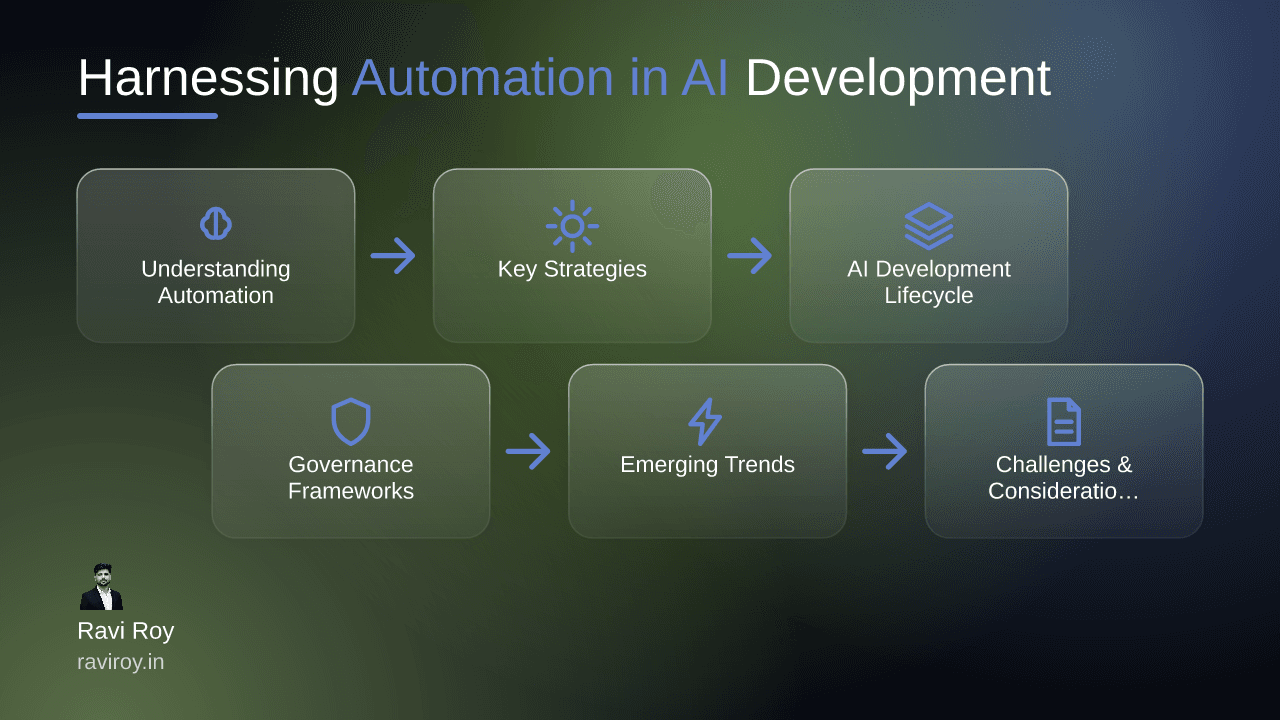
Harnessing Automation in AI Development: Strategies for Efficiency
The integration of automation in AI development isn’t just a trend—it’s a revolution. Organizations that harness this power can significantly boost their efficiency, reducing workloads and improving accuracy across various stages of their projects.
Understanding Automation in AI Development
What Is Automation in AI?
Automation in AI development refers to the use of technology to perform tasks that would typically require human intervention. This can range from data collection and processing to model training and evaluation. By implementing automation, developers can streamline workflows, minimize manual errors, and accelerate time-to-market for AI solutions.
Benefits of Automation
The benefits of automating AI processes are compelling. Speed is one of the most notable advantages. Automated systems can perform repetitive tasks quickly and consistently, leading to faster project completion. Accuracy is another critical factor; automation reduces the likelihood of human error, ensuring that processes are carried out as intended. Lastly, automation can significantly lower costs by reducing the need for extensive human resources on simple, mundane tasks.
Within AI development, specific tasks ripe for automation include:
Data Preparation: Automating data cleaning and preprocessing can save substantial time.
Model Training: Automated pipelines can carry out iterations on models efficiently.
Testing and Deployment: Continuous integration/continuous deployment (CI/CD) practices enable rapid iterations.
Key Strategies for Implementing Automation
MLOps: The Backbone of Automation
Machine Learning Operations (MLOps) is a methodology that integrates machine learning lifecycle management with automation. It facilitates the automation of key workflows—such as model monitoring, retraining, and deployment—fostering a seamless environment where both data scientists and operational teams can collaborate effectively.
Step-by-Step Approach to MLOps Integration:
Define Objectives: Clearly articulate the goals of your automation.
Select Tools: Choose appropriate MLOps tools (e.g., MLflow, Kubeflow).
Establish Pipelines: Build automated pipelines for model training and evaluation.
Integrate Continuous Testing: Automate the testing of models as part of deployment.
Monitor and Refine: Continuously monitor model performance and refine automation strategies accordingly.
Hyper-Automation and AI-Driven Pipelines
Hyper-automation takes automation a step further by integrating advanced technologies like AI and machine learning into processes. This approach can drastically speed up AI development cycles by automating not just isolated tasks but entire workflows from start to finish. Implementing AI-driven pipelines allows for a more dynamic and responsive AI model lifecycle.
Creating AI-Driven Pipelines:
Identify Bottlenecks: Analyze existing workflows to find inefficiencies.
Deploy Automation Frameworks: Leverage tools such as Apache Airflow for orchestrating complex workflows.
Utilize AI for Decision-Making: Leverage AI algorithms to optimize resource allocation automatically.
Evaluate and Iterate: Regularly assess pipeline effectiveness and make data-driven adjustments.
Automation Throughout the AI Development Lifecycle
Identifying Suitable Phases for Automation
Not all stages in the AI lifecycle are equally amenable to automation, but several key phases often present significant opportunities:
Data Collection: Automating data sourcing from various APIs ensures fresh data availability.
Model Training: Automated hyperparameter tuning can lead to more refined models.
Evaluation: Continuous evaluation frameworks can automate assessments and reports for model performance.
Tools like TensorFlow and PyTorch provide functionalities that increase the automation of these phases.
Integration with Legacy Systems
Integrating automation with existing legacy systems presents both challenges and opportunities. Often, organizations face difficulties due to outdated technologies that don’t readily support new automation practices.
Solutions for Integration:
API Development: Build APIs to bridge gaps between new and old systems.
Incremental Changes: Slowly introduce automation into the legacy infrastructure to reduce disruption.
Training and Support: Enhance staff skills to manage both old and new systems effectively.
Adopting Governance Frameworks for Responsible AI Automation
Understanding Governance in AI
The governance of AI involves ensuring that automated processes adhere to ethical standards and comply with relevant laws. As automation in AI grows, establishing robust governance frameworks is crucial to take responsibility for algorithmic decisions.
Establishing Explainable AI (XAI)
Transparency is essential for public trust in automated AI systems. Explainable AI (XAI) helps demystify how a model makes decisions, enabling stakeholders to understand algorithmic reasoning. This is particularly vital in sectors like healthcare and finance, where decisions can have far-reaching implications.
Governance Frameworks to Consider:
Ethical Guidelines: Implement guidelines that dictate responsible AI usage.
Regular Audits: Schedule audits to ensure adherence to ethical frameworks.
Stakeholder Engagement: Involve different stakeholders in discussions to enhance accountability.
Emerging Trends: The Future of Automation in AI
The Rise of Agentic AI and Multi-Agent Systems
Agentic AI refers to systems that operate autonomously and can make decisions without human input, often collaborating in multi-agent environments. This enhances automation by simulating complex decision-making scenarios that are traditionally cumbersome for human operators.
Generative AI in Software Development
Generative AI is transforming how software is developed by automating code generation and testing. Tools like GitHub Copilot showcase the potential of generative AI to facilitate the programming process, making it faster and more efficient.
Real-World Example: A company that implemented GitHub Copilot found a 30% reduction in time spent on coding tasks, allowing developers to focus more on strategy and innovation.
Challenges and Considerations in AI Development Automation
Addressing Data Foundations and Security
A robust data foundation is essential for effective automation in AI. Poor data quality or security vulnerabilities can impede automation efforts. Organizations must prioritize secure data practices and invest in data management solutions to mitigate these risks.
The Need for Human-AI Collaboration
As automation grows, the balance between human oversight and machine efficiency becomes crucial. Relying solely on automation can lead to gaps in understanding and accountability.
Strategies for Effective Human-AI Collaboration:
Training Programs: Equip teams with skills to work alongside AI tools effectively.
Iterative Feedback Loops: Establish feedback mechanisms where humans can provide input to improve automated processes.
Clear Roles: Define roles in AI development clearly, ensuring a balance of autonomy and oversight.
Automation in AI development presents a powerful opportunity for organizations to enhance their efficiency and effectiveness. By using the strategies outlined, you can cultivate a development environment that embraces change and fosters innovation.
What specific challenges have you faced when implementing automation in your AI projects, and how did you address them?
💬 Join the conversation — share your take in the comments and tell us what you’d add.