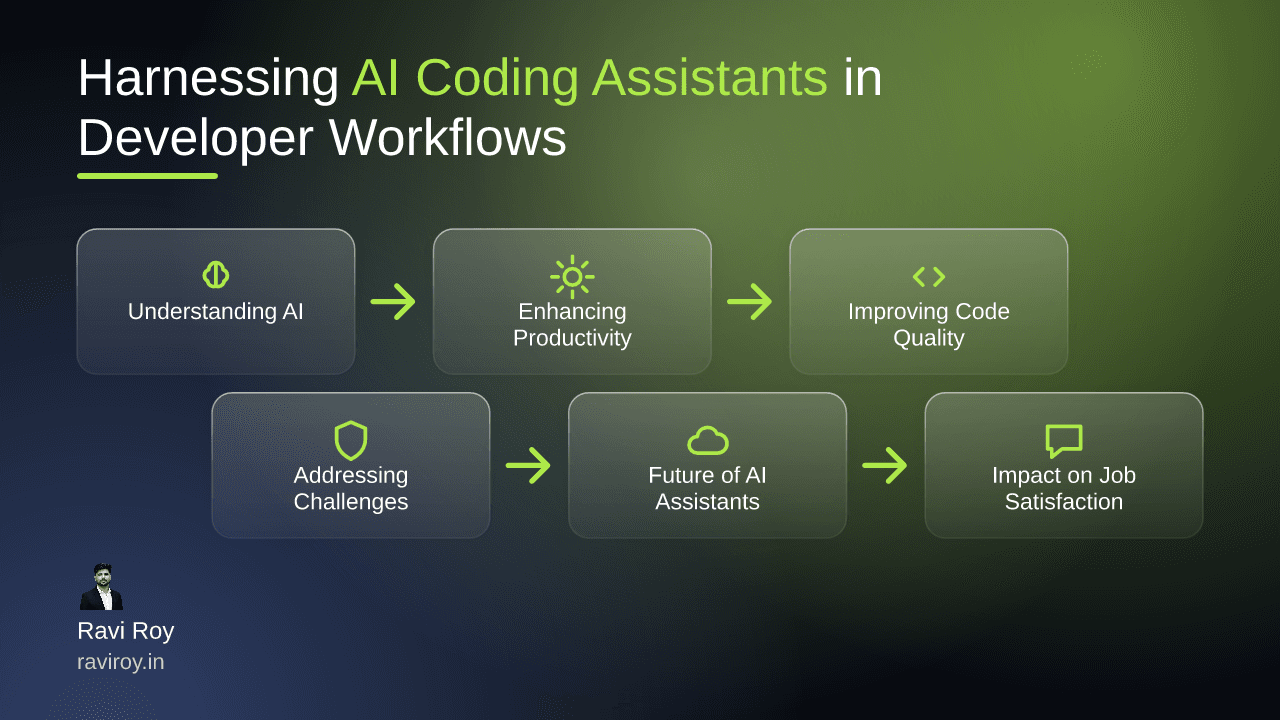
Understanding AI Coding Assistants
The world of software development is rapidly evolving, and AI coding assistants are at the forefront of this transformation. These intelligent tools not only streamline coding processes but also significantly enhance developer productivity.
What Are AI Coding Assistants?
AI coding assistants are software tools powered by artificial intelligence that help developers write code more efficiently. Their core functions include generating code snippets, providing real-time suggestions, automating testing and debugging, and even reviewing code for potential issues. By doing so, they allow developers to focus on higher-order tasks that demand creativity and strategic thinking.
Key Features of Modern AI Coding Assistants
Today’s AI coding assistants come packed with advanced features that make them indispensable on development teams. Some standout abilities include:
Automated Testing: Tools like GitHub Copilot or Tabnine can generate test cases based on your code, ensuring that new changes don’t introduce unintentional bugs.
Debugging Assistance: When developers encounter errors, coding assistants can analyze the code and provide suggestions for fixing issues.
Code Snippet Generation: Applications like OpenAI's Codex can generate entire functions based on a simple description, saving time and effort.
Popular models include GitHub Copilot, Codex, and Tabnine, each offering a unique set of features tailored to different programming styles and environments.
Enhancing Productivity in Developer Workflows
The integration of AI coding assistants offers unparalleled opportunities to bolster productivity within development teams.
Boosting Efficiency Through Automation
Repetitive tasks can quickly sap a developer's creativity and energy. AI coding assistants automate these mundane activities, allowing developers to concentrate on challenges that require decision-making and innovation. According to industry forecasts, a whopping 84% of organizations are expected to adopt AI tools by 2025, highlighting the growing trend toward automation in coding.
For instance, AI assistants can handle the tedious task of formatting code, suggesting variable names, or even generating documentation, leading to cumulative time savings.
Real-World Examples of Productivity Gains
A notable case study involves a leading software company that integrated an AI coding assistant into its workflow. The implementation resulted in a 25% reduction in time spent on repetitive tasks and increased project completion speed by 30%, thanks to the automated code suggestions that minimized back-and-forth during development. These statistics underline how AI coding assistants can lead to significant productivity improvements across teams.
Improving Code Quality and Reliability
The role of AI in enhancing code quality should not be underestimated. With the increasing complexity of software, maintaining high coding standards becomes increasingly challenging.
Testing and Debugging with AI
Automated testing and debugging through AI tools can dramatically improve the code review process. These assistants provide:
Automated Code Reviews: By analyzing the code for best practices and potential vulnerabilities, they ensure developers adhere to code quality standards.
Critical Bug Detection: Tools can identify bugs before they make it into the deployment phase, hence lowering the overall error rate.
Research indicates that projects utilizing AI coding assistants experience up to a 40% drop in code errors compared to those relying solely on manual testing methods.
Mitigating Code Errors Effectively
Imagine working on a complex project where simple typos or logic errors can lead to extensive debugging hours. By employing AI coding assistants, developers receive instant feedback on their code's quality—learning from suggested corrections that bolster their coding skills. This symbiotic relationship not only results in fewer bugs in the final product but also assists in educating developers on effective coding practices.
Addressing Challenges in Adoption
Despite the myriad benefits AI coding assistants offer, adopting these tools isn't without its challenges.
Common Concerns Among Developers
Some developers express concerns over becoming overly reliant on AI tools for their coding tasks. Issues like trust in AI-generated code often lead to skepticism—developers worry that they may overlook errors or accept suggestions that aren't the best fit for their codebase.
Overcoming Implementation Hurdles
To smooth the transition to AI coding assistants, organizations can implement several strategies:
Incremental Integration: Start using AI tools for non-critical tasks, allowing developers to familiarize themselves gradually.
Training Programs: Providing team members with educational resources can foster a culture of collaboration between humans and AI tools. Showing the art of calibrating AI suggestions can boost confidence and trust in their utility.
The Future of AI Coding Assistants in Software Development
AI coding assistants are evolving rapidly, with advancements that foresee them becoming not just helpful tools but autonomous agents.
Advancements on the Horizon
Trends such as natural language processing improvements and enhanced contextual awareness suggest that future AI coding assistants will be better equipped to understand complex coding requirements, leading to more tailored assistance.
The Shift Towards Autonomous Agents
Imagine a future where AI coding assistants could autonomously make decisions about code architecture or implement fixes based on project needs. This capability could redefine how software development is conducted, reducing the cognitive load on developers and allowing them to focus on strategic elements of software design.
Impact on Developer Job Satisfaction
AI coding assistants don’t just change the tools developers use; they can transform the very nature of work itself.
Reducing Burnout and Enhancing Focus
By automating repetitive elements of coding, AI tools can dramatically reduce burnout rates among developers. Greater efficiency allows for a more balanced workload, fostering job satisfaction. Developer feedback shows a trend of increased enjoyment in their work when freed from tedious tasks, allowing for more creative freedom.
Shifts in Developer Roles
With AI taking over mundane tasks, new roles are emerging within development teams. Positions focused on AI management, ethical AI implementation, and hybrid roles that combine coding with heavy analytical skills are on the rise, broadening career trajectories for developers.
Testimonies from developers reveal how AI assistants have created a more dynamic and rewarding work experience—fueling creativity rather than stifling it under routine tasks.
As AI coding assistants increasingly integrate into developer workflows, the landscape of software development is set for a radical transformation. How have your experiences with AI coding assistants shaped your workflow as a developer?
💬 Join the conversation — share your take in the comments and tell us what you’d add.