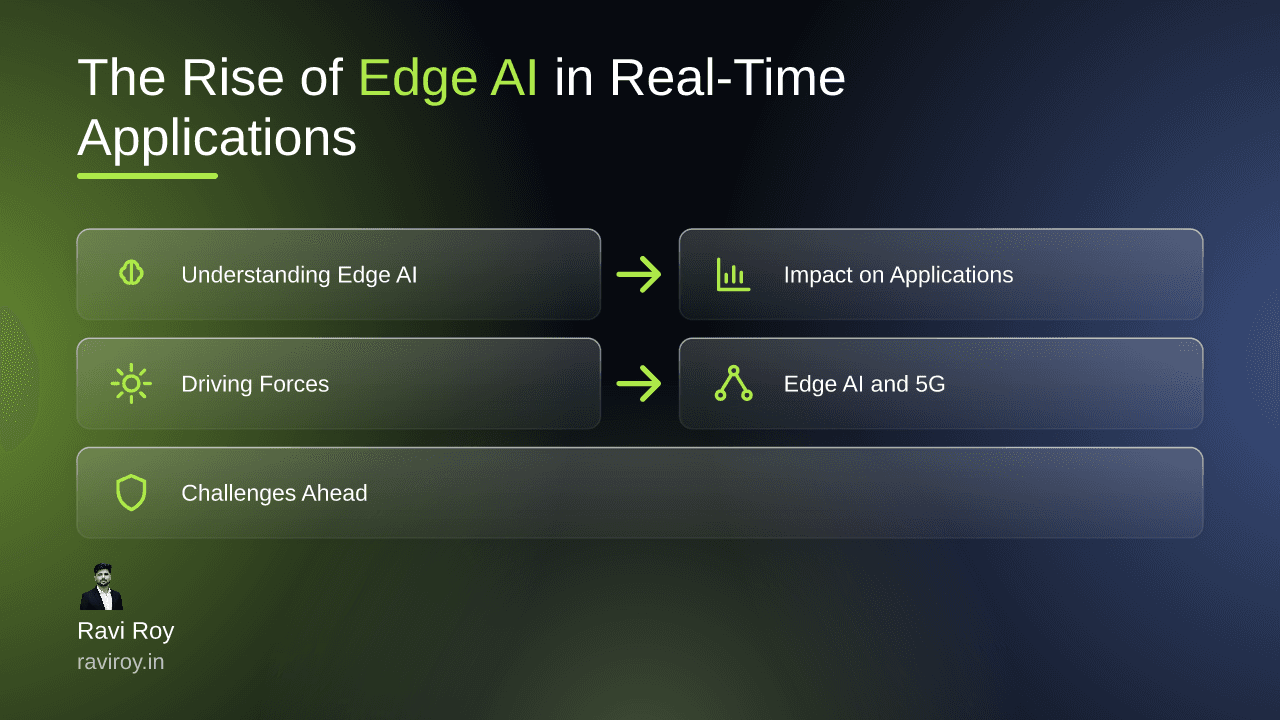
Exploring Emerging Technologies: The Rise of Edge AI in Real-Time Applications
Understanding Edge AI and Its Place in Emerging Technologies
What is Edge AI?
Edge AI is revolutionizing the way data is processed by moving artificial intelligence capabilities closer to the source of data generation: the edge of the network. Unlike traditional AI processes that rely heavily on centralized cloud computing, Edge AI enables real-time data processing directly at the device level. This means sophisticated algorithms analyze information on-device—be it a smart camera, sensor, or automotive system—reducing the need to send data back and forth across the network.
The components of Edge AI include local processors, sensors, and AI algorithms that facilitate an immediate response. This decentralized approach not only speeds up processing but also creates a more efficient system overall. According to a study by Gartner, approximately 75% of enterprise data will be processed outside a centralized data center by 2025, spotlighting the pivotal shift towards Edge AI (Gartner Research).
The Role of Edge AI in Real-Time Processing
The primary benefit of real-time data processing in Edge AI applications is drastically reduced latency. With traditional cloud computation, there can be significant delays due to the time taken to send data to the cloud and receive feedback. Edge AI circumvents this issue, allowing for immediate actions based on incoming data, which is crucial for applications like autonomous driving or industrial automation systems.
Consider a smart security camera: instead of sending every frame to a cloud server for analysis, it processes video locally. This not only speeds up threat detection but also conserves bandwidth and enhances privacy by not transmitting sensitive footage over the internet.
The Impact of Edge AI on Modern Applications
Real-Time Processing in Autonomous Vehicles
Edge AI is a game-changer in the realm of autonomous vehicles, making real-time decision-making a reality. Self-driving cars leverage sophisticated AI algorithms to interpret various data inputs—cameras, LiDAR sensors, and radar—within milliseconds. An excellent example is Waymo’s autonomous driving technology, which utilizes Edge AI to assess its environment continuously and make driving decisions, from navigating traffic to avoiding obstacles.
The capacity to analyze vast amounts of data locally allows autonomous vehicles to adapt and react in real time, improving safety and reliability. When every second counts, Edge AI stands as the backbone of autonomous technology, transforming how we view transportation.
Enhanced Data Privacy Through Edge AI
One of the pressing concerns in today's digital age is data privacy. Edge AI offers a compelling solution by enabling data to be processed locally rather than sent to a centralized location. This drastically reduces the risk of data breaches that come with transferring sensitive information over networks.
For instance, in healthcare applications, patient information can be analyzed and stored on-edge devices instead of cloud servers, ensuring that sensitive data doesn’t leave the facility, significantly lowering the risk of exposure. Thus, Edge AI not only empowers organizations to utilize data effectively but also fortifies their data security strategies.
Driving Forces Behind the Growth of Edge AI
IoT Devices as a Catalyst for Edge AI
The explosion of Internet of Things (IoT) devices has fueled the growth of Edge AI. As more devices become interconnected, the demand for real-time data processing increases exponentially. From smart home devices to industrial IoT sensors, the number of devices capable of performing Edge AI functions is on the rise.
In 2019, it was noted that there would be more than 40 billion connected devices worldwide by 2023 (Statista). This growth creates the perfect storm for Edge AI, as manufacturers seek to enhance device functionalities while minimizing latency and operational costs.
Energy-Efficient Hardware Developments
The development of energy-efficient AI hardware is another driving force behind the rise of Edge AI. Specialized chips, optimized for AI processing, enable the deployment of edge solutions without draining resources. Companies like NVIDIA and Intel are developing hardware that consumes less power while delivering high performance—essential for Edge AI applications running on battery-operated devices.
The emergence of dedicated hardware accelerators not only supports the rise of Edge AI but also facilitates scalability across various industries, making it a feasible option for a wide range of applications.
Technological Synergy: Edge AI and 5G Integration
Benefits of 5G for Edge AI
5G technology significantly enhances Edge AI capabilities by delivering improved speed, lower latency, and increased connectivity. The advent of 5G allows for more devices to communicate seamlessly, making it easier for Edge AI applications to analyze data in real time.
For instance, 5G networks can support a vast array of devices simultaneously, allowing connected car services—like vehicle-to-everything (V2X) communication—to function more effectively by sharing real-time data about traffic conditions, road hazards, and more.
Case Studies of Edge AI and 5G in Action
Several organizations are already pioneering the integration of Edge AI and 5G technologies. For example, a partnership between Verizon and Nokia demonstrated how Edge AI could optimize manufacturing operations. By combining 5G with edge computing, factories receive real-time analytics to make swift operational adjustments, drastically improving efficiency.
Another case study from Ericsson highlighted how smart city initiatives leverage Edge AI and 5G. Traffic lights equipped with Edge AI can analyze vehicle flow patterns and adjust timings accordingly to reduce congestion, directly benefiting urban traffic management.
Challenges and Future of Edge AI
Addressing Security Issues
While Edge AI brings numerous advantages, it also introduces significant security challenges. Devices at the edge can be more vulnerable to attacks given their distributed nature. Industries need to implement robust security measures, such as encryption and authentication protocols, to protect data processed locally.
Additionally, organizations should invest in regular updates and maintenance strategies to mitigate risks associated with outdated software. Best practices from cybersecurity frameworks can serve as blueprints for securing Edge AI implementations.
Scaling Edge AI Solutions
Scaling Edge AI applications across various industries poses another critical challenge. While local processing has clear benefits, it requires substantial planning regarding infrastructure and resource allocation. Organizations must ensure they have the right balance of performance and efficiency, considering factors such as data management, device compatibility, and integration with existing systems.
Innovative solutions, like containerization for deploying AI models across diverse environments, can ease this scaling process. These strategies not only help standardize operations but also support flexibility and adaptability as new technologies emerge.
Conclusion: The Future Landscape of Edge AI and Emerging Technologies
Edge AI stands at the forefront of technological innovation, shaping how data is processed and utilized across industries. From autonomous vehicles to smart cities, its impact is undeniable. The continuous evolution of Edge AI, driven by advancements in energy-efficient hardware and the proliferation of IoT devices, will define the future technological landscape.
As organizations increasingly recognize the importance of low-latency, data-driven solutions, Edge AI will continue to thrive, proving to be a leading force in the tech industry.
How do you see Edge AI influencing the future of your industry? Share your insights and experiences!
💬 Join the conversation — share your take in the comments and tell us what you’d add.