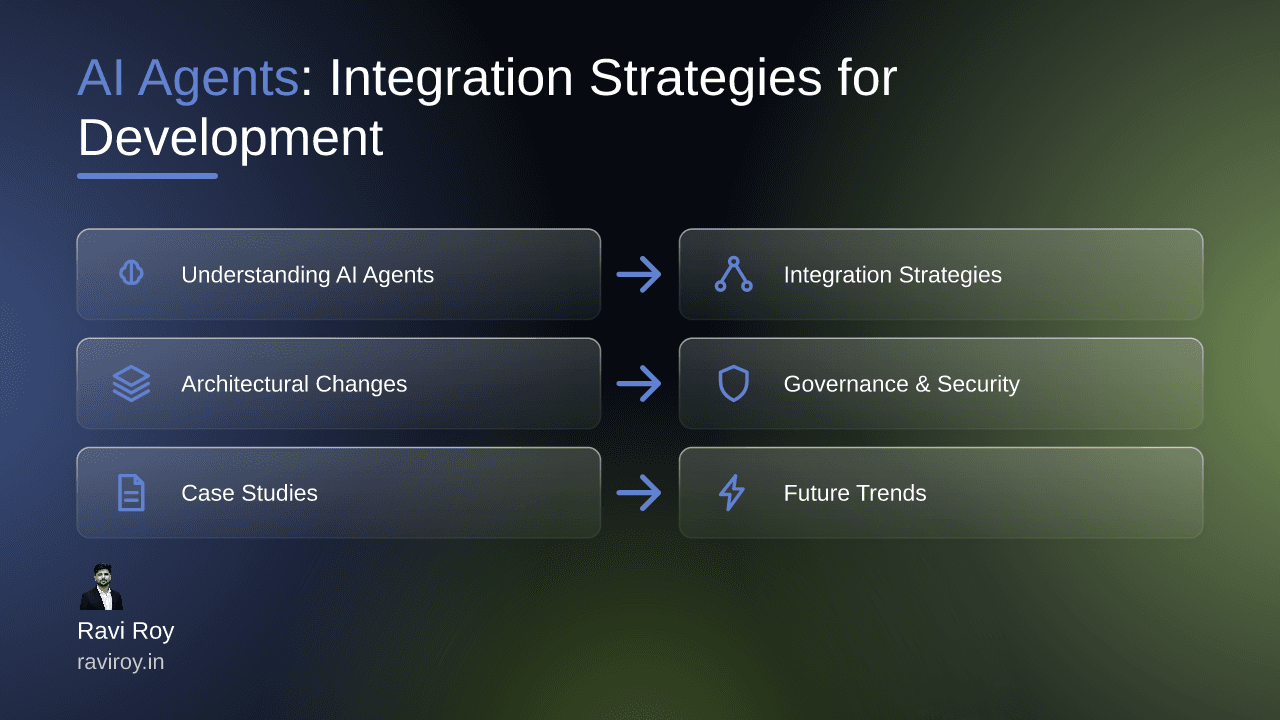
Exploring AI Agents: Integration Strategies for Modern Development
In the ever-evolving landscape of technology, the introduction of AI agents has changed the game for modern development. Their ability to automate tasks and enhance operational efficiency has caught the attention of industries worldwide. To truly leverage the benefits of AI agents, it's crucial to understand their role, integration strategies, and the future trends shaping their evolution.
Understanding AI Agents and Their Role
What Are AI Agents?
AI agents are software entities designed to autonomously perform tasks in a digital environment. They analyze data, learn from their experiences, and execute functions with minimal human intervention. Ranging from simple chatbots to complex machine learning models, AI agents can adapt to various environments and work in numerous industries—from manufacturing to healthcare.
For instance, in the healthcare sector, AI agents are employed to monitor patient vitals and even predict potential health issues based on historical data. Their core functionalities include:
Decision-making capabilities: AI agents evaluate data to make informed decisions.
Task automation: Repetitive tasks can be handled seamlessly, freeing up human resources for more strategic tasks.
Real-time processing: AI agents can analyze and respond to data inputs in real time, optimizing workflows.
The Benefits of Using AI Agents
The advantages of utilizing AI agents extend far beyond mere automation. Key benefits include:
Increased Efficiency: Businesses experience streamlined operations as AI handles mundane tasks. For instance, customer service bots can address inquiries 24/7, ensuring prompt responses without the need for human agents.
Enhanced Data Insights: AI agents excel at pattern recognition within large data sets, leading to smarter business decisions (source).
Personalization: With machine learning algorithms, AI agents can provide tailored experiences for customers, adapting responses based on individual preferences.
Integration of AI Agents with Existing Systems
Integrating AI agents into existing systems can be complex yet rewarding. Understanding the best approaches can maximize their potential.
Key Integration Strategies
APIs for Smooth Integration
Using Application Programming Interfaces (APIs) allows seamless communication between AI agents and existing systems. APIs can help in orchestrating data flows and ensuring interoperability among various components.
AI-Driven Integration
For organizations lacking robust APIs, AI-driven integration solutions can bridge the gap. This method leverages machine learning to facilitate system connections without extensive manual configuration.
Incremental Rollout
Initiating a phased approach allows organizations to test AI agent integrations with less risk. Start small, and gradually expand operations as confidence and reliability are established.
Challenges in Integration
While integrating AI agents can offer numerous benefits, challenges are inevitable. Recognizing these challenges and preparing to tackle them is crucial for success:
Data Silos: Existing data may be compartmentalized, necessitating a strategy to unify information for maximum efficiency.
Legacy Systems Compatibility: Older systems may struggle to support modern AI functionalities. Identifying and possibly upgrading components will be essential.
Change Management: Employees may resist new technologies. Adequately addressing this through training and support will aid smoother transitions.
Architectural Changes for Multi-Agent Workflows
Importance of Architecture in Integration
The architecture underlying AI integrations is vital. Properly designed systems can optimize the effectiveness of AI agents and ensure scalability. Considerations must include modular designs that simplify the addition of new agents and enhance communication paths among them.
Frameworks and Open-Source Models
Utilizing emerging frameworks can significantly ease the integration of AI agents. Platforms like TensorFlow and PyTorch are gaining prominence for their open-source models, which provide flexible solutions tailored to specific applications. These frameworks allow developers to build custom AI solutions that can be woven into existing business processes seamlessly.
Case Study Example: A logistics company adopted a microservices architecture that enabled them to integrate AI agents into their supply chain management system efficiently, resulting in a 25% increase in delivery speed.
Governance, Evaluation, and Security in AI Agent Integration
Best Practices for Security
As AI agents handle sensitive data, ensuring robust security becomes paramount. Governance frameworks should outline the policies governing AI agent activities, focusing on:
Data Encryption: Protecting data at rest and in transit ensures that breaches can be mitigated.
User Compliance: Regular audits can ensure that AI systems adhere to industry standards and regulations.
Evaluating AI Agent Performance
Measuring the success of AI agents is critical for their continued improvement. Evaluation metrics should focus on productivity, accuracy, and user satisfaction. Implementing feedback loops that provide insights into agent performance can lead to continuous refinement of the AI systems.
Case Studies of Successful AI Agent Integrations
Industry-Specific Examples
Examining real-world applications provides valuable insights into best practices. For instance:
Retail Sector: A novel integration of AI agents in inventory management allowed a retail chain to stabilize stock levels and reduce carry costs by 30%.
Healthcare: An AI-driven symptom checker increased consultation efficiency by triaging patients before they reached doctors, improving patient care pathways.
Lessons Learned from Implementation
These case studies highlight several important lessons:
Customization is Key: Tailoring AI agents to specific organizational needs enhances effectiveness.
Involve Stakeholders: Engaging relevant teams during the development and implementation phases can lead to wider acceptance and better outcomes.
Future Trends in AI Agent Integration
Autonomy and Specialization
As AI technologies advance, we are witnessing a trend toward greater autonomy in AI agents. These systems are becoming specialized in distinct fields, allowing them to take on increasingly complex tasks without the need for constant supervision.
New Pricing Models
With the growing demand for AI integrations, new pricing models are emerging, such as subscription-based models that allow businesses to pay as they scale. This makes deploying AI agents more feasible for organizations of all sizes.
In conclusion, successfully integrating AI agents requires not only understanding their capabilities but also recognizing the strategies that can optimize their implementation. As we venture further into the AI revolution, the ability to navigate these changes will be crucial for ongoing success and innovation.
What unique challenges have you faced when integrating AI agents into your systems?
💬 Join the conversation — share your take in the comments and tell us what you’d add.