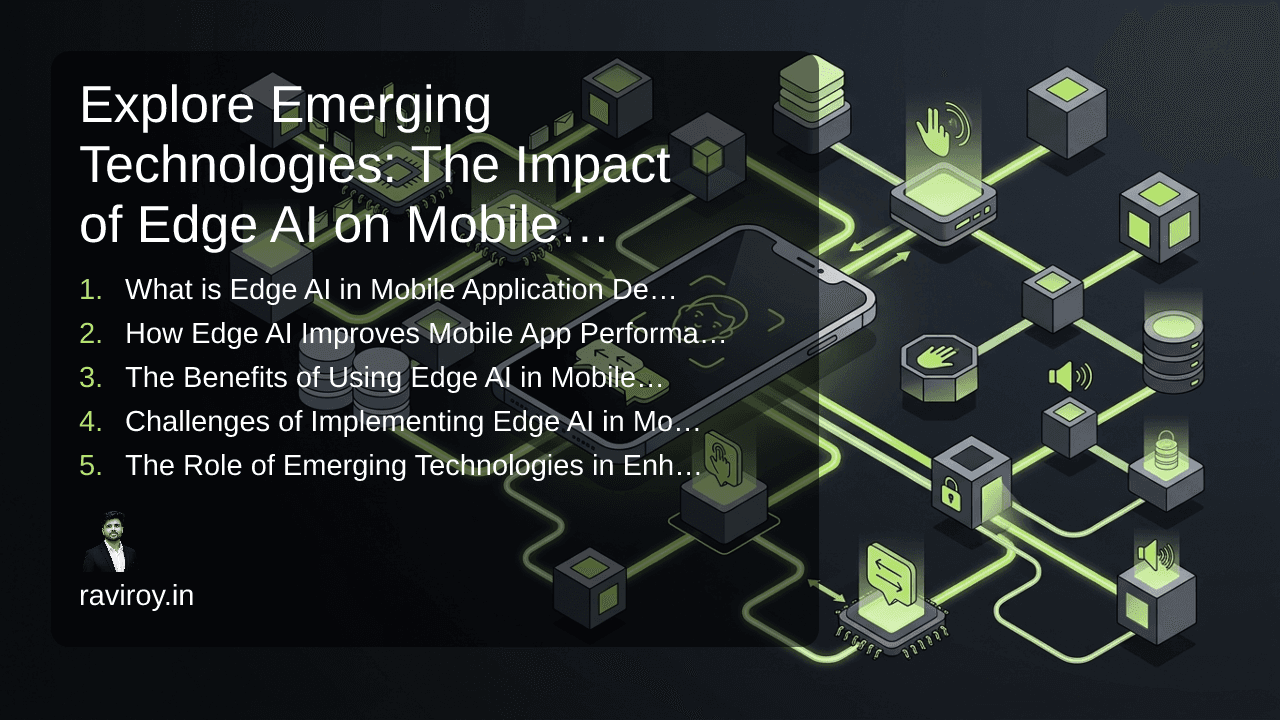
What is Edge AI in Mobile Application Development?
Edge AI is revolutionizing mobile application development by enabling data processing at the device level rather than relying solely on cloud computing. This shift not only speeds up decision-making but also significantly enhances the user experience. Unlike traditional AI models that require constant communication with centralized servers, Edge AI processes data closer to the user. For instance, applications like facial recognition in security apps or real-time language translation tools leverage Edge AI to deliver instantaneous results without lag, even in areas with poor connectivity.
Examples of Edge AI applications in mobile development include personalized recommendations in shopping apps that adapt based on user behavior and fitness tracking apps that analyze health data in real-time. By engaging in data processing on-device, these applications are not only faster but also more reliable, providing users with a seamless experience.
How Edge AI Improves Mobile App Performance
Low Latency and Real-Time Capabilities
One of the most significant advantages of Edge AI is its ability to minimize latency. Traditional mobile applications often experience delays due to data retrieval from distant servers. With Edge AI, processing occurs locally, enabling actions such as swiping, tapping, or any form of user interaction to be instantaneous. Imagine a navigation app that can adjust routes based on real-time traffic—this is only possible when data is processed without the lag of server communication.
Better Data Privacy Through On-Device Processing
Data privacy is a growing concern for users today. With Edge AI, sensitive data stays on the device instead of being sent to the cloud, significantly minimizing the risk of data breaches. Applications like health monitoring tools and personal finance apps can analyze sensitive information locally, ensuring that users maintain control over their data. This not only fosters trust but also aligns with global data protection regulations.
Offline Functionality and Network Independence
One of the standout features of Edge AI is its ability to function offline. Imagine being in a remote area with no internet connection; Edge AI enables applications to continue performing complex tasks without the need for constant online access. This capability is crucial for users who depend on apps for critical tasks like navigation or emergency communication, ensuring that functionality is unaffected by network availability.
The Benefits of Using Edge AI in Mobile Applications
Cost Reduction and Cloud Dependency
Edge AI represents a compelling strategy for cost reduction in mobile application development. By shifting processing from the cloud to the device, businesses can save on bandwidth costs and avoid the expenses related to cloud storage and processing. This enables developers to allocate resources elsewhere, fostering innovation and enhancing the overall app experience.
Enhanced User Experience
The direct effects of Edge AI on user experience are profound. With improved speed, reduced latency, and offline functionality, applications not only engage users more effectively but also retain their attention. A study by tech analytics firms highlights that apps utilizing Edge AI saw a 30% increase in user retention, primarily due to their responsiveness and reliability.
Specialized AI Hardware in Devices
Today’s smartphones come equipped with specialized AI hardware, such as neural processing units (NPUs) or dedicated graphic processing units (GPUs), which enhance the performance of Edge AI applications. These advancements facilitate more complex computations on-device, enabling apps to perform tasks that previously required significant server resources or could not be performed entirely offline.
Challenges of Implementing Edge AI in Mobile Apps
Technical Barriers
Implementing Edge AI in mobile applications is not without its challenges. Developers face technical barriers ranging from hardware limitations to the need for sophisticated algorithms designed for on-device processing. Not all devices are capable of handling advanced AI functionalities, which can limit the reach of certain applications.
Data Management Challenges
Data management is another hurdle that developers must navigate. Storing and processing large amounts of data on devices raises questions about storage capacity and device performance. Applications must strike a balance between functionality and the efficient use of local resources, which can complicate the development process.
User Acceptance and Learning Curve
Despite the advantages, user acceptance remains a crucial challenge. Many users may hesitate to embrace applications featuring AI, either due to a lack of understanding or concerns over privacy. Moreover, there may be a learning curve associated with new AI-driven functionalities, which developers must consider when designing user interfaces.
The Role of Emerging Technologies in Enhancing Mobile User Experience
Real-World Use Cases
Real-world applications of Edge AI in mobile apps abound. For instance, healthcare apps that monitor patient vitals can process information locally, alerting users and healthcare providers in real-time. Another example includes augmented reality apps that utilize AI to create engaging experiences without needing high-speed internet. These real-world scenarios demonstrate how Edge AI is not just a trend but a vital tool for improving user experiences across various sectors.
Future Trends in Mobile App Development
The future of mobile app development is undoubtedly intertwined with advancements in Edge AI. As device capabilities improve, we can expect innovations like smarter autonomous agents and even more intuitive user experiences. Forecasts suggest that Edge AI could become the standard in app development within the next few years, leading to more robust applications that further blur the lines between device capabilities and cloud-based functionalities.
Conclusion: The Future of Edge AI and Mobile Applications
Edge AI is shaping the future of mobile applications in profound ways. By enhancing performance and user experience through low latency, data privacy, and offline capabilities, it offers a promising landscape for innovation in app development. As we continue to explore emerging technologies, the possibilities seem limitless.
How have you experienced Edge AI in your mobile applications, and what improvements did you notice?
💬 Join the conversation — share your take in the comments and tell us what you’d add.