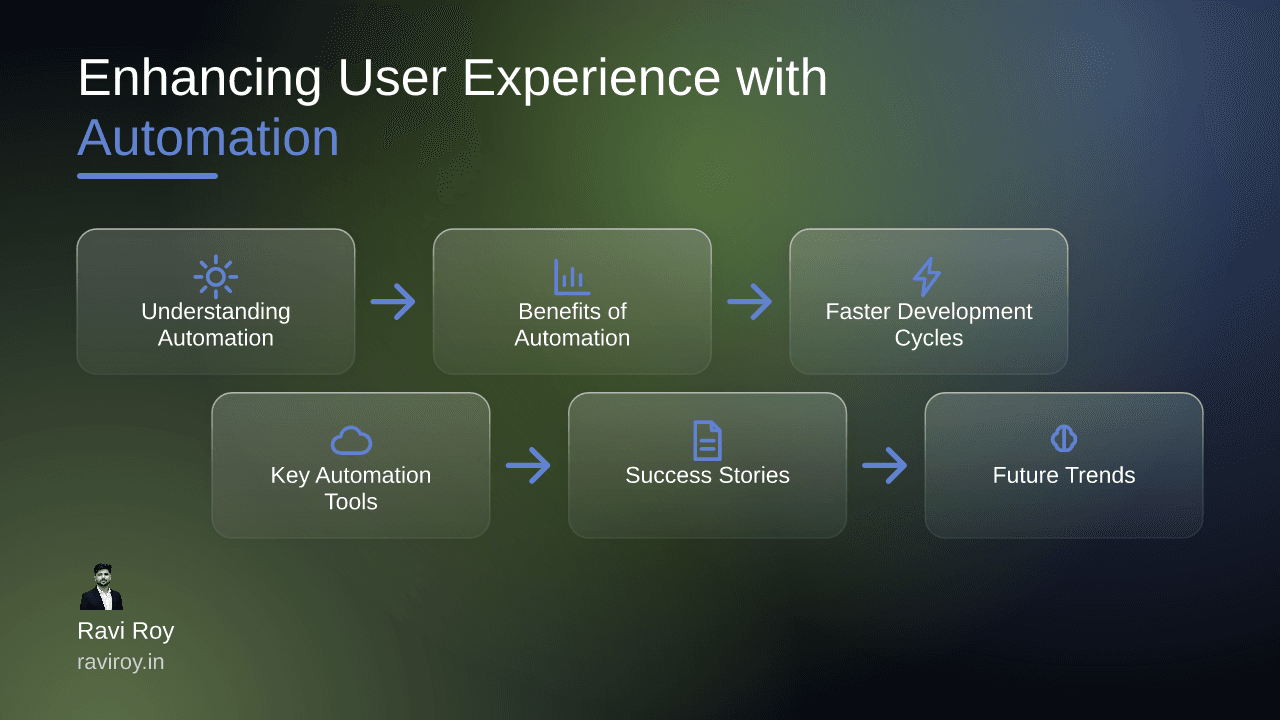
Enhancing User Experience with Automation in Mobile App Development
Mobile app development is a fast-paced industry, and automation is transforming how applications are built and enhanced. By integrating automation into the development process, teams can ensure a seamless user experience that is both efficient and consistent.
Understanding Automation in Mobile App Development
What is Automation?
Automation in mobile app development refers to the use of various tools and technologies to streamline repetitive tasks and processes. It allows developers to focus on creative solutions while ensuring that routine activities—such as testing, deployment, and even user feedback collection—are handled efficiently. By automating a wide range of processes, teams can accelerate development cycles and enhance the overall quality of their applications.
Benefits of Automation
The benefits of automation in mobile app development are manifold:
Time Savings: Automated processes reduce the amount of time spent on manual tasks, enabling teams to deliver updates and new features more swiftly.
Error Reduction: By minimizing manual input, automation helps to eliminate human errors that can lead to crashes or downtime.
Consistency: Automated tools ensure that processes are executed in a uniform manner, which supports better quality assurance and user experience.
How Automation Enhances User Experience
Faster Development Cycles
Rapid prototyping is a crucial component of modern development practices. automation tools such as continuous integration/continuous deployment (CI/CD) frameworks allow teams to make incremental changes and deploy them almost instantly. This speed translates directly into a better user experience, ensuring that user feedback can be quickly acted upon. For instance, when user testing reveals a need for a feature adaptation, automated build tools can help implement and roll out the modification in record time.
Improved Testing and Quality Assurance
Automated testing frameworks like Appium and Selenium have transformed how developers validate mobile applications. These tools allow for the execution of a vast number of test cases across different devices and operating systems simultaneously.
Use Case Example: Imagine launching a new e-commerce feature during the holiday season. Using automated testing, your team can run multiple tests to ensure the checkout process is flawless across devices, reducing the likelihood of cart abandonment due to bugs.
Reliable testing leads to a more polished user experience, minimizing the number of updates needed post-launch because issues are identified and addressed earlier in the development phase.
Key Automation Tools for Mobile App Development
Testing Tools
Popular testing tools in mobile app development include:
Appium: Ideal for both Android and iOS applications, Appium enables developers to execute automated tests across various platforms.
Selenium: While primarily used for web applications, Selenium can be integrated with mobile testing to ensure web-based mobile applications perform well.
CI/CD Tools
Continuous Integration (CI) and Continuous Deployment (CD) tools streamline the workflows involved in app development. Tools like Jenkins, CircleCI, and Travis CI allow developers to automate the build and deployment processes, making it easier to release updates regularly and efficiently.
User Feedback Automation
Automating the collection of user feedback can significantly refine app features based on actual usage. Tools like Hotjar or SurveyMonkey can gather insights automatically, allowing development teams to prioritize enhancements that will directly impact user satisfaction.
Case Studies: Success Stories of Automation in Mobile Apps
E-commerce Applications
A notable example of automation enhancing user experience comes from a leading e-commerce platform that integrated automated testing into its mobile app development lifecycle. By doing this, the company reduced its time-to-market for new features by 30%. The instant feedback loop established through automated testing allowed the team to implement user-requested features rapidly, leading to increased customer satisfaction and sales spikes during promotional events.
Healthcare Apps
In healthcare, automation played a pivotal role in a mobile app designed to streamline patient intake processes. By automating the collection of patient data, the app minimized errors and processing time, allowing healthcare providers to focus more on patient care rather than paperwork. The result was an impressive increase in efficiency, significantly improving the patients' experience during their visits.
Challenges and Considerations When Implementing Automation
Cost vs. Benefit Analysis
While automation presents numerous advantages, teams must be mindful of its financial implications. The initial outlay for tools and training can be significant, prompting a careful analysis of the expected return on investment. Projects should start small, focusing on the most tedious processes before scaling automation efforts.
Technical Barriers
Technical hurdles, such as integrating new tools with legacy systems, might pose significant challenges. Teams can overcome these by:
Prioritizing training for staff to ensure everyone understands the tools being used.
Starting with a pilot project to gauge the effectiveness of automation before full-scale implementation.
Future Trends in Automation and Mobile App Development
AI and Machine Learning Integration
Looking ahead, AI and machine learning are poised to revolutionize automation in mobile app development. By using predictive analytics, apps will become more intuitive, predicting user behavior and automating personalized user experiences based on this data.
Voice Command Automation
Voice command integration is gaining traction as a standard feature in mobile applications. This technology allows users to interact with apps seamlessly, providing a more natural and engaging experience.
As the landscape evolves, embracing these innovations can pose exciting new opportunities for developers to enhance user experiences even further.
How has automation improved your mobile app development workflow? Have you encountered any challenges worth sharing? Your experiences and insights could provide valuable guidance to others in the field!
💬 Join the conversation — share your take in the comments and tell us what you’d add.