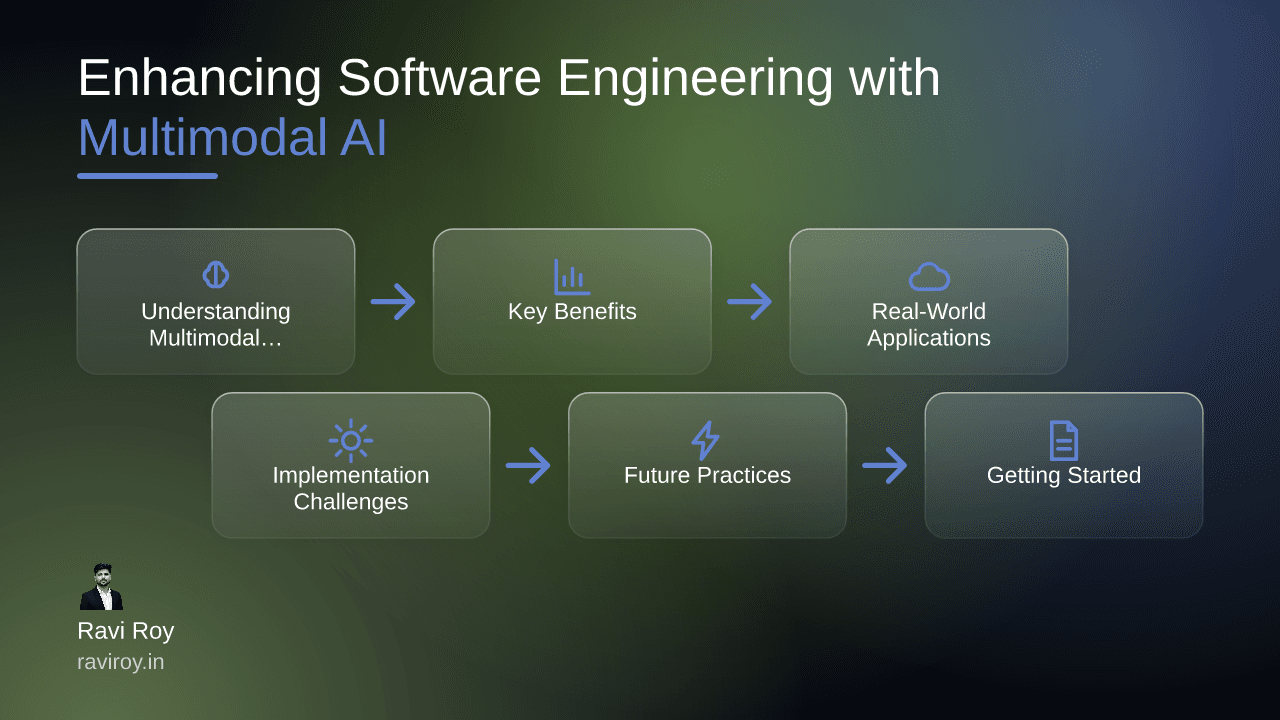
Enhancing Software Engineering Practices with Emerging Technologies in Multimodal AI
The integration of emerging technologies like multimodal AI has begun redefining software engineering practices. As projects demand an agile and integrated approach to data, multimodal AI emerges as a viable solution for enhancing both efficiency and creativity in software development.
Understanding Multimodal AI and Its Importance in Software Engineering
What is Multimodal AI?
Multimodal AI refers to systems that can process and integrate multiple types of input data—such as text, images, audio, and video—to generate more nuanced and accurate outputs. There are various types of multimodal AI, each tailored to specific tasks, including natural language processing (NLP), computer vision, and audio processing.
How Does Multimodal AI Work?
The technical mechanisms that enable multimodal AI revolve around deep learning architectures. These include convolutional neural networks (CNNs) for image processing and recurrent neural networks (RNNs) for textual data. By leveraging transfer learning and fine-tuning models pre-trained on large datasets, multimodal AI can effectively consolidate diverse data types. This approach improves contextual understanding, allowing systems to respond with greater relevance.
Why is Multimodal AI Important?
In software engineering, multimodal AI enhances decision-making processes by offering richer insights. By synthesizing various data streams, teams can make informed choices. For instance, an AI system might analyze user feedback, analyze product visuals, and monitor user interaction—all simultaneously—to provide actionable recommendations to developers.
Key Benefits of Leveraging Emerging Technologies in Software Development
Enhanced Data Integration
Multimodal models excel in consolidating diverse data formats, bridging gaps between traditional silos of information. This capability leads to a unified approach to managing software projects, making data-driven insights more accessible. For example, by combining user interaction data with usage analytics, developers can better tailor software features to user needs.
Improved User Experience
With AI-driven design patterns, user interaction is enhanced significantly. Multimodal AI can synthesize user feedback from various channels to create a coherent and personalized experience. The result is software that not only meets user expectations but also adapts dynamically to their behaviors, improving overall satisfaction.
Streamlined Development Processes
The incorporation of multimodal AI into the software development lifecycle automates repetitive tasks. Activities like code reviews, bug tracking, and testing can be streamlined through AI-driven solutions. For example, tools like GitHub Copilot utilize AI to suggest code snippets based on natural language prompts, saving precious development time and reducing manual workload.
Real-World Applications of Multimodal AI in Software Engineering
Case Study: AI in DevOps
One of the most promising applications of multimodal AI is in DevOps. Solutions that integrate predictive analytics and automated monitoring utilize various data inputs efficiently. For instance, a DevOps pipeline that leverages AI can optimize performance by analyzing server logs alongside application metrics, preemptively identifying potential bottlenecks.
Case Study: User-Centric Design
Multimodal AI proves invaluable in creating user-centric software. A prominent design tool company employs AI to gather user behavior data and feedback automatically from different platforms. By analyzing this data, the tool recommends design modifications, ultimately streamlining the design process and increasing user engagement.
Case Study: Code Optimization
In the realm of code optimization, tools like CodeGuru and DeepCode utilize multimodal AI to assess and refactor codebases. These platforms analyze code written in different languages, assessing syntax, performance, and maintainability. The immediate feedback helps developers to improve their code quality, saving time on debugging and maintenance.
Challenges to Implementation of Emerging AI Technologies
Ethical Implications
While implementation of AI may streamline processes, it also raises ethical questions. Concerns about data privacy, bias in AI algorithms, and accountability must be addressed before deploying these technologies widely. Companies must ensure transparency, allowing for audits of AI decisions to mitigate potential risks.
Integration Strategies
Integrating multimodal AI technologies into existing infrastructures can be daunting. Enterprises need robust integration strategies that involve aligning AI capabilities with current workflows. This could involve training staff, investing in infrastructure upgrades, or phased rollouts to minimize disruption.
Scalability Concerns
When deploying AI solutions, organizations must consider scalability. Multimodal models often require substantial computational resources as they handle diverse data inputs. Planning for scalability—through efficient cloud solutions or on-premises infrastructure—is crucial for long-term success.
The Future of AI-Enhanced Software Development Practices
The Role of Agentic AI
Agentic AI signifies a shift towards AI systems that not only support but also take proactive roles in decision-making. As these models develop, their contributions to software development will become increasingly strategic, influencing design and functionality from the outset.
MLOps as a Discipline
As multimodal AI thrusts itself into the spotlight, the discipline of MLOps grows more vital. This field focuses on streamlining the deployment and management of machine learning models within software development, advocating for a blend of DevOps practices and AI-specialized methodologies.
The Evolving Landscape of AI Tools
With rapid advancements in AI technologies, the software engineering toolkit is constantly evolving. Future trends predict an increase in user-friendly AI tools that democratize access to powerful technologies, enabling even small teams to leverage sophisticated AI capabilities without specialized knowledge.
Getting Started with Multimodal AI in Your Projects
Initial Steps for Integration
To begin integrating multimodal AI into your projects, start with a clear assessment of your current data landscape. Identify data silos and consider where multimodal approaches would create the most value.
Data Audit: Evaluate available data types and assess their relevance to your goals.
Pilot Projects: Initiate small-scale projects to test the waters of multimodal implementation.
Collaboration: Engage cross-functional teams to bring diverse perspectives into the integration process.
Essential Tools and Technologies
TensorFlow & Keras: For deep learning model development.
Hugging Face Transformers: Excellent for NLP tasks to integrate with other data types.
OpenCV: A collection of algorithms for computer vision applications.
Best Practices
Continuous Learning: AI technologies evolve; ensure your team stays updated with ongoing training.
User Feedback: Regularly gather and analyze user feedback to refine AI models.
Ethical Guidelines: Implement ethical standards for data use, privacy, and user impact assessments.
As you explore the integration of emerging technologies like multimodal AI into your software engineering practices, consider the best approaches that work for your team and projects.
What has been your experience with implementing AI technologies in your software projects? Share a specific example!
💬 Join the conversation — share your take in the comments and tell us what you’d add.