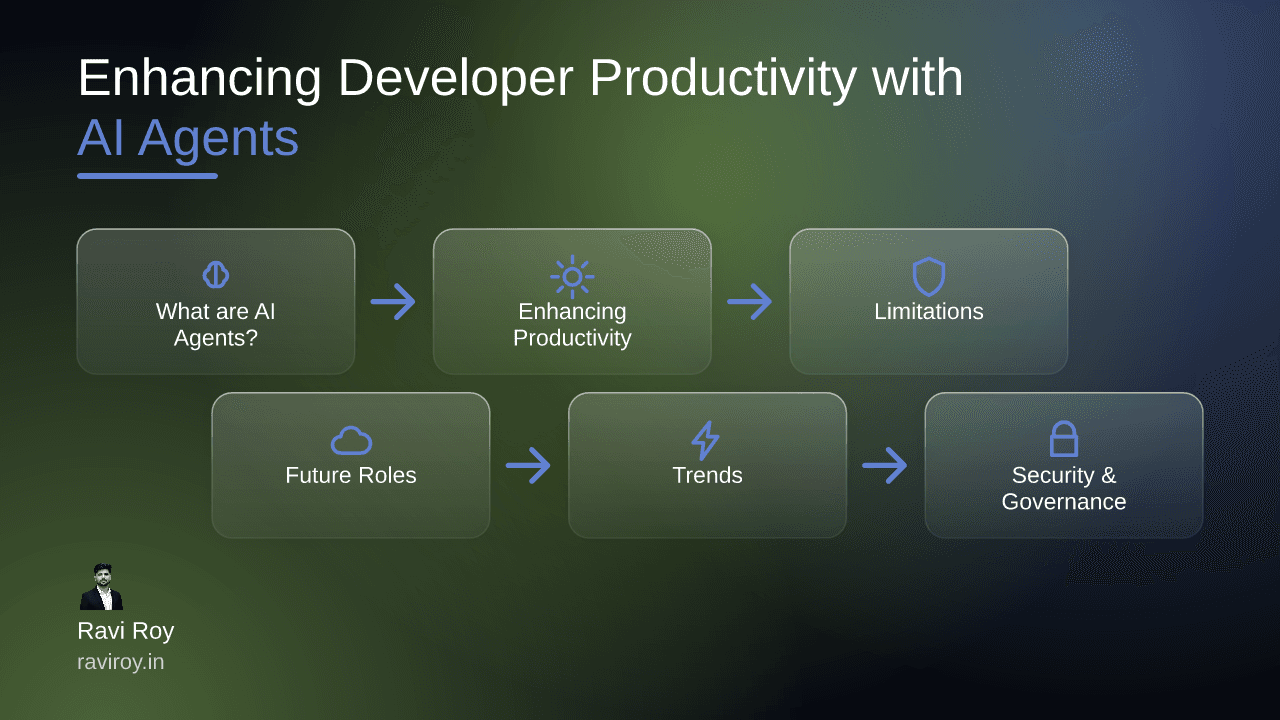
Enhancing Developer Productivity with AI Agents: A Comprehensive Guide
The software development landscape is evolving rapidly, and at the forefront of this change are AI agents, revolutionizing how developers approach their daily tasks. Imagine a virtual assistant that not only remembers your preferences but also learns from your coding habits to streamline your workflow. This comprehensive guide explores how AI agents can enhance developer productivity and reshape the software development environment.
What are AI Agents and How Do They Work?
Defining AI Agents
AI agents are autonomous programs designed to assist in various tasks by mimicking human-like decision-making processes. They utilize advanced algorithms and machine learning techniques to analyze data, make predictions, and execute actions based on their findings. This capability allows them to operate with a degree of independence, making them valuable tools in the software development arsenal.
Differences Between AI Agents and Traditional Tools
The essential difference between AI agents and traditional development tools lies in their learning capabilities. Traditional tools often execute predefined tasks without the ability to adapt or learn, whereas AI agents continually refine their functions based on data input. This adaptive quality allows AI agents to improve over time, enabling them to handle increasingly complex tasks and making them indispensable in modern development environments.
How AI Agents Operate in Software Development
In software development, AI agents can automate tasks such as coding, testing, and deployment. For example, an AI agent could analyze a codebase and suggest improvements or even handle entire sections of code generation, thus drastically reducing the workload for developers. Such automation not only accelerates project timelines but also enhances overall productivity.
Enhancing Productivity Through AI Agents
Automation of Repetitive Tasks
One of the primary advantages of AI agents is their ability to automate repetitive coding tasks. Tasks like refactoring code, formatting, and even basic implementations can be handed over to AI, freeing developers to focus on higher-order functions such as system architecture or creative problem-solving. For instance, an AI agent might take over the coding for frontend components based on design inputs, allowing developers to dedicate more time to user experience (UX) improvements.
Improving Code Quality
Another area where AI agents can significantly enhance productivity is in code quality. By analyzing coding patterns, AI can identify potential bugs and ensure adherence to best practices. This predictive analysis can lead to fewer bugs in production, ultimately saving developers both time and headaches. A common scenario would be an AI tool automatically flagging anti-patterns in your code or suggesting refactoring where needed.
Facilitating Better Collaboration
AI agents also play a vital role in enhancing collaboration among team members. Real-time collaboration tools powered by AI can streamline communication, allowing team members to coordinate seamlessly. Such tools can suggest next steps or highlight which parts of a project require immediate attention based on the ongoing discussions, thus maintaining project momentum.
Limitations of AI Agents in Software Development
Understanding the Weaknesses
Despite their many advantages, AI agents come with limitations. They may struggle with tasks that require nuanced judgment or creative thinking—qualities inherently human and challenging for AI to replicate. For instance, while an AI can suggest code improvements based on statistical patterns, it may fall short in understanding the context or intended functionality behind those improvements.
Human Oversight is Essential
Given these limitations, human oversight becomes crucial. Developers are needed to evaluate and refine the suggestions made by AI agents, ensuring that the final output meets quality standards. This collaboration ensures that the AI serves as an effective assistant rather than a replacement.
Risks of Over-reliance on AI
There’s also a risk associated with over-reliance on AI agents. As developers become accustomed to AI performing essential tasks, they may experience a degradation of their coding skills over time. This potential skills gap emphasizes the need for balanced integration of AI agents into workflows, combining their efficiencies with human intelligence.
The Future of Developer Roles with AI Agents
Shifting Responsibilities
As AI agents become more ingrained in the development process, the responsibilities of developers will inevitably shift. Instead of manual coding, developers will increasingly focus on overseeing AI operations, ensuring that the technology aligns with project goals and quality standards. This positions developers not just as coders, but as project managers who interpret AI recommendations effectively.
Human-AI Collaboration Models
Collaboration models between humans and AI will also evolve, becoming more critical as development teams adapt to new workflows. Developers will need to cultivate skills that facilitate effective collaboration with AI, such as understanding AI logic and capabilities, to optimize project outcomes.
Career Development in an AI-Driven Environment
Continuous learning will be essential for career advancement in an AI-driven environment. Developers who actively seek to enhance their knowledge of AI technologies and tools will not only become more valuable team members but also secure their careers in an ever-evolving job market. Engaging in AI-related training, webinars, and professional courses can help developers stay ahead.
Trends Shaping the Role of AI Agents
Rise of Multi-Agent Systems
One prevailing trend is the rise of multi-agent systems that enable various AI agents to work together. These systems enhance collaboration, allowing different AI agents to specialize in specific tasks, thereby optimizing the software development process holistically.
Evolution Towards Autonomous Workflow Orchestration
We are also witnessing a transition towards autonomous workflow orchestration. AI agents are increasingly capable of managing entire development pipelines without continuous human intervention, significantly improving efficiency.
Integration with Existing Toolchains
Integrating AI agents into existing toolchains is crucial for smooth adoption. Developers should ensure that new AI functionalities seamlessly fit into their current workflows, minimizing disruption while maximizing benefits. Tools like Jenkins or GitLab are increasingly incorporating AI capabilities, making it essential for developers to stay updated on these integrations and leverage them effectively.
Security and Governance in AI Agent Implementation
Establishing Ethical Guidelines
As AI agents become more prevalent, establishing ethical guidelines is paramount. These guidelines help prevent misuse and ensure AI technologies are used responsibly within organizations.
Ensuring Data Security
Data security measures must also be prioritized to protect sensitive information processed by AI agents. Developers should work closely with cybersecurity teams to establish comprehensive protocols that safeguard data integrity.
Governance Structures for AI Utilization
Effective governance structures will facilitate responsible deployment of AI agents, ensuring they serve their intended purposes without compromising ethical standards or security measures. Regular audits and reviews of AI deployments can help maintain these standards.
Moving from Pilot Projects to Full-Scale Implementation
Evaluating Pilot Success
Transitioning from pilot projects to full-scale implementation requires careful evaluation of pilot success. Metrics such as productivity gains, code quality, and overall team satisfaction should be assessed to inform best practices moving forward.
Scaling Challenges and Solutions
Scaling AI from pilot to production involves confronting significant challenges. These can include technical limitations, resistance to change, or lack of training. Addressing these issues proactively plays a critical role in successful AI integration.
Best Practices for Implementation
Adhering to best practices—such as phased rollouts, ongoing training, and active user feedback—ensures a smoother transition. Engaging stakeholders early in the process can also help create buy-in and minimize resistance.
AI agents have the potential to transform developer productivity and the software development landscape. As you explore their integration into your development workflows, reflect on your challenges and successes.
How have you incorporated AI agents into your development workflow, and what challenges have you faced?
💬 Join the conversation — share your take in the comments and tell us what you’d add.