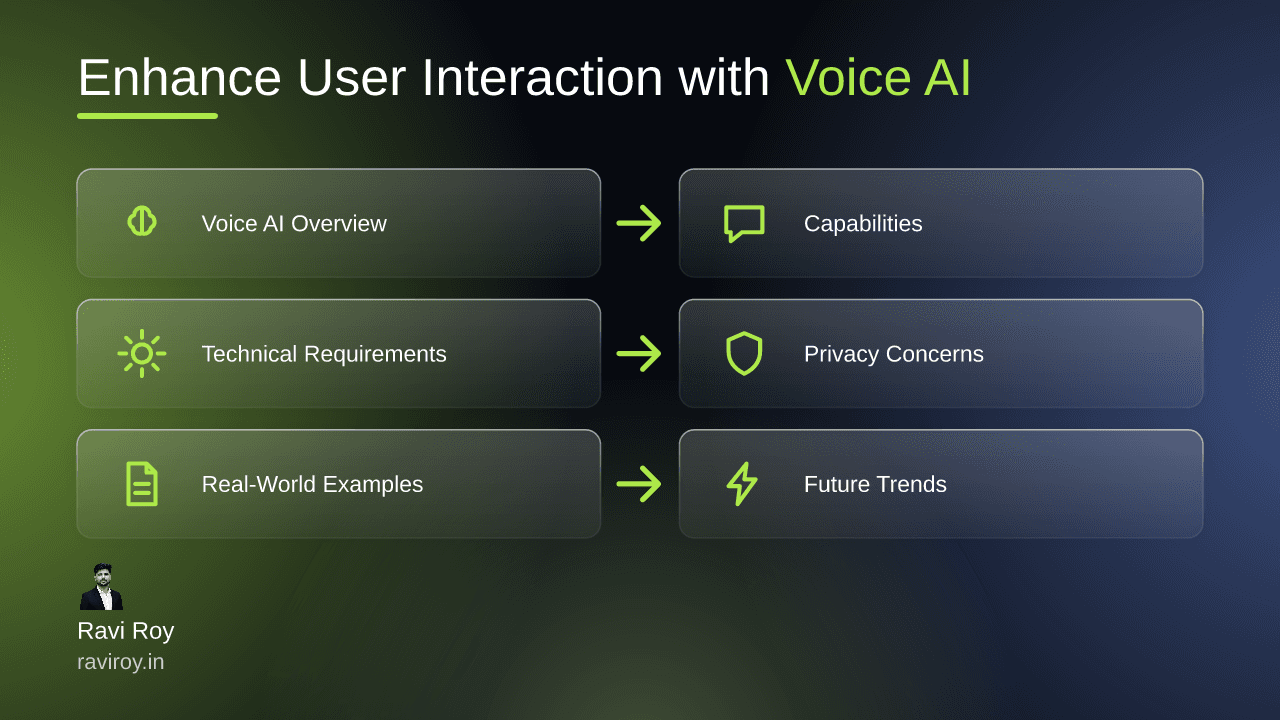
What is Voice AI in Mobile Apps?
Voice AI is revolutionizing how we interact with mobile applications, transforming mundane tasks into seamless experiences. This innovative technology enables devices to understand and process human speech, allowing users to communicate with apps just as effortlessly as they would with a human.
Defining Voice AI
At its core, Voice AI refers to artificial intelligence that comprehends and interprets spoken language. This system leverages a combination of machine learning, deep learning, and linguistics to respond to verbal commands. Users no longer have to navigate complex menus or touch screens; they can simply speak to their mobile devices.
Key Components of Voice AI Technology
Understanding Voice AI involves looking at its fundamental components:
Speech Recognition: This technology converts spoken language into text, enabling the app to understand user commands.
Natural Language Processing (NLP): NLP processes the text to decipher intent and meaning, allowing the AI to provide relevant responses.
Speech Synthesis: This allows the app to respond using human-like speech, completing the interaction loop.
These components work together to create a user-friendly interface that enhances engagement and interactivity.
Capabilities of Voice AI Assistants in Mobile Apps
Voice AI has ushered in a new era of mobile interactions, offering distinct capabilities that stand out in today's app ecosystem.
Voice Commands
Voice AI empowers users to execute tasks hands-free. For instance, a user can set reminders, send messages, or even adjust settings by simply speaking. This accessibility is particularly beneficial in situations where hands-free operation is necessary, enhancing user experience significantly.
Contextual Understanding
Advanced contextual understanding distinguishes Voice AI from conventional voice interfaces. Imagine booking a table at a restaurant; Voice AI recognizes not just the command but also the context—like the type of cuisine or the number of diners—tailoring its responses accordingly. This personalized touch makes conversations feel more natural and engaging.
Multilingual Support
The global nature of mobile applications demands that they cater to diverse audiences. Voice AI's support for multiple languages not only enhances accessibility but also fosters greater user engagement. Users can interact in their native tongue, leading to a more immersive experience.
Differences Between Voice AI Mobile Apps and Traditional Voice Assistants
While traditional voice assistants have laid the groundwork for voice interaction, Voice AI in mobile apps brings several unique advantages.
Interactivity
Mobile Voice AI applications offer more interactive features than their traditional counterparts. For example, consider a fitness app that talks back to users with motivational phrases based on their speaking patterns and performance history, creating a compelling experience that keeps users engaged.
User Experience
User experience is tailored for on-the-go usage in mobile apps, unlike stationary devices like smart speakers. When you're jogging or cooking, you can still interact with a Voice AI app seamlessly, which is particularly advantageous for sustaining user engagement in diverse scenarios.
Technological Advancements
Modern advancements in machine learning have significantly improved the responsiveness of mobile Voice AI. Real-time speech processing capabilities ensure that users receive almost instantaneous feedback—vital for maintaining engagement during interactions.
Technical Requirements for Running Voice AI Apps on Mobile
To leverage Voice AI in mobile applications, certain technical specifications are paramount.
Hardware Specifications
Mobile devices need adequate processing power to handle real-time speech processing efficiently. Most contemporary smartphones come with built-in processors that can manage Voice AI tasks. However, older models may struggle, leading to delays that can frustrate users.
Software Dependencies
On the software side, developers must incorporate specific frameworks capable of voice recognition and NLP. Popular frameworks include Google's Speech-to-Text API and Microsoft Azure's Cognitive Services, both of which provide robust capabilities to enhance Voice AI functionalities in apps.
Privacy and Security Concerns with Voice AI in Mobile Apps
As Voice AI technology continues to advance, so do concerns regarding privacy and security.
Data Collection Practices
Understanding how voice data is collected and stored is crucial for user trust. Apps should transparently communicate their data practices, ensuring users are aware of how their information will be used. This fosters a sense of safety, encouraging more users to embrace Voice AI features.
User Consent
Before initiating data collection processes, user consent must be explicitly obtained. This not only aligns with various legal frameworks but also enhances brand reputation. Clear consent mechanisms should be easy to navigate, allowing users to opt-in or out as they choose.
Security Measures
To safeguard user information from data breaches, implementing robust security measures is essential. Encryption of voice data as it travels to the server can minimize risks, while regular security audits can help identify vulnerabilities.
Real-World Examples of Voice AI in Mobile Apps
It’s illuminating to examine how some applications have effectively integrated Voice AI.
Popular Apps Utilizing Voice AI
Several notable mobile applications capitalize on Voice AI, transforming their user interactions. Apps like Google Assistant, Siri, and even specialized apps like Google Maps utilize Voice AI for navigation, reminders, and much more, streamlining user experiences.
Case Studies of Effective Implementations
Real-world case studies illustrate the tangible benefits of Voice AI. For example, a contactless food delivery app saw a 30% increase in user engagement after integrating Voice AI features, showcasing a clear return on investment. Users appreciated the convenience of ordering through voice commands, leading to higher customer satisfaction.
Future Trends in Voice AI and Mobile Applications
As technology evolves, so too does the role of Voice AI in mobile applications.
Integration with the Metaverse
Voice AI is adapting to experience changes in technology, such as the Metaverse. This expansion allows seamless communication across virtual environments. Imagine navigating a virtual marketplace or socializing in a virtual café, all facilitated through intuitive voice interactions.
Advancements in Speech Technology
Continuous advancements in speech technology promise even greater enhancements for user interaction. Expect to see improved accuracy in speech recognition and natural language understanding, minimizing misunderstandings and enhancing the overall user experience.
Voice AI is more than just a trend; it’s a game-changer in user interaction for mobile applications. With its growing capabilities and technical robustness, the future is bright for Voice AI technology.
How have you seen Voice AI transform user interaction in your favorite mobile apps?
💬 Join the conversation — share your take in the comments and tell us what you’d add.