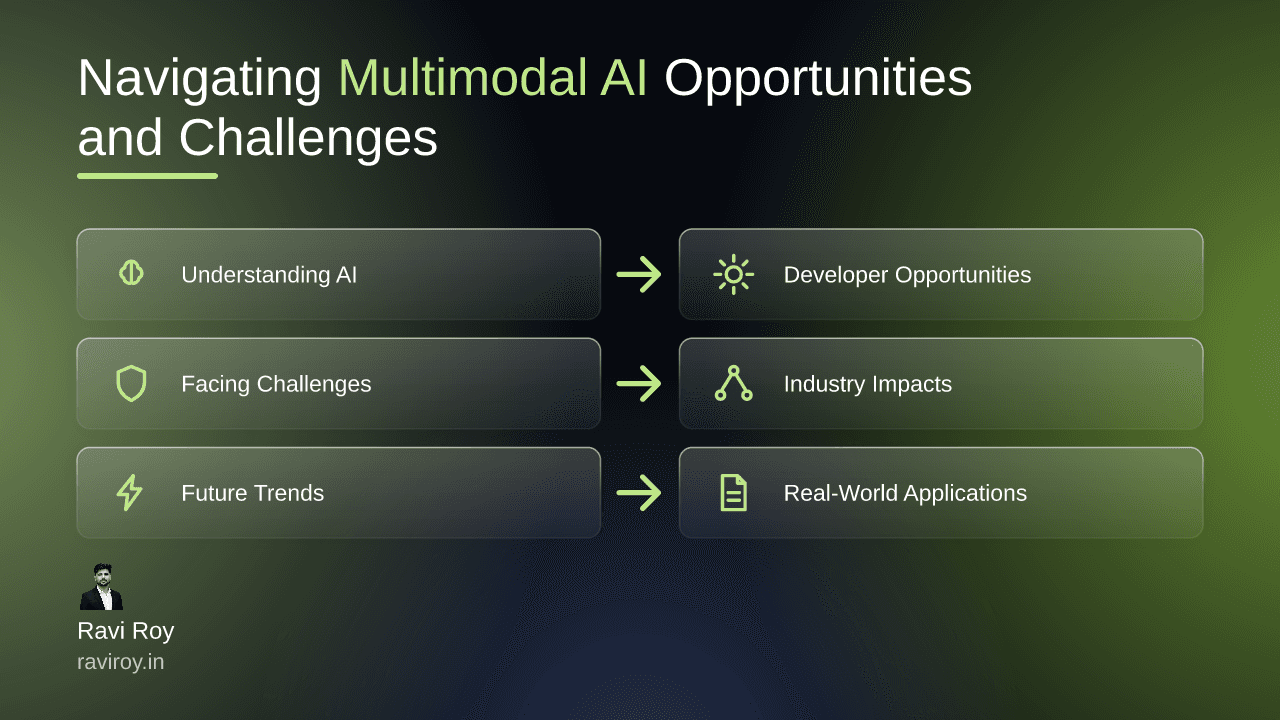
Understanding Multimodal AI
What is Multimodal AI?
Multimodal AI represents a transformative leap in artificial intelligence by synthesizing various forms of data—such as text, images, and audio—into cohesive and intuitive outputs. Unlike traditional AI systems, which typically handle a single type of input, multimodal AI leverages a broader context to enhance understanding and responsiveness. For instance, an AI that analyzes a photograph can also interpret accompanying text and audio to generate a comprehensive response or action. This integrative approach harnesses diverse data sources, leading to more robust and nuanced intelligence.
Differences from Traditional AI Models
Traditional AI models often operate in silos, processing one kind of data at a time, leading to limitations in understanding context and nuance. In contrast, multimodal AI can create connections across different data types, enhancing its applications drastically. For example, a traditional chatbot might misinterpret user intent if only given text, whereas a multimodal AI could identify tone through voice or relevant imagery, thereby providing a more fitting response. This blend fosters richer interactions and improved decision-making capabilities, positioning multimodal AI as an essential advancement in the realm of artificial intelligence.
Emerging Opportunities for Developers
Real-Time and On-Device Processing
The demand for real-time processing capabilities in multimodal AI applications is surging. Developers are increasingly focused on creating systems that function seamlessly without the latency often associated with cloud-based processing. For example, edge computing allows multimodal AI to process data locally on devices, significantly reducing response times. This trend is particularly beneficial for applications like mobile health monitoring, where timely analysis can inform immediate health decisions.
Agentic Multimodal AI Applications
Fusing multiple modalities also opens pathways for developing agentic AI—that is, AI that operates autonomously across different data types and environments. This concept empowers developers to create systems that not only respond to user inputs but also take proactive actions based on context. For instance, a voice-activated smart home assistant could identify a user’s mood through their voice tone, combined with visual cues from security cameras, thus offering tailored responses that enhance user experience. Case studies, such as NVIDIA’s applications in enhancing customer engagement, demonstrate the profound potential of agentic multimodal solutions.
Challenges Facing Developers in Multimodal AI
Technical and Ethical Concerns
Despite the enormous potential, several technical challenges persist in multimodal AI development. Integrating various data streams often leads to complications in data quality and consistency—ensuring that the AI can accurately interpret the information presented. Moreover, ethical concerns loom over privacy and bias. As developers collect and utilize rich datasets from diverse sources, maintaining user trust while avoiding algorithmic bias becomes paramount. Such considerations necessitate a multi-faceted approach to data ethics, urging developers to adopt stringent guidelines.
Cross-Modal Reasoning and Integration
Achieving seamless integration between different modalities is another key hurdle. Effective cross-modal reasoning requires sophisticated algorithms that can understand how different types of data relate to one another. For instance, if a visual recognition model identifies a child playing outside but the text input reflects concerns about nearby traffic, the system must reconcile these signals to evaluate risk accurately. Ensuring that multimodal AI can reason across various inputs effectively remains a critical challenge that developers must address in their applications.
Industry Impacts of Multimodal AI
Healthcare Applications
One of the leading sectors benefiting from multimodal AI is healthcare. Advanced AI algorithms are enabling more accurate diagnostics and patient monitoring by integrating data from medical images, electronic health records, and real-time biometric feedback. For example, imaging studies can be aligned with patient histories and voice consultations to formulate tailored treatment plans. This transformative capability is paving the way for more personalized and efficient healthcare solutions, leading to improved patient outcomes.
Implications for Autonomous Vehicles
The implications of multimodal AI extend to autonomous vehicles, where integrating visual data from cameras with audio signals and sensor feedback is crucial for safety and decision-making. Effective multimodal systems can enhance navigation accuracy and help in understanding complex scenarios—akin to how humans process information while driving. Robust multimodal AI can identify nuances in surroundings, ensuring vehicles respond appropriately to dynamic environments, thereby enhancing both safety and efficiency on the road.
Future Trends in Multimodal AI Development
Advanced Training Methods
Looking ahead, advanced training methods like contrastive learning will enable developers to fine-tune multimodal models more effectively. This approach encourages models to learn by comparing and contrasting different modes of information, thus improving their accuracy and response times. By training models this way, developers can create AI that better understands context and relationships among various data types, leading to a significant uplift in performance.
Scale and Integration at the Edge
As demand for multimodal AI grows, so does the need for scalable solutions. Implementing these advanced systems at the edge, minimizing reliance on centralized data processing, presents both challenges and opportunities. Developers will face the intricate task of balancing computation power and energy efficiency to ensure that systems remain responsive while leveraging multimodal capabilities. The ongoing innovation in edge computing holds the potential to make this balance achievable, paving the way for wider adoption of multimodal solutions.
Real-World Case Studies and Applications
Successful Multimodal AI Projects
Across industries, numerous organizations are making significant strides with multimodal AI. For example, businesses like Google have successfully integrated multimodal systems into their search algorithms, allowing for richer, more contextual search results based on user inputs. Similarly, companies like OpenAI are pushing boundaries with multimodal models that understand and generate human-like responses across different data types. These case studies highlight the practical applications and effectiveness of multimodal AI projects.
Lessons Learned from Deployments
Examining these successful deployments reveals critical lessons for future developers. A common takeaway is the importance of user-centric design—ensuring that multimodal solutions are intuitive and tailored to real-world needs. In addition, attention to ethical practices, including safeguarding data privacy and minimizing bias, is essential for long-term success. These insights empower developers to create multimodal systems that not only deliver on functionality but also align with user expectations and ethical standards.
What barriers have you faced while developing applications in multimodal AI, and how did you overcome them?
💬 Join the conversation — share your take in the comments and tell us what you’d add.