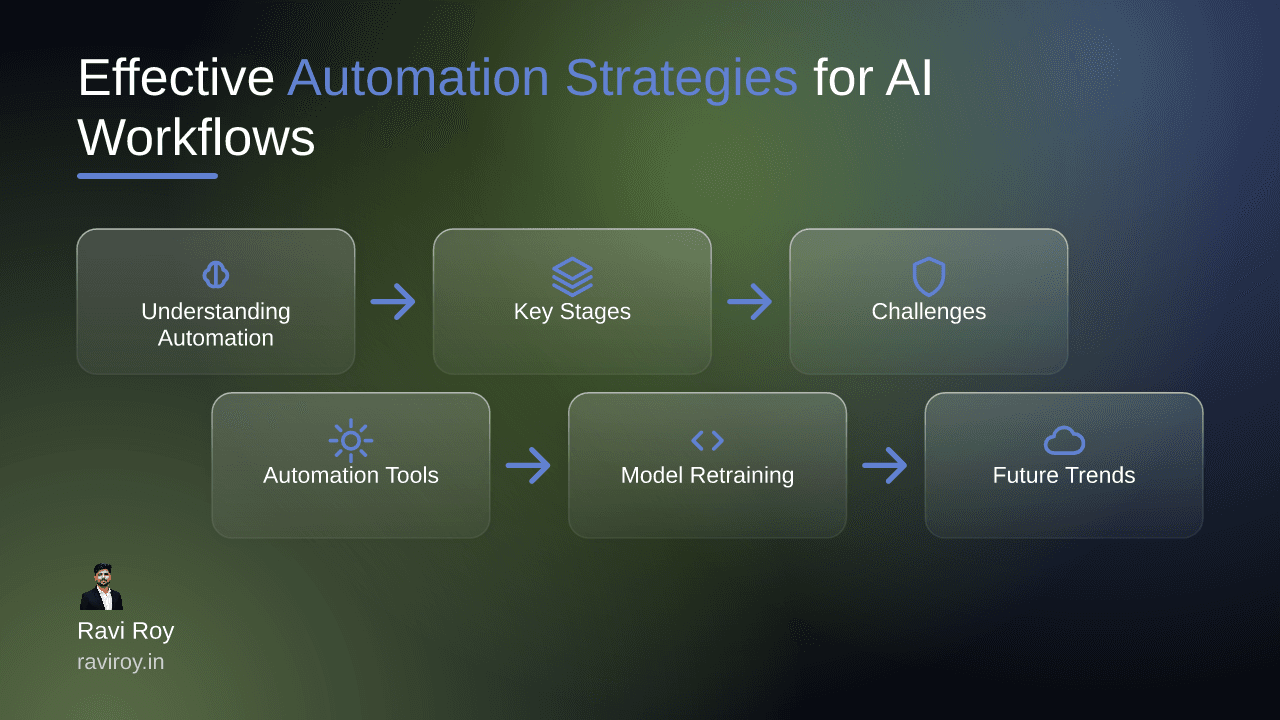
Effective Automation Strategies for Enhancing AI Development Workflows
Automation is more than just a buzzword; it’s a vital cog in the machinery of AI development workflows. As organizations strive to make their processes more efficient while minimizing human error, understanding how automation plays a role becomes indispensable.
Understanding Automation in AI Development Workflows
What is Automation?
At its core, automation is the application of technology to produce and operate processes without human intervention. In the landscape of AI development, automation captures everything from data preprocessing to model deployment, ultimately streamlining workflows and enabling faster iterations. It is the backbone that supports a robust AI strategy.
Why Automation Matters in AI Development
The significance of automation in AI development cannot be overstated. By streamlining repetitive tasks, automation minimizes the potential for human error, improves accuracy, and accelerates the overall development lifecycle. For example, organizations like Google have utilized automated testing frameworks that halve the time it takes to identify software issues, demonstrating substantial gains in efficiency (link text). The more we automate mundane tasks, the more time and resources can be redirected to innovation and creativity.
Key Stages in Automating AI Development Workflows
Identifying Workflow Stages
To effectively integrate automation into AI development workflows, it’s essential to map out the critical stages that can benefit from automation:
Data Collection: Gathering data from diverse sources.
Data Processing: Cleaning and preparing the data for analysis.
Model Training: Training machine learning models until they meet performance criteria.
Model Evaluation: Assessing model performance against benchmarks.
Model Deployment: Deploying the model for real-world application.
Understanding these stages allows teams to identify which parts of their workflows can be automated, thus saving both time and resources.
Tools for Each Stage
Data Collection: Tools like Apache NiFi and Airflow can help automate data ingestion.
Data Processing: Pandas and Dask facilitate data cleaning and transformation.
Model Training: Libraries like TensorFlow and PyTorch support automated hyperparameter tuning through tools like Optuna and Ray Tune.
Model Evaluation: Automated testing frameworks like TFX can assist in continuous monitoring of model performance.
Model Deployment: Platforms like Kubeflow and MLflow streamline the deployment process.
The integration of these tools, especially within MLOps frameworks, offers a more harmonious environment in which automation can flourish throughout the AI Software Development Life Cycle (SDLC).
Challenges in Automating AI Development
Common Pitfalls
While automation brings significant advantages, it also offers challenges. Common pitfalls include:
Integration Issues: Legacy systems may not easily interface with modern automation tools.
Data Quality: Automation is only as effective as the data it uses. Poor data quality can lead to misleading outcomes.
Mitigating these challenges often involves thorough planning and testing to ensure compatibility and data integrity.
Navigating Security Implications
The rise of AI automation also brings security concerns unique to the field. From data breaches to ethical dilemmas in model deployment, organizations must take proactive steps to secure their operations. Employing secure coding practices, continuously monitoring for vulnerabilities, and ensuring compliance with data regulations are vital strategies to mitigate risks.
Automation Tools for AI Model Deployment
Integrating AI Tools into Existing Workflows
The deployment of AI models can greatly benefit from automation. Automated deployment pipelines enable faster updates and continuous integration and delivery (CI/CD) processes that keep AI applications relevant in changing environments. The use of containers and orchestration platforms, like Docker and Kubernetes, is increasingly popular for their ability to simplify complex deployment procedures.
Popular Tools Overview
Several tools have emerged as leaders in facilitating AI automation:
Docker: Simplifies application containerization, making deployments seamless.
Kubernetes: Automates deployment, scaling, and management of containerized applications.
MLflow: Facilitates end-to-end machine learning lifecycle management, including tracking experiments and model registry.
These tools provide options that enhance workflow efficiency and reduce deployment times, thereby driving faster iterations for machine-learning projects.
Automated Model Retraining Pipelines
Why Automated Retraining is Essential
Regular retraining of AI models is crucial to ensure their performance remains optimal in dynamic environments. As data evolves, models can become outdated, leading to decreased accuracy. Automated retraining pipelines address this by systematically updating models based on new data inputs without requiring constant human oversight.
Setting Up a Retraining Pipeline
To set up a successful automated retraining pipeline, follow these steps:
Data Monitoring: Continuously track data and model performance metrics.
Triggering Events: Define conditions (e.g., changes in model accuracy) that will automatically trigger the retraining process.
** retraining Process**: This can be facilitated by frameworks such as Jenkins or CircleCI, which can coordinate retraining jobs based on triggers.
Deployment: Upon successful retraining, automatically deploy the updated model back into production.
Tools such as Kubeflow Pipelines can significantly simplify these workflows, providing a cohesive environment for monitoring and retraining processes.
Future Trends in AI Workflow Automation
Agentic AI as Coders' Copilots
The emergence of agentic AI is transforming how we code. These AI assistants help developers by suggesting code snippets, debugging, and even automating repetitive tasks—much like having a copilots assist human pilots. This trend signifies a shift towards much more collaborative programming practices that can enhance efficiency and reduce developer fatigue.
Integration of AI Systems in Software Development
The integration of AI systems throughout software development—from planning and coding to deployment and maintenance—will be paramount. Expect to see more cohesive tools designed to work alongside traditional software stacks, facilitating a more fluid development and deployment process.
Predictions suggest rapid advancements in automation strategies that will continue to redefine the AI landscape in the coming years, promoting higher levels of efficiency and collaboration.
What unique automation strategies have you implemented in your AI development processes? Share your experiences and outcomes!
💬 Join the conversation — share your take in the comments and tell us what you’d add.