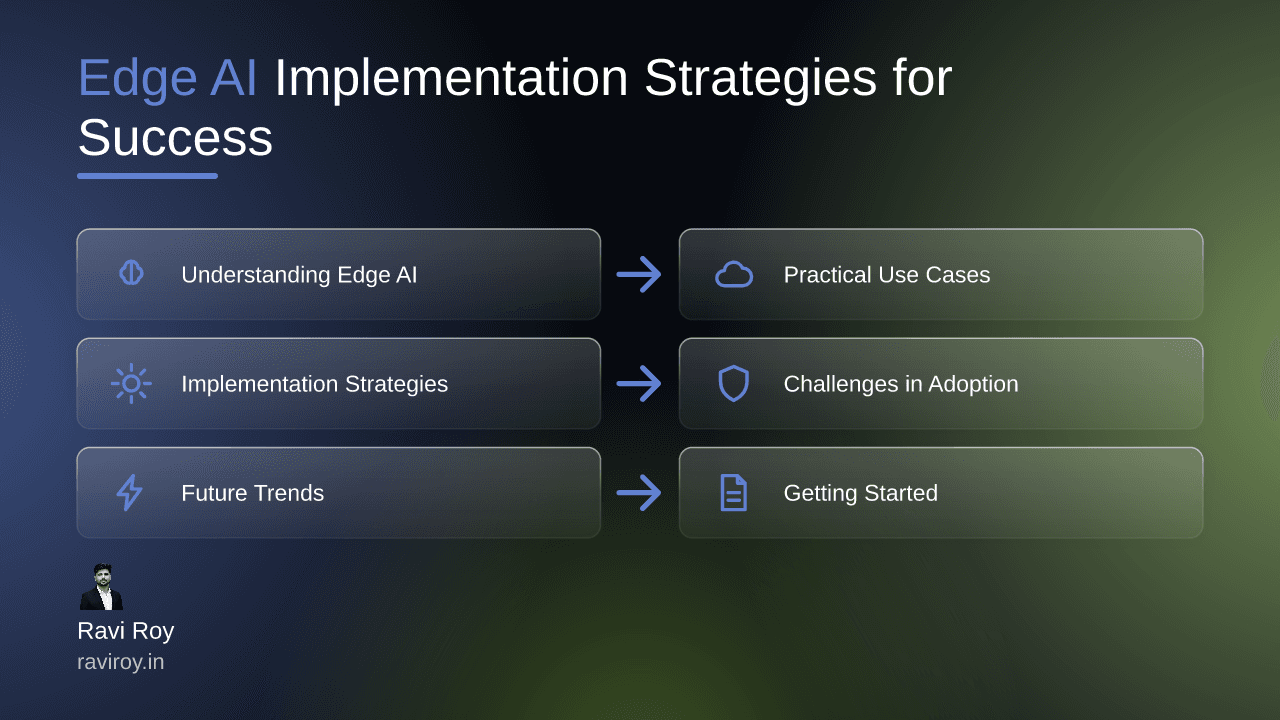
Understanding Edge AI
What is Edge AI?
Edge AI represents a transformative approach to data processing, bringing artificial intelligence capabilities closer to the data source. By integrating AI algorithms directly on edge devices, it allows for real-time analysis and decision-making without the need to transfer large amounts of data back to centralized servers. This technology minimizes latency, enhances operational efficiency, and bolsters data privacy, as sensitive information can be processed locally rather than transmitted over the internet.
Difference Between Edge AI and Cloud AI
While both Edge AI and Cloud AI harness the power of artificial intelligence, they cater to different needs. Edge AI processes data speedily at or near the source, enabling instant responses, which is critical for applications requiring low-latency responses, such as autonomous vehicles or healthcare monitoring systems. On the other hand, Cloud AI leverages vast computational resources and centralized data storage to perform extensive analyses that may not require immediate feedback.
In terms of efficiency, Edge AI stands out by significantly reducing the bandwidth needed for data communication, allowing organizations to respond more adeptly to real-time demands. Conversely, Cloud AI thrives in scenarios where data analytics must be broad, aggregative, and less time-sensitive (source).
Practical Use Cases of Edge AI
Edge AI in Healthcare
In healthcare, Edge AI is revolutionizing patient monitoring by enabling real-time data analysis from medical devices. For instance, wearable devices equipped with edge AI algorithms can continuously analyze patients' heart rates and detect anomalies instantly, alerting healthcare providers without delay. This not only enhances patient safety but also allows for timely interventions, reducing emergency cases and hospital visits.
Edge AI for Smart Cities
Smart city initiatives are highly benefitting from Edge AI by optimizing energy management, traffic control, and public safety. By using data from various sensors installed throughout urban environments, city planners can analyze traffic flow in real time, adjusting traffic signals to reduce congestion. Additionally, edge AI systems can optimize power consumption in smart grids by analyzing energy usage patterns and adjusting supply accordingly (link text).
Manufacturing and Industry 4.0 Applications
In the realm of manufacturing, Edge AI facilitates predictive maintenance, minimizing downtime and reducing operational costs. By analyzing data from machinery and sensors integrated into the production line, companies can foresee potential equipment failures and undertake preventative measures before breakdowns occur. For example, a smart factory environment might employ edge devices to monitor machine vibrations and temperature, feeding this data into algorithms that predict wear and tear.
Implementation Strategies for Edge AI
Choosing the Right Hardware
When implementing Edge AI, selecting the appropriate hardware is crucial. Organizations should evaluate devices based on specific application requirements, such as processing power, energy efficiency, and compatibility with existing systems. For example, high-performance GPUs may be necessary for applications involving complex image recognition, while simpler tasks can be efficiently handled by low-power microcontrollers.
Software Considerations
Developers need to consider software frameworks that support Edge AI development. Options like TensorFlow Lite, AWS Greengrass, and Microsoft Azure IoT Edge provide accessible paths for deploying machine learning models on edge devices. These frameworks often include optimization tools that enhance model performance while reducing resource consumption, ensuring applications run smoothly even on less powerful hardware (source).
Networking and Security Best Practices
Security in Edge AI implementations cannot be overlooked. Organizations must ensure secure communication channels, utilizing encryption technologies to protect sensitive data during transmission and storage. Furthermore, devices should be regularly updated with the latest security patches to address potential vulnerabilities.
Challenges in Adopting Edge AI
Scalability Issues
One of the primary challenges with Edge AI is scalability; deploying a multitude of edge devices across various environments can be daunting. Organizations must design their systems to efficiently manage and scale their edge infrastructure, potentially investing in advanced orchestration tools that facilitate deployment and management.
Data Privacy Concerns
As Edge AI often involves processing sensitive data at the source, it raises important privacy concerns. Organizations must navigate regulations such as GDPR or HIPAA by ensuring that personal data is handled responsibly. Employing anonymization techniques and data minimization strategies can help mitigate risks while maintaining compliance.
Integration with Existing Systems
Integrating Edge AI solutions with legacy systems presents another layer of complexity. Many organizations operate on traditional data architectures that may not support new edge functionalities. A phased approach to integration, where new systems are incrementally introduced, can ease the transition while ensuring continuity in operations.
Future Trends in Edge AI
Advancements in AI Algorithms
The future of Edge AI hinges on advancements in AI algorithms, which will empower edge devices with more sophisticated capabilities. Enhanced models may enable better decision-making and more complex analyses directly at the source, paving the way for innovative applications across various sectors.
Growth in Edge Device Adoption
As businesses realize the benefits of Edge AI, the adoption of edge devices is set to soar. Industries will increasingly invest in IoT integrations, ensuring that devices equipped with edge capabilities become the norm rather than the exception, particularly in sectors like agriculture and retail.
Impact of 5G on Edge AI
The rollout of 5G technology is a game-changer for Edge AI, as it provides significantly faster data transmission speeds and increased device connectivity. This acceleration supports the deployment of more responsive Edge AI applications, enabling real-time analytics and improved user experiences.
Getting Started with Edge AI
Assessing Your Business Needs
Before embarking on an Edge AI initiative, organizations must assess their specific business needs. Identifying use cases that would benefit from low-latency processing and real-time data analysis is key. For example, a logistics company might focus on optimizing delivery routes using Edge AI applications to analyze real-time traffic conditions.
Pilot Projects and Testing
Conducting pilot projects is an advisable step before scaling up Edge AI implementation. These initial projects allow organizations to test their edge systems in a controlled environment, analyzing performance and making necessary adjustments. For instance, a retail chain could deploy Edge AI in a single store to gather data on customer interactions and assess staffing needs before a broader rollout.
Evaluating Success Metrics
Finally, success metrics must be outlined to evaluate the effectiveness of Edge AI implementations. This could involve tracking improvements in operational efficiency, cost reductions, and user satisfaction rates. Establishing clear KPIs will help quantify the impact of Edge AI on the business.
What specific Edge AI use case are you considering for your business, and why? Let's hear your thoughts and experiences!
💬 Join the conversation — share your take in the comments and tell us what you’d add.