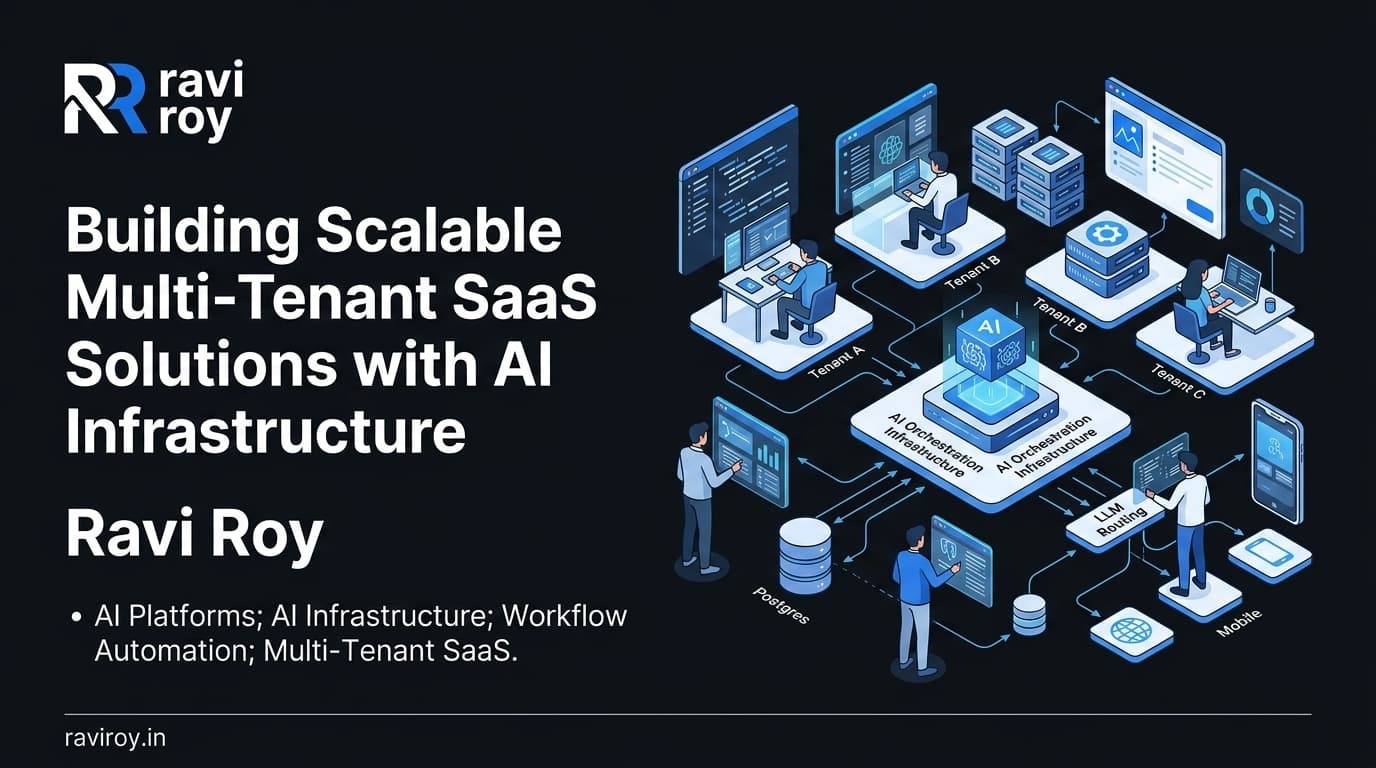
Building Scalable Multi-Tenant SaaS Solutions with AI Infrastructure
The world of SaaS is evolving rapidly, and for developers, understanding how to build scalable multi-tenant solutions is crucial. Multi-tenant architecture allows numerous customers to share a single application instance while maintaining their data privacy, offering both cost-efficiency and enhanced scalability.
Understanding Multi-Tenant SaaS Architecture
Defining Multi-Tenant SaaS
Multi-tenant SaaS architecture differs significantly from single-tenant infrastructure. In a single-tenant model, each customer operates their own exclusive instance of the software, leading to higher costs and complexity when scaling. Multi-tenancy, on the other hand, leverages a shared infrastructure. This not only optimizes resource usage but also enhances the speed of feature deployment for all tenants.
Key Characteristics of Multi-Tenant Solutions
Some defining characteristics of multi-tenant solutions include:
Scalability: Enables swift adaptation to varying user loads and traffic patterns.
Cost-Efficiency: Reduces operational costs through shared resources.
Strong Tenant Isolation: Guarantees that user data is securely compartmentalized, protecting privacy while enhancing performance.
The right multi-tenant architecture allows businesses to pivot and grow efficiently, responding to market demands without incurring substantial infrastructure overhauls.
Ensuring Tenant Isolation in Multi-Tenant SaaS
Importance of Tenant Isolation
Effective tenant isolation is vital in multi-tenant SaaS environments. Weak isolation can lead to severe security breaches, making sensitive data accessible to unauthorized users. As incidents of data leaks continue to rise, the stakes for tenant isolation have never been higher. Organizations must prioritize security to build trust among their customers.
Best Practices for Tenant Isolation
Implementing robust strategies to achieve tenant isolation includes:
Sharding: Dividing databases into smaller segments to segregate data and minimize risk.
Distributed SQL: Using distributed databases enhances both scalability and isolation, empowering distinct instances to operate independently without interference.
Technologies for Enhancing Isolation
Technologies like containerization have emerged as effective methods for securing tenant environments. By encapsulating applications in containers, data is further protected, and deployment across shared infrastructures becomes seamless.
Scaling Multi-Tenant SaaS Applications Horizontally
Defining Horizontal Scaling
Horizontal scaling refers to adding more machines or nodes to a system as opposed to enhancing the capacity of individual servers (vertical scaling). This method is generally more efficient for multi-tenant environments as it naturally accommodates growth.
Benefits of Horizontal Scaling
The benefits of horizontal scaling for multi-tenant applications are manifold:
Improved Performance: Distributing workloads across multiple servers improves response times and resource handling.
Resilience: A network of multiple servers ensures that failure in one doesn’t compromise the entire service.
Techniques for Effective Scaling
To effectively implement horizontal scaling, consider leveraging cloud-native technologies and tools like Kubernetes. Autoscaling allows your application to automatically adjust according to real-time traffic demands, significantly enhancing operational flexibility.
Database Strategies for Multi-Tenant SaaS Solutions
Common Database Architectures
When it comes to databases in multi-tenant architectures, options typically include:
Shared Databases: Cost-effective but can complicate data isolation.
Isolated Databases: Provides maximum security at a higher cost.
Hybrid Models: Balances cost and security by isolating sensitive tenant data while leveraging shared resources for others.
Cost Considerations
Each architecture has its cost implications. Shared databases significantly lower the initial investment but can lead to higher long-term costs due to complexity and potential security issues. Conversely, isolated architectures require more upfront investment but can save costs on compliance and security in the long run.
Choosing the Right Database
When selecting the most suitable database strategy for your multi-tenant solution, consider factors such as:
Tenant requirements: What level of data isolation is necessary?
Scalability needs: Will the architecture handle growth effectively?
Cost implications: What is the budget constraint?
Implementing Tenant-Aware Security
Understanding Tenant-Specific Security Needs
Multi-tenant environments face unique security threats. As different tenants may have varying levels of security requirements, addressing these needs effectively is paramount.
Technological Solutions for Security
Recent advancements in AI-driven monitoring tools offer the ability to detect anomalies and potential threats across multi-tenant landscapes. These technologies can actively learn and adapt, improving tenant security over time.
Challenges in Implementing Security
While there are numerous solutions available, challenges remain in deploying them effectively:
Complexity: Introducing multiple tools can lead to integration issues.
Resource allocation: Adequately distributing security resources across tenants can be daunting.
Utilizing Kubernetes for Multi-Tenant SaaS
Benefits of Kubernetes
Kubernetes is a powerful orchestration tool that simplifies the management of containerized applications, providing profound benefits for multi-tenant environments:
Simplified Scaling: Automatically manages scaling in response to demand.
Environment Consistency: Ensures applications run uniformly across different platforms.
Kubernetes Architecture Overview
Kubernetes operates through a cluster of nodes, each running its own containers, and coordinates these to form a cohesive application environment. This architecture not only supports scaling but also facilitates robust data segmentation between tenants.
Best Practices for Kubernetes Deployments
To maximize Kubernetes effectiveness, consider these best practices:
Labels and Annotations: Use these for efficient organization of resources.
Namespaces: Implement namespaces to create logical separations between tenant resources, improving security and management.
Future Trends in Multi-Tenant SaaS
AI and Machine Learning Integration
The future of multi-tenant SaaS will likely be dominated by AI and machine learning. These technologies can optimize resource management, predict usage patterns, and enhance tenant experiences through personalized services.
Evolving Security Practices
As threats evolve, so too must security practices. Multi-tenant architectures will need to embrace advanced security measures that are adaptive and capable of learning from new threats in real-time.
Emerging Technologies and Their Impact
Technologies such as edge computing could significantly influence the SaaS landscape by enabling data processing closer to the user, thereby reducing latency and improving application performance.
Ready to build your own scalable multi-tenant SaaS solution? Contact us today for expert guidance!