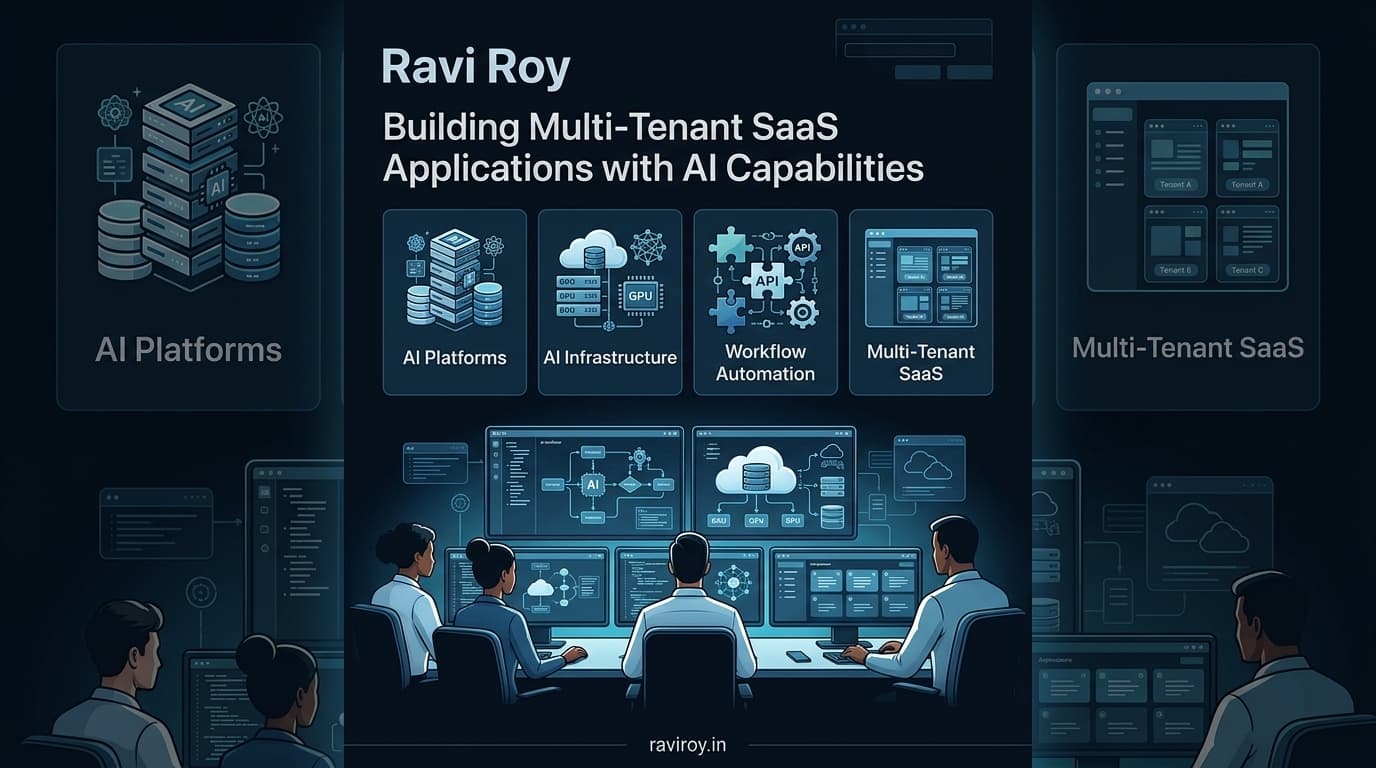
Building Multi-Tenant SaaS Applications with AI Capabilities
Building multi-tenant SaaS applications with AI capabilities offers a frontier of innovation and efficiency that cannot be ignored. As businesses increasingly pivot to the cloud, understanding how to harness both multi-tenancy and AI stands as a crucial aspect of modern application development.
Understanding Multi-Tenant SaaS Architecture
What is a Multi-Tenant SaaS Application?
A multi-tenant SaaS application serves multiple customers—tenants—within a single instance of an application, sharing the same software infrastructure and application resources. This structure stands in contrast to single-tenant applications where each customer has their own isolated instance.
Multi-tenancy optimizes resource utilization and lowers costs, as the same application instance efficiently serves multiple users. Tenants can access features and data sets tailored to their specific needs while benefitting from the scalable architecture and faster deployment times.
Why Choose Multi-Tenant Over Single-Tenant?
Choosing multi-tenant architecture over single-tenant provides several noteworthy advantages:
Cost Efficiency: By sharing resources, multi-tenancy reduces operational costs significantly. SaaS providers can group infrastructure expenses, allowing them to lower subscription fees for customers.
Scalability and Flexibility: Multi-tenant systems are inherently more scalable. New tenants can be added without the need for additional infrastructure, allowing businesses to expand rapidly.
Centralized Maintenance: Updates and maintenance are simpler in a multi-tenant architecture, as changes are implemented in one place rather than requiring individual updates for each tenant.
Enhanced Collaboration: Since data can be shared across tenants, this architecture can facilitate collaboration and data analytics among businesses that are part of the same ecosystem.
Integrating AI Capabilities in Multi-Tenant SaaS
How Does AI Fit into Multi-Tenant SaaS Platforms?
The integration of AI into multi-tenant SaaS platforms enhances user experience, automates processes, and provides personalized services. AI-driven features, such as chatbots and recommendation engines, leverage data across tenants to deliver tailored suggestions and support.
AI also plays a pivotal role in analyzing user data, helping to optimize software performance and identify trends that can inform future product development. By implementing AI, SaaS applications can evolve to meet the sophisticated needs of varying tenant profiles.
Should Each Tenant Have Its Own AI Model?
One of the pressing questions when building multi-tenant AI SaaS applications is whether to implement unique AI models for each tenant. While tenant-specific models can fine-tune services based on unique datasets, they can also introduce challenges related to scalability, maintenance, and resource allocation.
A balanced approach involves using shared models that still allow for some degree of customization. This enables tenants to experience personalized AI capabilities while reaping the benefits of centralized learning and reduced overhead.
Architecture Layers of a Multi-Tenant AI SaaS System
Core Architecture Components
The architecture of a multi-tenant AI SaaS application typically comprises three layers:
Application Layer: This is where the user interface and core functionalities reside. It handles interactions and integrates with back-end services.
Data Layer: Centralized databases manage and store tenant data, ensuring easy access while applying data separation protocols to protect individual tenants' information.
Service Layer: This encapsulates the core business logic and AI services, managing processes such as AI inference and model training.
Microservices and Kubernetes for Tenant Isolation
Microservices architecture, coupled with Kubernetes, greatly enhances tenant isolation and management. Each service can operate independently, allowing for easier updates and isolated resource consumption.
Kubernetes orchestrates these services, ensuring that tenant workloads are distributed effectively while providing scalability and resilience. This isolation not only secures tenant data but also optimizes resource allocation across various AI services.
Security and Data Governance in Multi-Tenant SaaS
Keeping Tenant Data Secure
Security is a paramount concern in a multi-tenant architecture. To protect tenant data, best practices include:
Data Encryption: Both at rest and in transit, encryption safeguards sensitive tenant information from unauthorized access.
Access Controls: Implementing role-based access controls ensures that only authorized users can view or manipulate tenant data.
Regular Audits: Conducting frequent security assessments helps identify vulnerabilities and strengthen data governance.
Centralized Governance and Auditing for Generative AI
As AI-driven applications generate insights from user data, governance becomes crucial. Centralized auditing mechanisms ensure that tenant data usage is compliant with regulations and standards. This level of scrutiny can help establish trust among users, who want assurance that their data is handled responsibly.
Optimizing Resources for AI Inference
Resource Optimization Techniques
Efficient resource allocation is critical for AI inference in a multi-tenant environment. Techniques include:
Dynamic Resource Allocation: Utilize tools that allow for real-time scaling of resources based on tenant demand.
Load Balancing: This ensures that AI workloads are evenly distributed, preventing any single service from becoming a bottleneck.
Batching and Caching for Performance
Batching and caching techniques can significantly improve the performance of AI services.
Batching processes allow multiple requests to be processed together, reducing overhead and improving throughput.
Caching provides quick access to frequently used data, decreasing latency and elevating user experience. Combined, these strategies optimize the systems for both speed and cost-effectiveness.
Challenges in Building Multi-Tenant AI SaaS
Addressing Common Pitfalls
While the benefits of multi-tenant AI SaaS models are numerous, challenges such as scaling difficulties, performance issues, and security concerns cannot be overlooked. It’s vital to develop a robust framework that anticipates these challenges and implements proactive measures.
Engaging in regular performance assessments and user feedback loops can identify issues early, leading to quicker resolutions and continuous improvement.
Monitoring AI Usage Per Tenant
Monitoring the usage of AI services across tenants is essential for maintaining performance and compliance. Analytic tools can provide insights into each tenant's AI utilization, helping to optimize resources and address potential misuse. Leveraging these insights enables service providers to offer tailored solutions that meet individual tenant needs effectively.
Transitioning from Single-Tenant to Multi-Tenant
Best Practices for Transitioning
Moving from a single-tenant to a multi-tenant architecture necessitates careful planning. Here’s a roadmap to guide the transition:
Assessment: Evaluate current architecture and identify components that can be adapted for multi-tenancy.
Design: Create a strategy for data isolation and security that aligns with multi-tenant principles.
Implementation: Roll out the new architecture in phases, starting with a pilot to test functionality.
Monitoring: Use real-time monitoring tools to track performance during the transition.
Case Studies of Successful Implementations
Several organizations have successfully transitioned to multi-tenant architectures, reaping the rewards of improved scalability and cost savings. For instance, Company X implemented a centralized AI model that allowed them to serve multiple clients, reducing their operational costs by 30% while enhancing service offerings (link text).
Company Y utilized a hybrid model that balanced shared AI services with tenant-specific customizations, resulting in a 150% increase in user satisfaction scores.
Conclusion
Building multi-tenant SaaS applications with AI capabilities represents an evolving frontier that holds significant promise for businesses looking to enhance efficiency and scalability. By understanding the architecture, integrating AI thoughtfully, prioritizing security, and learning from transitions, organizations can position themselves for success in this dynamic landscape.
Explore how our services can help you build a robust multi-tenant SaaS application with advanced AI capabilities.