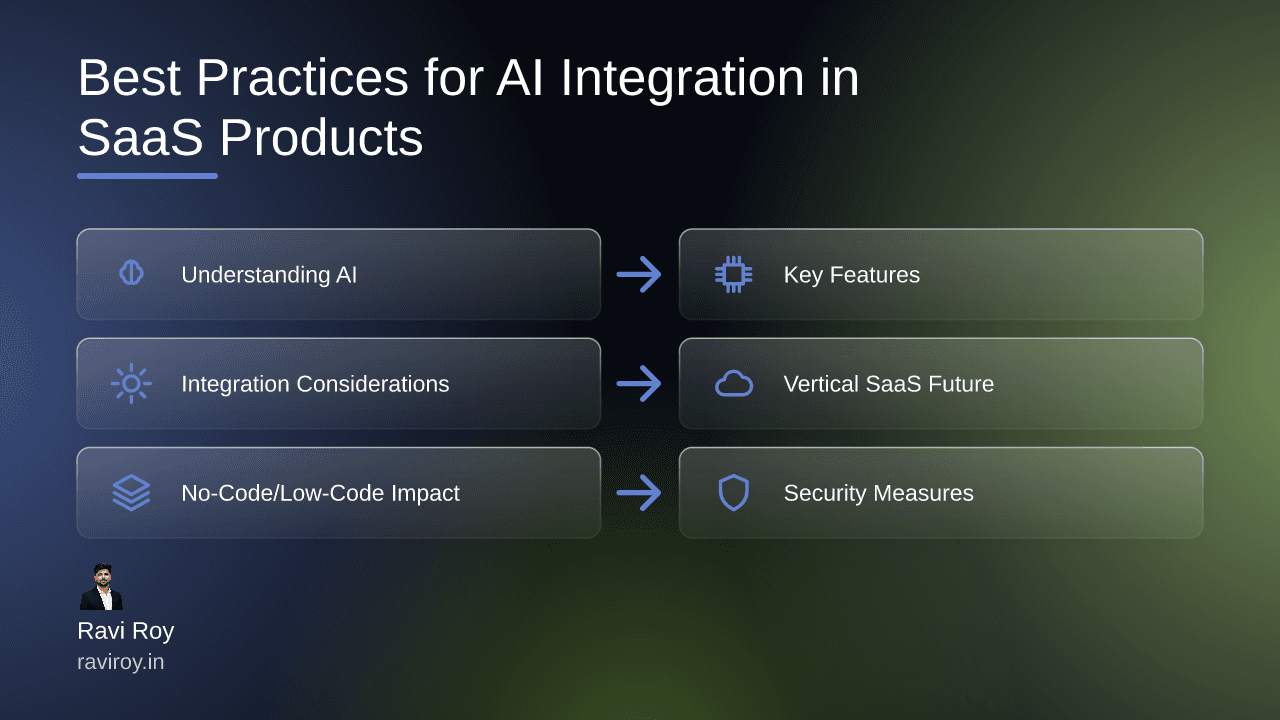
Understanding AI Integration in SaaS Products
The integration of AI into Software as a Service (SaaS) products is not just a trend; it's becoming an industry standard. As businesses aim to enhance operational efficiency and user experience, the question of how to effectively integrate AI into SaaS solutions becomes paramount.
What is AI Integration in SaaS?
AI integration in SaaS refers to embedding artificial intelligence capabilities within cloud-based software applications. This seamless incorporation allows SaaS solutions to automate processes, analyze data, and provide intelligent insights, making tasks simpler and more efficient. By leveraging machine learning algorithms, natural language processing, and predictive analytics, AI enables SaaS products to offer personalized experiences and smarter functionalities.
Why Businesses are Adopting AI in SaaS
There are several compelling reasons why businesses are adopting AI within their SaaS frameworks. Firstly, operational efficiency is a major driving factor. By automating mundane tasks—such as data entry, customer support, and basic analytics—companies can free their staff to focus on more strategic initiatives. This not only reduces labor costs but also minimizes human error, leading to improved overall productivity. Moreover, AI-driven tools can help organizations scale by quickly adapting to changing demands and streamlining operations.
Key AI Features and Use Cases in SaaS Products
SaaS platforms that effectively leverage AI can outperform their competitors by enhancing user experience and providing actionable insights.
Common Features of AI-Driven SaaS
Some of the common AI features found in SaaS applications include:
Predictive Analytics: This allows businesses to foresee industry trends and customer behaviors, enabling proactive decision-making.
Chatbots: Automated chat solutions are utilized for customer service, significantly improving response times and user satisfaction.
Personalization Algorithms: These algorithms adapt services to meet individual user needs, enhancing engagement and loyalty.
Real-World Use Cases and Examples
Several successful SaaS products showcase the effective integration of AI:
Salesforce uses AI through its Einstein platform, which provides predictive lead scores and recommendations, streamlining sales processes.
Slack employs AI features to suggest relevant channels and messages, improving team communication.
Zoom, with its virtual backgrounds and noise cancellation, enhances user experience through intelligent AI features.
These examples illustrate how AI can elevate SaaS products by improving personalization and operational efficiency.
Considerations for Integrating AI into SaaS
While the benefits of integrating AI into SaaS applications are numerous, potential challenges must be considered for a successful implementation.
Challenges to Anticipate
Common challenges businesses encounter when adopting AI include:
Data Quality Issues: AI systems depend heavily on data; poor-quality data can lead to inaccurate outputs.
Integration Complexity: Combining AI with legacy systems can be technically challenging and costly.
Resistance to Change: Employees may resist adopting AI technologies, fearing job displacement or lack of understanding.
Best Practices for Seamless Integration
To ensure effective AI integration, consider these best practices:
Feedback Loop: Establish a system for gathering user feedback throughout the development phase. This will help identify pain points and improve functionalities.
Pilot Programs: Begin with pilot projects to test AI features in controlled environments, allowing for adjustments before full-scale deployment.
Cross-Functional Teams: Involve varied departments—from IT to marketing—during the AI integration process to gather diverse insights and expectations.
Vertical SaaS: The Future of AI Integration
Vertical SaaS solutions focus on specific industries, tailoring features and functionalities to meet unique needs. This specialization is where the future of AI integration lies.
What is Vertical SaaS?
Vertical SaaS refers to software that is crafted for specific industries, such as healthcare, finance, or real estate. Unlike horizontal SaaS applications that serve a broad market, vertical SaaS allocates its resources to niche sectors, allowing for deeper customization and specialization.
Benefits of Deep AI Integration in Vertical SaaS
The advantages of integrating AI deeply within vertical SaaS products are vast:
Specialized Features: Advanced capabilities—like predictive healthcare analytics or real-time financial updates—enhance the relevance and performance of solutions.
Industry-Specific Data Models: Vertical SaaS providers can deploy AI models that are specifically designed for unique data sets, increasing accuracy and insights.
Competitive Edge: As industries become more reliant on specialized solutions, firms that integrate advanced AI capabilities will undoubtedly outpace competitors.
Examples include Epic Systems, which utilizes AI in healthcare for patient management, and Procore, which employs AI for risk analysis in construction projects.
The Impact of No-Code/Low-Code in AI SaaS Development
The rise of no-code and low-code tools is transforming how companies approach AI integration in SaaS products.
Democratization of AI Through No-Code Tools
No-code and low-code platforms make AI functionalities accessible to non-technical users. Businesses can create custom applications and tools without extensive programming knowledge, allowing teams to leverage AI’s potential quickly and efficiently. This democratization leads to increased innovation, as users can create bespoke solutions tailored to specific organizational needs.
Future Trends in Low-Code AI Solutions
Emerging trends indicate a shift toward more robust low-code AI solutions:
User-Created AI Functionalities: Expect to see non-developers creating their own AI applications, driven by user-friendly interfaces and scalable templates.
Integration with Existing SaaS: Future low-code platforms will likely focus on easy integrations with existing SaaS systems, further streamlining operations and ensuring cohesive workflows.
Ensuring Robust Security with AI in SaaS
Integrating AI into SaaS applications also requires a focus on security.
AI-Driven Security Enhancements
AI can significantly improve security within SaaS applications. By leveraging machine learning algorithms, businesses can detect patterns of fraudulent behavior in real time, enabling swift action against potential breaches. AI-driven analytics can also enhance threat modeling, identifying vulnerabilities before they can be exploited.
Best Practices for Secure AI Integration
To ensure secure AI integration, consider these essential measures:
Data Encryption: Protect user data both in transit and at rest through robust encryption methods.
Regular Security Audits: Conduct frequent audits of AI systems to identify and resolve vulnerabilities.
User Education: Continuously educate users about security best practices and encourage them to employ two-factor authentication and other protective measures.
Examples of effective AI security applications include firewalls capable of discerning normal traffic behavior from potential threats and automated patch solutions that promptly respond to vulnerabilities.
Conclusion: Shaping the Future with AI in SaaS Products
Integrating AI into SaaS products presents incredible opportunities to enhance functionality and user satisfaction. Key takeaways include the importance of understanding AI's role, recognizing industry-specific advantages through vertical SaaS, and acknowledging the crucial need for robust security measures.
As AI technology continues to evolve, developers must prioritize continuous learning and adaptation. Keeping abreast of developments in no-code tools and industry trends will empower businesses to remain competitive and innovative in a rapidly changing landscape.
What are your experiences with integrating AI features in your SaaS products? Share your insights and challenges!
💬 Join the conversation — share your take in the comments and tell us what you’d add.