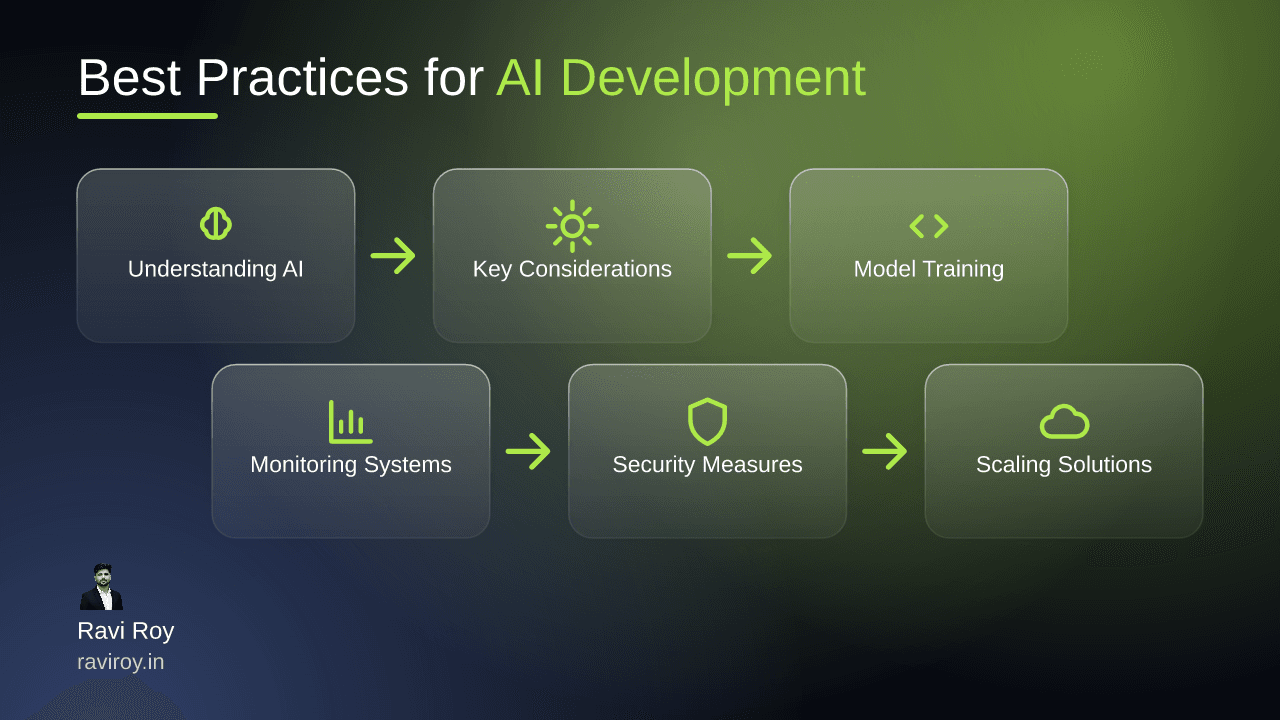
Understanding AI Development for Scalable Platforms
Building scalable AI platforms is more than just a technical challenge—it's a pathway to unleashing the true potential of artificial intelligence. As AI continues to reshape industries, understanding the fundamentals of AI development is vital for anyone looking to make a significant impact.
What is AI Development?
AI development refers to the process of creating systems that can emulate human intelligence, learning from data, and making decisions. It encompasses a range of disciplines, including machine learning, natural language processing, and computer vision. With the rise of big data and more robust algorithms, AI development has become increasingly integral to various sectors, making tasks more efficient and cost-effective.
Importance of Scalable Platforms
Scalability is a critical factor in AI applications, affecting not only performance but also the overall efficiency and cost-effectiveness of the system. A scalable AI platform can handle increased loads without a significant drop in performance, allowing businesses to grow without frequent overhauls of their technology stack. This adaptability is essential when implementing AI in production environments where demands can fluctuate dramatically.
Key Considerations for AI Deployment
When deploying AI solutions, several factors need to be considered to ensure that the environment is conducive to optimal performance.
Environment Setup
Setting up production environments for AI development involves a combination of best practices that can drastically influence your project's outcome. Here’s a step-by-step guide to creating an effective environment:
Select Infrastructure: Choose between cloud-based solutions like AWS, Azure, or on-premise setups depending on your scalability needs and budget.
Establish Version Control: Implement systems like Git to ensure code changes are tracked and managed effectively, which is crucial for collaboration in AI teams.
Automate CI/CD: Introduce Continuous Integration and Continuous Deployment (CI/CD) pipelines to streamline testing and updating your models in production.
Choosing the Right Tools
The right tools can facilitate a smoother development process. Essential platforms and frameworks include:
TensorFlow & PyTorch: Dominant frameworks for building and training machine learning models.
Kubernetes: Ideal for orchestrating containerized applications and ensuring scalability.
Apache Kafka: Useful for managing real-time data feeds, vital for AI applications reliant on live data inputs.
Best Practices for AI Model Training
Training AI models effectively is as much about quality data as it is about the training techniques used.
Data Management
High-quality data is the backbone of successful AI projects. Ensure your data is:
Clean: Address any inconsistencies and handle missing values appropriately.
Annotated: Proper labeling can greatly enhance model performance during training.
Diverse: Include diverse datasets to improve the model's ability to generalize.
Training Techniques
For scalable AI models, consider utilizing:
Transfer Learning: Leverage pre-trained models to save time and resources.
Ensemble Learning: Combine multiple models for improved accuracy.
Hyperparameter Tuning: Use grid search or random search methods to find the most suitable parameters for your model.
Monitoring and Maintenance of AI Systems
Keeping your AI systems performing at their best requires continuous oversight and prompt issue resolution.
Performance Monitoring
Monitoring tools like Prometheus and Grafana play a crucial role in tracking AI performance over time. They can help identify performance drops or drift in data distribution. Key metrics to track include:
Latency: The time it takes for the model to deliver predictions.
Throughput: The number of requests processed by the AI system in a given time frame.
Issue Resolution
Timely responses to issues are paramount. Develop an efficient process for troubleshooting that includes:
Log Analysis: Regularly inspect logs for errors or anomalies.
Automated Alerts: Set up notifications for performance dips below acceptable thresholds.
Rollback Capabilities: Have protocols for reverting to previous model versions when necessary.
Security Considerations in AI Development
AI development brings unique security challenges that need to be addressed proactively.
Data Privacy
With increasing data privacy regulations, developers must ensure compliance. Implement data minimization strategies to limit the information collected and stored. Techniques like anonymizing sensitive data can mitigate risks of breaches.
Preventing Attacks
To shield your AI systems from potential threats, consider these measures:
Regular Security Audits: Conduct audits to identify vulnerabilities in your systems or data pipelines.
Adversarial Training: Train models to withstand adversarial attacks by exposing them to intentionally misleading inputs during the development phase.
Scaling AI Solutions Effectively
When the time comes to scale your AI solutions, you need to know your options inside out.
Horizontal vs. Vertical Scaling
Understanding the differences between horizontal and vertical scaling is essential:
Horizontal Scaling: Involves adding more machines or instances to handle increased load. This is often the preferred method for cloud applications.
Vertical Scaling: Means upgrading existing machines, such as adding more CPU or RAM. While easier to implement, it has a limit before it becomes prohibitive.
Load Balancing Techniques
Effective load balancing can help distribute workloads evenly across your server resources. Here are a couple of techniques to consider:
Round Robin: Distributes requests evenly across servers, ideal for stateless applications.
Least Connections: Directs incoming traffic to the server with the least number of active connections to enhance resource utilization.
Future Trends in AI Development
As technology evolves, so too does the landscape of AI development.
Emerging Technologies
Keep an eye on advancements in quantum computing and federated learning, which aim to revolutionize how AI systems are trained and deployed. These technologies promise to enhance processing power and maintain data privacy respectively.
Predictions for AI
Looking ahead, AI is expected to take a more integrated role in business operations, impacting decision-making processes and customer interactions across sectors. Automation will continue to enhance productivity, reducing the burden on human resources.
Adapting to Changes
Developers need to remain agile. Continuous learning and adaptation are required to keep pace with rapid advancements in AI technologies. Attending workshops, engaging with community forums, and investing in training can equip developers to navigate these shifts effectively.
What challenges have you encountered when building scalable AI platforms, and how did you overcome them?
💬 Join the conversation — share your take in the comments and tell us what you’d add.