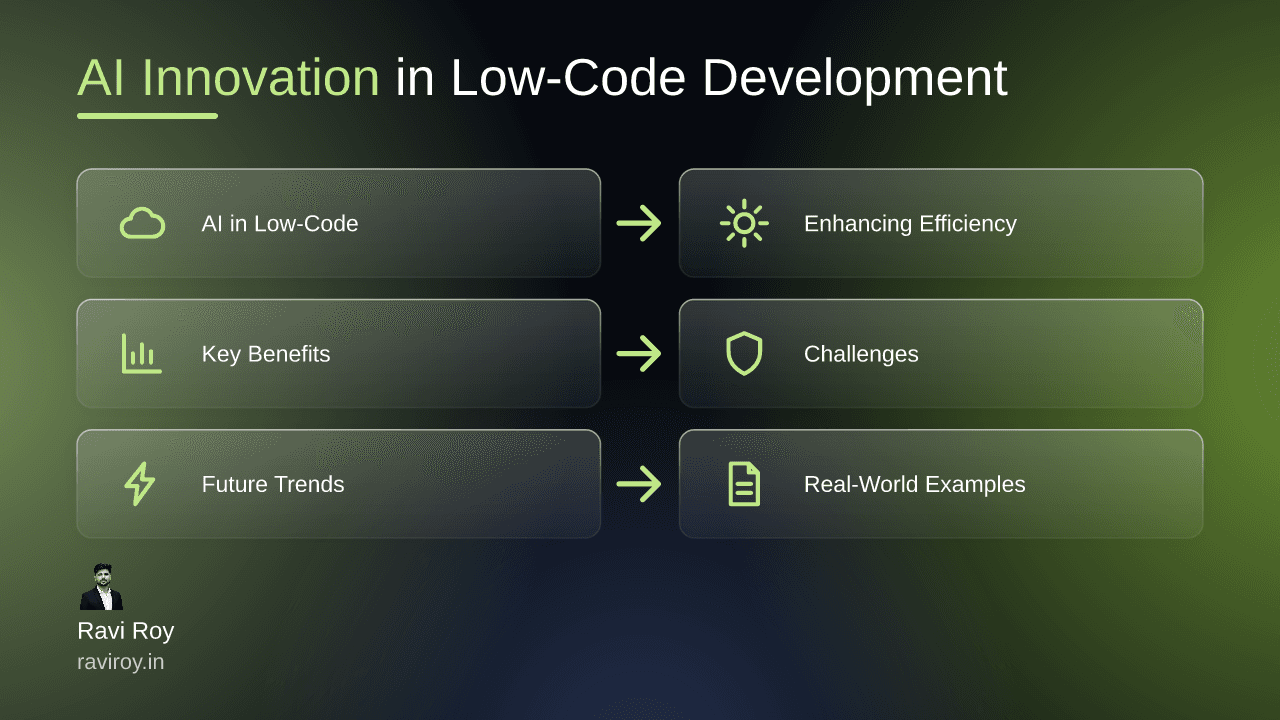
Understanding AI Innovation in Low-Code Development
Low-code development is revolutionizing the way organizations build applications, allowing teams to turn ideas into functioning software with unprecedented speed. When infused with AI innovation, this approach not only accelerates development cycles but also enhances overall efficiency, creating a new paradigm for designers and developers alike.
What is Low-Code Development?
Low-code development refers to a software development methodology that enables the creation of applications through graphical user interfaces and configuration, rather than traditional hand-coded programming. This approach significantly reduces the complexity of software development, allowing both technical and non-technical users to contribute to app creation. Traditional advantages of low-code development include accelerated project timelines, reduced need for coding expertise, and improved collaboration between IT and business teams.
With the advent of AI, low-code platforms are now enhanced to offer even faster development cycles and improved efficiency. AI tools can assist in automating repetitive tasks, thereby freeing developers to focus more on design and innovation. Key features like natural language processing allow users to interact with development environments in intuitive ways, transforming the creation process into a more fluid and accessible experience.
The Role of AI in Low-Code Platforms
AI plays a pivotal role in augmenting low-code platforms. By incorporating machine learning algorithms and analytics, these platforms can analyze vast amounts of data to help users make informed design choices. Rather than starting from scratch, non-technical users can leverage AI's ability to offer suggestions and optimize workflows based on usage patterns and project requirements.
How AI Enhances Low-Code Development Platforms
The integration of AI into low-code development platforms unlocks a multitude of opportunities for improving accessibility and streamlining processes.
Improved User Accessibility
One of the most significant advantages of AI in low-code environments is the enhancement of user accessibility. AI-driven tools empower non-technical users, such as business analysts and marketers, enabling them to develop applications without needing to write code. For instance, platforms like OutSystems and Mendix utilize AI features that allow users to build apps by simply describing their desired functionality. This democratization of app development not only boosts productivity but also fosters innovation across teams.
Streamlined Development Processes
Generative AI technologies can enormously enhance productivity by automating previously tedious tasks. For example, AI can auto-generate code snippets or complete workflows, which not only saves time but also reduces the likelihood of errors. A notable case is the integration of AI in Microsoft's Power Apps, which allows users to rapidly create applications by leveraging pre-built templates and AI-generated suggestions.
Moreover, imagine an ecommerce platform where customer feedback is automatically analyzed to suggest new features. By streamlining such processes, developers can focus on creativity and the end-user experience, ultimately leading to better products faster.
Key Benefits of Integrating AI with Low-Code Platforms
The combination of AI and low-code brings forth key benefits that can significantly impact development timeliness and resource allocation.
Democratization of App Development
AI integration allows a wider range of users to engage in app development, thus democratizing the process. This trend not only accelerates development but also encourages diverse input, resulting in applications that better serve user needs. According to a recent report, businesses that embrace AI in low-code environments have seen a significant reduction in development times—by as much as 70% in certain cases.
Faster Application Rollout
The deployment of AI-enhanced functionalities like pre-trained models smoothed the integration process. Developers can leverage these models without extensive machine learning knowledge, allowing for a quicker rollout of applications. Imagine launching an AI-driven customer service chatbot that is up and running in a fraction of the time traditionally required. This rapid pace facilitates faster responses to market changes, helping businesses stay competitive.
Challenges and Considerations in AI-Driven Low-Code Development
While the benefits are compelling, integrating AI into low-code development is not without challenges.
Limitations of AI Integration
While AI can streamline various aspects of development, limitations exist. Not all AI tools can be seamlessly integrated into every low-code platform. Some users may also encounter resistance or skepticism from traditional developers who question the reliability of AI-generated outputs. Awareness of these limitations is crucial for effective implementation and user training.
Governance and Compliance Issues
Governance and compliance present another layer of complexity. Integrating AI can lead to potential data privacy issues, depending on the nature of the data being processed. Organizations must ensure that AI-generated solutions comply with industry regulations. Developing clear governance frameworks can help mitigate these risks, enabling organizations to harness the advantages of AI while safeguarding sensitive data.
Future Trends in AI and Low-Code Development
The landscape of AI-driven low-code development is continuously evolving, and several emerging trends are poised to shape its future.
Emerging Technologies
Technologies such as augmented reality (AR), virtual reality (VR), and Internet of Things (IoT) are soon expected to increasingly converge with low-code development. This convergence could give rise to new applications that were previously unimaginable. For instance, imagine using low-code platforms to quickly prototype a community safety application that integrates IoT sensors for real-time data analytics.
Anticipated Evolutions in User Experience
As user demands grow, the focus will increasingly shift towards enhancing the user experience through smarter automation. Predictive analytics may soon enable these platforms to anticipate user requirements, optimizing development processes even further. Through continuous improvements, AI is likely to offer richer, more contextual insights that can streamline workflows and enhance usability.
Real-World Examples of AI in Low-Code Development
Nothing speaks as strongly as real-world success stories.
Successful Case Studies
Consider the case of a leading financial institution that used a low-code platform integrated with AI capabilities to roll out a new mobile banking app within weeks instead of months. By leveraging AI for functionalities like fraud detection and user experience optimization, the organization could deliver a high-quality application with a strong focus on security and customer satisfaction.
Lessons Learned from Implementation
Feedback from users reveals that successful adoption often comes down to effective training and clear governance frameworks. Organizations that provide adequate support during the transition tend to fare better. Lessons learned reveal that early involvement of stakeholders in the planning stages leads to a smoother rollout and greater acceptance of AI-driven solutions.
Ultimately, the integration of AI into low-code development platforms not only accelerates application creation but also introduces exciting new possibilities for innovation and collaboration.
What are your experiences with integrating AI in low-code platforms, and how has it changed your workflow?
💬 Join the conversation — share your take in the comments and tell us what you’d add.