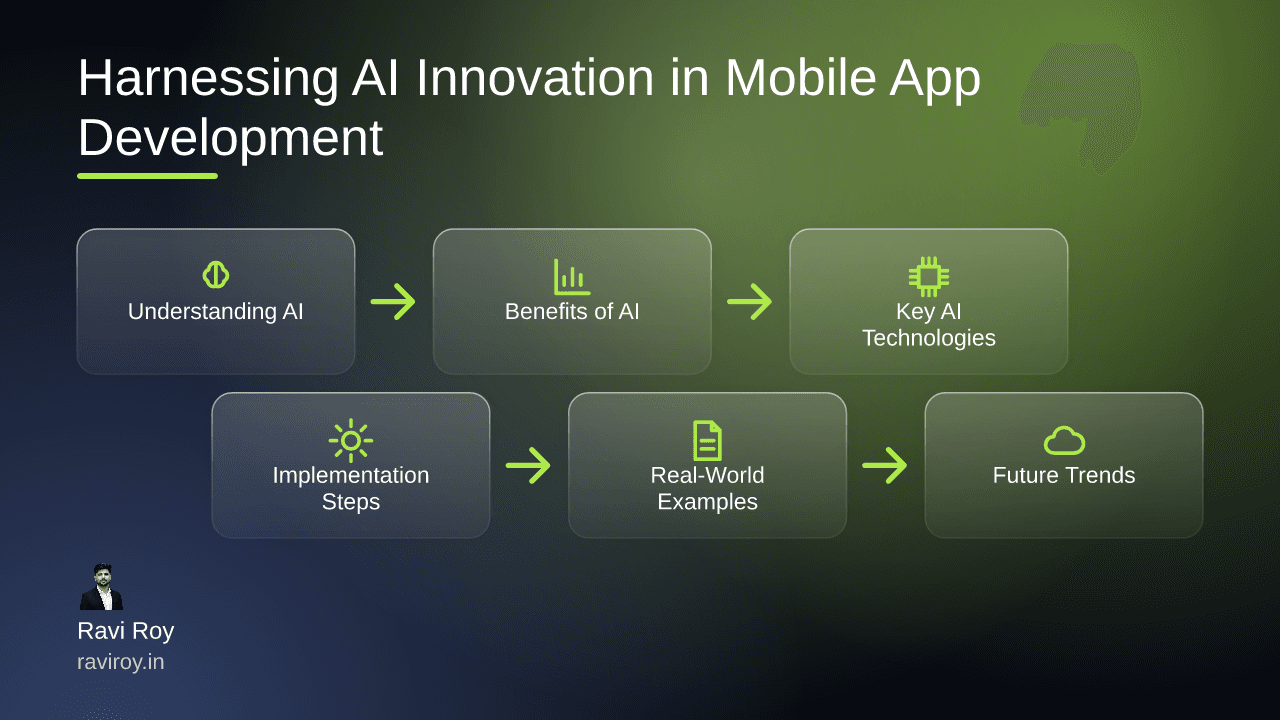
Harnessing AI Innovation in Mobile App Development: A Strategic Guide
Mobile app development is rapidly evolving, with AI innovation playing a critical role in reshaping the landscape of user engagement and functionality. For developers and businesses alike, integrating artificial intelligence into mobile applications isn't just a trend—it's a necessity for remaining competitive in the tech landscape.
Understanding AI Innovation in Mobile App Development
Defining AI Innovation
AI innovation refers to the continuous advancements in artificial intelligence technologies that allow for smarter, more efficient applications. It’s not merely about automation; it enhances the very fabric of technology by enabling systems to learn, adapt, and provide insights based on vast amounts of data. AI innovation is significant in the tech industry as it enables companies to offer smarter solutions that cater to users’ evolving needs.
The Role of AI in Mobile Apps
In mobile apps, AI technology enhances functionalities across various domains. Personalized recommendations, enhanced search capabilities, and intelligent customer support are just the tip of the iceberg. For instance, apps like Netflix use AI algorithms to analyze viewing preferences, thereby delivering personalized content recommendations to users. Similarly, AI-driven photo editing apps leverage neural networks to improve image quality, bringing professional-grade features to the smartphone.
Benefits of Integrating AI into Mobile Apps
Improved User Experience
AI plays a pivotal role in customizing user experiences based on individual preferences. By analyzing user interactions, mobile apps can provide tailored content and features that resonate with each user. For example, "Google Maps" uses AI to offer real-time traffic predictions and alternative routes, ensuring users make informed travel decisions.
Cost-Efficiency
Integrating AI into mobile app development may seem costly upfront, but it ultimately leads to significant savings. AI can automate routine tasks, reduce the need for human intervention, and streamline backend processes. For instance, customer support chatbots can handle inquiries 24/7, cutting down on staffing costs while simultaneously improving response times.
Data-Driven Insights
AI excels at analyzing user data to generate actionable insights. Developers can leverage this information to shape future updates, ensuring that app features remain relevant and helpful. Continuous feedback through AI models allows for rapid iterations, enhancing the overall user experience.
Key AI Technologies to Incorporate
Machine Learning
Machine learning algorithms form the backbone of AI innovation. These algorithms are designed to improve over time through exposure to more data, allowing the app to grow smarter as it interacts with users. For example, recommendation systems on e-commerce platforms become more accurate as they learn from user behaviors and preferences.
Natural Language Processing
Natural Language Processing (NLP) allows mobile apps to understand and respond to human language effectively. This technology is essential for enhancing chatbot functionalities and improving user interactions. With NLP, apps can parse questions, understand context, and provide relevant answers, significantly boosting user satisfaction.
Computer Vision
Computer Vision technology transforms how users interact with mobile applications by enabling image recognition and interpretation. Think of applications like "Snapchat" that utilize filters and visual effects based on computer vision algorithms. Users can experience augmented reality elements that create fun and engaging interactions within the app.
Steps to Effectively Implement AI Innovation
Identifying the Right Tools
Selecting the right AI tools is foundational for successful integration. Popular platforms such as TensorFlow for machine learning and PyTorch for neural networks can significantly aid in building AI models for mobile apps. Teams should evaluate their specific needs and align their tool choices accordingly.
Creating a Customizable Framework
To maximize the potential of AI features, it’s crucial to develop a flexible architecture. A customizable framework allows developers to implement, test, and adapt AI functionalities as user needs evolve. This ensures that the app's AI capabilities can grow alongside its user base.
Testing and Iteration
Comprehensive testing is vital to ensure that the AI functionalities perform as intended. Developers should employ methods such as A/B testing, user feedback loops, and performance metrics to refine AI-driven features continuously. This iterative process helps pinpoint areas for improvement and drives better user experiences.
Real-World Examples of AI in Mobile Apps
Success Stories
Several apps have leveraged AI to achieve significant success. "Spotify", for instance, uses AI-driven algorithms to curate personalized playlists based on listening habits, allowing users to discover new music tailored to their tastes. Meanwhile, "Google Maps" not only offers navigation but also utilizes AI to predict delays and suggest the fastest routes based on current road conditions.
Lessons Learned
While there are many success stories, challenges accompany AI integration. For instance, ethical considerations around data privacy and AI biases pose real challenges for developers. Addressing these issues early in the development process is crucial for maintaining user trust and regulatory compliance.
Future Trends in AI Innovation for Mobile Development
Emerging Technologies
The mobile development landscape is likely to witness a surge in trends like edge computing and federated learning. Edge computing process data closer to where it is generated, which can enhance performance and privacy. Federated learning allows for collaborative model training across multiple devices without compromising user data, paving the way for rich insights without privacy violations.
Predictions for User Interaction
User interactions will likely continue to evolve with AI integration. Imagine mobile apps that react intuitively to users' moods by analyzing voice tones or facial expressions—this future is closer than it seems. As AI capabilities grow, so will the sophistication of user interactions, leading to richer, more engaging mobile experiences.
In conclusion, integrating AI innovation into mobile app development opens the door to enhanced functionality, improved user experiences, and operational efficiencies. As you embark on this journey, consider the implications of AI on user engagement and the long-term impact on your app's success.
What challenges have you faced when integrating AI features into your mobile apps?
💬 Join the conversation — share your take in the comments and tell us what you’d add.