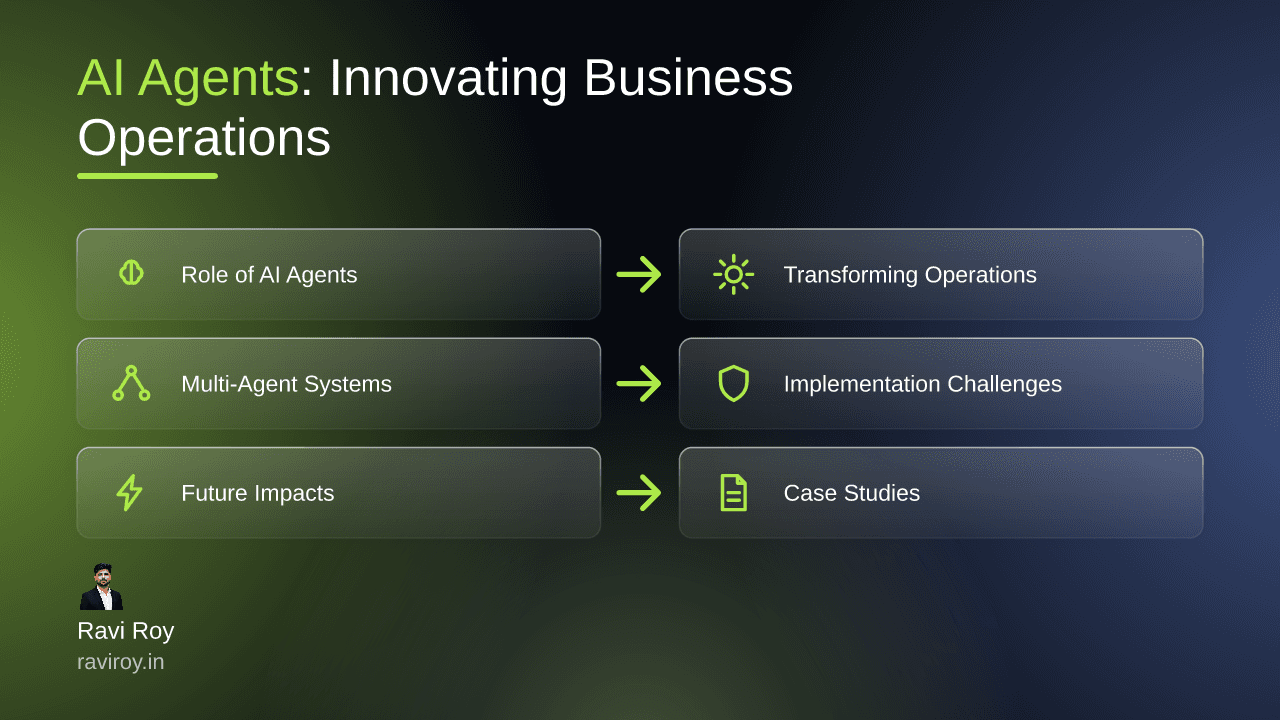
Understanding AI Agents and Their Role
What Are AI Agents?
AI agents represent a new frontier in automation, acting as powerful tools in modern business operations. Fundamentally, they are software programs designed to perform tasks autonomously, semi-autonomously, or with human oversight. These agents can interpret data, make decisions, and respond to their environments, making them an essential asset for organizations aiming to increase efficiency and productivity.
In the landscape of AI agents, we find three classifications: autonomous agents operate independently, semi-autonomous agents function with some human input, and human-in-the-loop systems rely heavily on human oversight. Each type offers distinct functionalities tailored to specific business needs, increasing adaptability and responsiveness.
Key Features of AI Agents
Every effective AI agent is equipped with essential features such as decision-making capabilities and real-time processing. These features empower AI agents to analyze vast amounts of data swiftly and draw insights that inform business strategies. Decision-making isn’t merely mechanical; many AI agents utilize machine learning algorithms to continually improve their performance and adapt to new information.
Also crucial is the ability to process information in real-time, allowing businesses to respond promptly to customer inquiries, market changes, or operational challenges. With these features, AI agents are not just tools; they are partners in driving innovation and operational excellence.
How AI Agents Transform Business Operations
Enhancing Customer Service
AI agents are revolutionizing customer service, primarily through chatbots and virtual assistants. These tools can handle inquiries at any hour, reducing customer wait times and improving satisfaction rates. In fact, research shows that organizations implementing AI in customer service report substantial increases in customer engagement and retention (source).
A case study highlighted a retail company that integrated an AI chatbot into its website. Within six months of launch, the company experienced a 30% reduction in customer service costs and a 20% increase in customer satisfaction ratings. This success story exemplifies how AI agents streamline communication and customer interactions.
Streams of Automation
Automation isn’t limited to customer service; it permeates various aspects of business operations. By delegating routine tasks—such as data entry, scheduling, and reporting—to AI agents, companies can free up their personnel for higher-value activities. As reported by industry leaders, automation through AI agents can lead to significant cost savings, with some organizations citing reductions of up to 50% in operational expenses due to increased efficiency.
Additionally, consider a financial services firm that automated its reporting processes using an AI agent. This transition saved countless hours of manual labor, allowing employees to focus on more critical analytical tasks, ultimately resulting in better business outcomes.
The Rise of Multi-Agent Systems
Defining Multi-Agent Systems
Multi-agent systems (MAS) represent an advancement over single-agent systems, particularly in complex environments where collaboration among agents is essential. In these systems, multiple AI agents work together to solve problems that single agents may struggle to address. The advantages of MAS include robust problem-solving capabilities, scalability, and resilience against failures.
Applications Across Industries
The application of multi-agent systems can be witnessed in various sectors. In healthcare, for example, MAS can facilitate efficient patient management by coordinating different AI agents dedicated to scheduling, diagnosis, and treatment recommendations. A notable case study in finance showcases a multi-agent trading system that adapts to market fluctuations in real-time, outperforming traditional trading strategies (source).
Furthermore, trends indicate that industries are increasingly recognizing the potential of multi-agent systems for tackling complex problems, reinforcing their importance in current and future business operations.
Challenges in Implementing AI Agents
Technical Barriers
While AI agents offer significant benefits, companies often face technical challenges when deploying them. Integrating AI into existing IT infrastructure, ensuring data quality, and maintaining system interoperability are common hurdles. Additionally, many organizations lack the talent and resources to effectively implement and manage these systems.
Ethical Considerations
As AI becomes more prevalent, ethical dilemmas also arise. The governance and regulation surrounding AI are still evolving, posing challenges in operation and deployment. Issues such as algorithmic bias, transparency, and accountability are paramount. Companies must navigate these ethical waters carefully, ensuring they uphold social responsibility while pursuing technological advancement.
The imperative for robust AI governance structures cannot be overstated, particularly as regulatory frameworks begin to take shape.
Future Impacts of AI Agents on Industries
Vertical AI Specialized Tools
Looking forward, the emergence of vertical AI tools tailored to specific industries is anticipated. These specialized tools will provide enhanced functionality, enabling businesses to apply AI strategies more effectively. For instance, a vertical AI tool in healthcare can drive personalized medicine, while in finance, it could optimize investment strategies based on real-time data analysis.
AI in Governance and Regulation
As AI continues to evolve, its influence on governance and regulatory frameworks will grow stronger. Future predictions suggest that AI will play a critical role in designing policies that ensure fair use while minimizing risks associated with technology misuse. As we enter this new era, the industry standards will certainly be affected by advancements in vertical AI and their applications.
Insights from Case Studies and Real-World Applications
Success Stories
Several companies have successfully integrated AI agents into their operations, showcasing the technology's transformative potential. Notable examples include a logistics firm that leveraged AI for route optimization, resulting in a 25% reduction in delivery times. These success stories underscore the significant competitive advantage AI agents can offer.
Learning from Failures
However, not every implementation is successful. Some organizations have faced setbacks due to poorly defined objectives or inadequate training data. An analysis of such cases reveals vital lessons, including the need for realistic expectations and comprehensive planning when integrating AI agents. Budget management is also a critical consideration, as underestimating setup and operational costs can lead to project failures.
Engaging with AI Agents: The Path Forward
Integrating AI Agents into Business Strategy
For businesses looking to harness the power of AI agents, strategic integration is key. Start by identifying areas ripe for automation and outline clear objectives for implementation. Collaborating with IT specialists and defining metrics for success will also increase the likelihood of positive outcomes.
The Future Landscape of AI Agents
As we look to the future, AI agents will continue to evolve, becoming integral parts of business operations. The next decade may see AI systems become even more interconnected, emphasizing cross-industry collaborations that enhance their capabilities.
Every business should consider how it can leverage this technology for growth, fostering partnerships that spur innovation.
What specific challenges have you encountered when integrating AI agents into your operations?
💬 Join the conversation — share your take in the comments and tell us what you’d add.