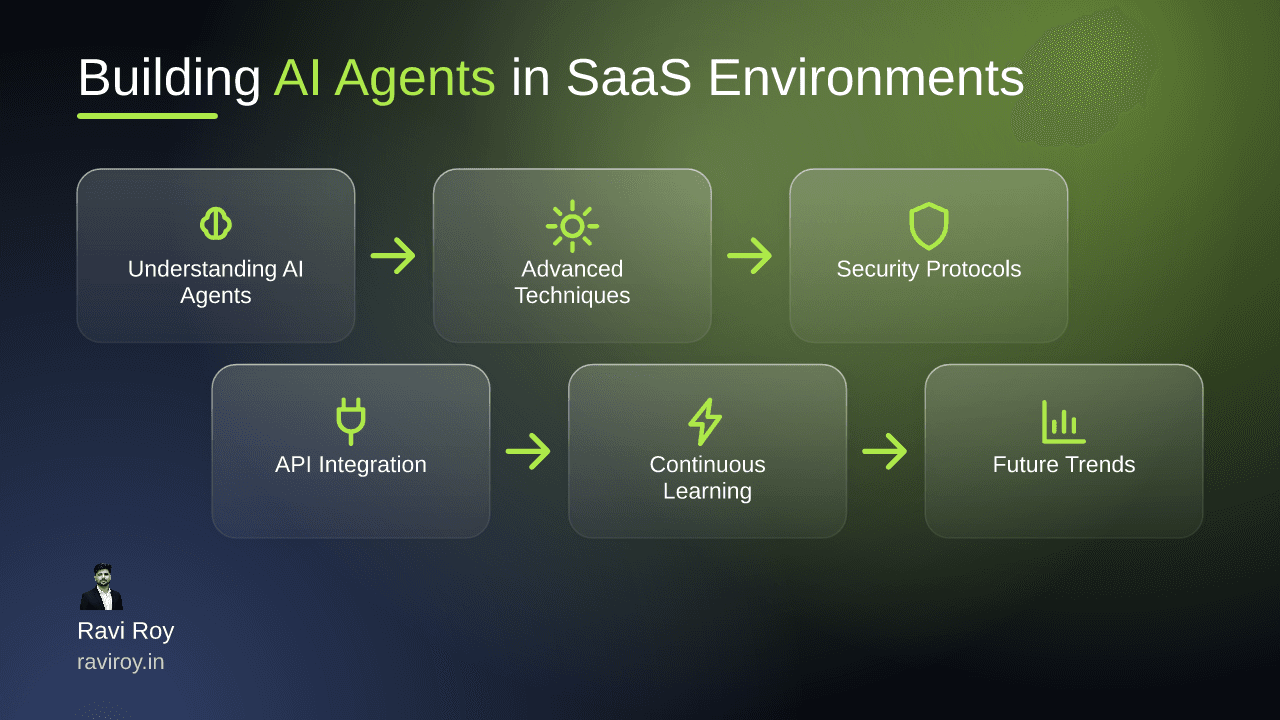
Understanding AI Agents in SaaS
What are AI Agents?
AI agents are intelligent software entities designed to autonomously perform tasks, make decisions, and interact with users within a digital environment. They utilize machine learning techniques to analyze data, predict outcomes, and optimize actions based on user input and environmental changes. In SaaS (Software as a Service) applications, AI agents enhance functionality by providing personalized experiences, automating repetitive tasks, and offering valuable insights derived from user behavior and preferences.
For instance, consider an AI-powered customer support agent in a SaaS platform. This agent can learn from previous interactions, answer common queries, and escalate complex issues to human operators when necessary. By personalizing user engagement, AI agents create a more interactive and satisfactory user experience, thereby driving both retention and satisfaction.
Importance of AI Agents in SaaS
The significance of AI agents in SaaS environments cannot be overstated. They streamline operations, add layers of intelligence to user interfaces, and enhance service delivery. By analyzing user interactions in real time, these agents can continually refine their responses, thereby improving the efficiency of routine tasks.
Moreover, the integration of AI agents equips businesses with critical data insights, enabling strategic decision-making and tailored marketing efforts. As companies increasingly shift to SaaS platforms, the presence of robust AI agents becomes a market differentiator that can significantly influence customer acquisition and loyalty.
Advanced Techniques for Building AI Agents
Modular AI Systems
One advanced technique for building AI agents is the implementation of modular AI systems. These systems divide the AI model into distinct, manageable components that can be developed and updated independently. This modularity offers immense benefits in terms of scalability and flexibility, particularly in fluid SaaS environments where requirements may change rapidly.
For example, if a company decides to pivot its focus from user acquisition to user retention, it can modify or replace the relevant module without disrupting the entire system. This adaptability not only saves time but also resources, allowing developers to innovate more rapidly.
Reinforcement Learning Integration
Integrating reinforcement learning into AI agents can dramatically enhance their performance through a model of continuous feedback. Here, agents learn by engaging with their environment and receiving rewards or penalties based on their actions.
To illustrate, consider an AI-oriented sales assistant. By using reinforcement learning, this AI can analyze the success of different sales tactics, gradually improving its approach over time. Utilizing frameworks like TensorFlow or PyTorch, developers can implement these learning algorithms to create agents that adapt more dynamically to user behavior.
Prompt Engineering Techniques
Prompt engineering is yet another advanced technique tailored for specific SaaS applications. It involves crafting specific inputs that guide AI responses, ensuring they align closely with intended outcomes.
For instance, when creating prompts for an AI-driven chat customer service tool, developers can employ structured queries that focus on key information retrieval. Sample code for a simple prompt may look like this:
def generate_prompt(user_query):
    return f"What problem is the user facing: {user_query}?"
Delivering precise prompts enhances the relevance of AI responses and enriches user interactions across the platform. Engaging in continuous A/B testing of prompts can further optimize their effectiveness, ensuring users receive valuable information promptly.
SaaS-Specific Security Protocols for AI Agents
Security Challenges
While AI agents offer numerous advantages, they also present unique challenges, particularly in security. Common threats include data breaches, where sensitive user information may be compromised, and adversarial attacks, where malicious actors manipulate AI behavior.
Implementing strong authentication mechanisms, robust encryption, and continual security audits are vital for minimizing these risks. Moreover, leveraging AI to monitor for unusual behaviors can serve as a first line of defense against potential attacks.
Compliance Measures
Compliance is another critical factor when integrating AI agents into SaaS environments. Regulations such as GDPR and CCPA stipulate stringent guidelines for data usage and user privacy. Companies must ensure their AI agents are programmed to comply with these regulations, managing user data ethically and transparently.
Employing frameworks that restrict data access and maintaining comprehensive audit logs can help in achieving compliance, protecting both the company and its users from potential legal repercussions.
Integrating AI Agents with SaaS APIs
Best Practices for Integration
Integrating AI agents with existing SaaS APIs requires a systematic approach to ensure seamless functionality. Best practices include:
Standardization: Use standardized API protocols such as REST or GraphQL to streamline communication.
Version Control: Implement version control for APIs to manage changes and avoid disruptions.
Documentation: Maintain thorough documentation of AI functionalities and API capabilities to ease future integrations or modifications.
Here's a simple example of an API integration using Python's Flask framework:
from flask import Flask, jsonify, request

app = Flask(__name__)

@app.route('/ai-agent-response', methods=['POST'])
def ai_agent_response():
    user_input = request.json['input']
    # Process input with AI model here
    return jsonify({"response": "Processed response"})

if __name__ == '__main__':
    app.run(debug=True)
Real-World Examples
Real-world case studies offer insights into the effective integration of AI agents with SaaS APIs. One notable example is Slack integrating productivity bots to automate task management through its API. These bots seamlessly assist users by fetching relevant documents and scheduling meetings, which exemplifies the potential of combined AI and SaaS capabilities.
By analyzing such successful integrations, businesses can glean valuable strategies to enhance their own AI functionalities, ensuring they remain competitive in an ever-evolving marketplace.
Continuous Learning and Adaptation in AI Agents
Managing Learning Processes
Facilitating continuous learning in AI agents requires a structured approach. This involves deploying techniques such as transfer learning, where knowledge gained from one task is applied to another, enhancing the agent’s ability to adapt to new scenarios more quickly.
Furthermore, utilizing pipelines for data collection ensures that agents are continually learning from real-time user interactions, thereby refining their algorithms and improving overall performance.
Strategies for Continuous Improvement
Monitoring performance and implementing improvements are crucial for sustaining the effectiveness of AI agents. Strategies may include:
Feedback Loops: Establish mechanisms for gathering user feedback to inform AI training.
Performance Metrics: Regularly track key performance indicators (KPIs) such as response accuracy, user satisfaction, and engagement rates.
Iterative Development: Adopt agile methodologies, allowing for rapid adjustments based on performance analysis.
By embedding this cycle of continual learning and adaptation, organizations can ensure their AI agents remain relevant and effective.
Future Trends in AI Agents for SaaS
Emerging Technologies
As technology evolves, several emerging trends are poised to shape the future of AI agents in SaaS environments. One significant trend is the advancement of Natural Language Processing (NLP), which is enhancing how AI agents understand and interact with users. This technology trends toward greater sophistication in contextual understanding, making interactions feel more human-like.
Other emerging technologies, such as AI ethics frameworks, will soon guide how agents operate within legal frameworks, ensuring ethical decision-making and interactions.
Market Predictions
Looking ahead, the market for AI agents in SaaS is expected to expand significantly. Analysts predict an influx of AI-driven solutions across various sectors, such as healthcare, finance, and e-commerce, as businesses seek to leverage AI for operational efficiencies and enhanced customer experiences.
The adoption of voice and visual recognition technologies within SaaS platforms is likely to further amplify this trend, allowing users more varied modes of interaction with AI agents.
Conclusion
Advanced techniques for building AI agents in SaaS environments offer incredible opportunities for businesses looking to enhance user experience, operational efficiency, and adaptability. By leveraging modular systems, reinforcement learning, and a focus on security, organizations can create robust AI solutions tailored to their specific needs.
As you embark on building or refining AI agents for your SaaS projects, consider which strategies resonate the most with your goals.
What advanced techniques have you found most effective when building AI agents in your SaaS projects?
💬 Join the conversation — share your take in the comments and tell us what you’d add.